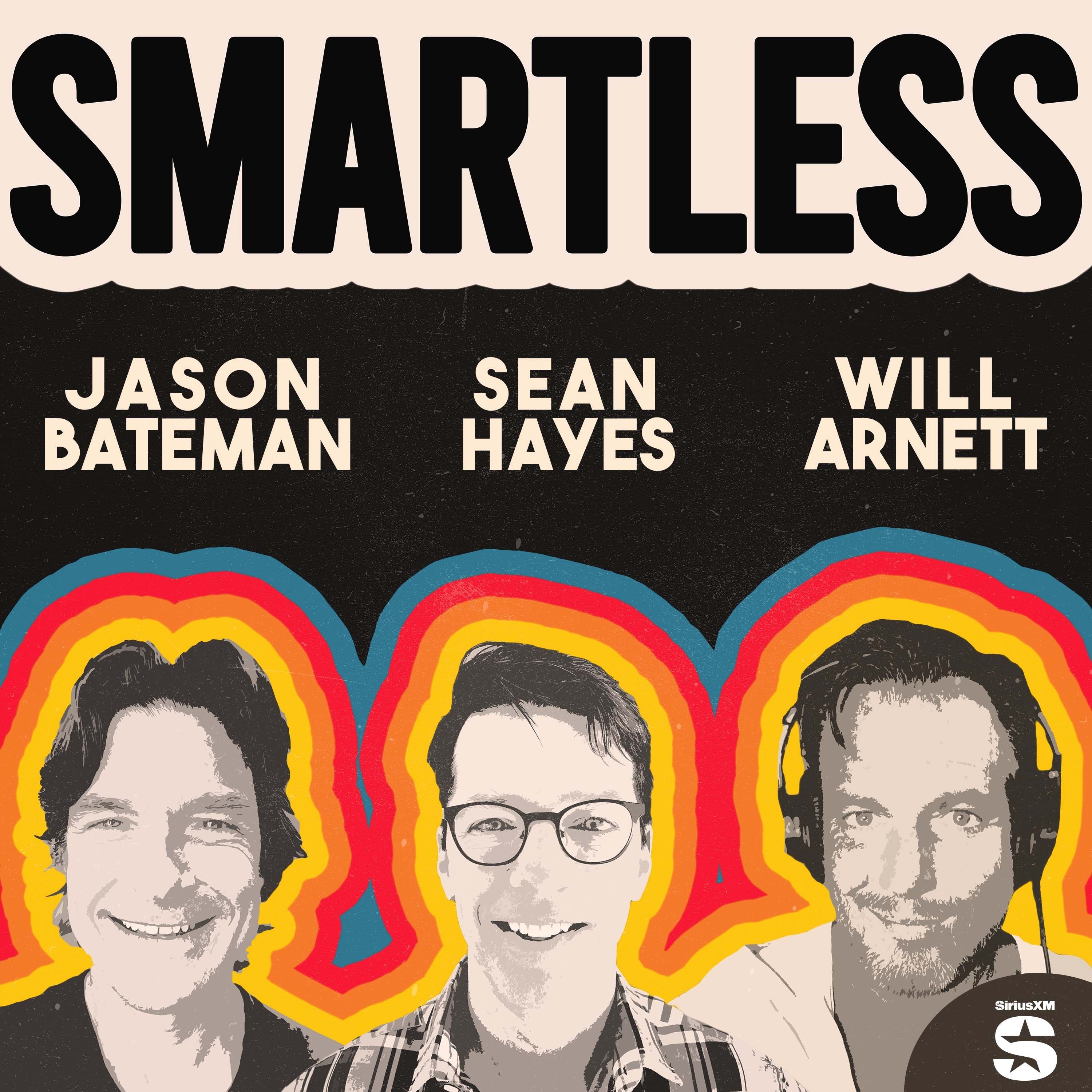
Ike Barinholtz has zero money in the stock market. No mutual funds, no retirement accounts. His complete investment philosophy: put money into friends' small businesses and trust people over institutions.

Where this was said
At 55:50 · chapter starts 53:30
Will Arnett mentions he bought two of Seth Rogen's standing ashtrays from his cannabis brand's website, sending Seth a photo as a show of support. Ike casually mentions he is an investor in the company, prompting Will to demand a deal since he paid full retail. Ike then drops his complete financial philosophy: he invests exclusively in friends' small businesses, with zero exposure to the stock market, mutual funds, or retirement accounts — a revealing and deliberately contrarian stance. The episode closes with all three hosts heaping genuine praise on Ike: Will says everyone he knows asks if they've seen Ike on The Studio; Jason credits Ike's longevity to being on time and easy to work with rather than raw talent; Ike responds with gracious humility, calling the SmartLess appearance a bucket-list item. It's a warm, unaffected ending to a characteristically ebullient episode.
Ike Barinholtz said his entire investment strategy is backing friends' small businesses, with no stocks, mutual funds, or Roth IRA.
Ike Barinholtz offers a genuinely humble and practical theory of Hollywood longevity: he may not be the funniest or most talented person in the room, but he is always on time and always respectful. Jason Bateman and the hosts enthusiastically agree that this is exactly why he keeps getting hired.
Avnish grew his solo business to $25,000 per month in just 15 months without spending a dollar on ads. His entire growth engine was built on community posts in Reddit and Facebook groups.
One well-crafted post in the right community took Avnish from single thousands of users to tens of thousands. This wasn't luck — it was a repeatable part of his 5-step playbook.
Most founders chase paid ads and influencer deals, but Avnish's growth came entirely from knowing where his users already gathered online. Dominating Reddit and Facebook groups — for free — was his entire strategy.
Spend 80% of your landing page design time above the fold. The hero section is the only thing most visitors will ever truly read, so it needs to deliver your full message instantly.
The dominant mobile monetization flow is simple: free download, onboarding, then a hard paywall that blocks all features until the user pays or starts a trial. It's unskippable by design — and that's exactly the point.
Switching PuffCount to a hard paywall and requiring a free trial before any feature access sent conversion rates soaring to 20–25%. One structural change to the payment flow — no new features, no new users — transformed the business.
Vasco is so confident in YouTube that he'll personally PayPal $500 to anyone who posts for 45 days and doesn't make $5,000. This isn't hype — it's a distillation of his own experience growing an AI app to $70K/month using nothing but daily videos.
Vasco's AI app went from zero to $70,000 a month in just two years. The entire growth engine was YouTube — one video a day, nothing fancy, no expensive tools. Most of his users came directly from the channel.
People buy from people they know, like, and trust. YouTube is the only platform that builds all three at scale — and Vasco's $1M business is the proof of concept.
We use essential and analytics cookies to run Vuci. To understand how the site is used: Privacy Policy.
Install Vuci on your phone
Add it to your home screen for a faster, app-like experience.
Install Vuci on your phone
Tap the Share button, then “Add to Home Screen”.
A new version is available
Reload to get the latest Vuci.