
SpaceX 2 GW compute by end of 2026
SpaceX plans to reach 2 gigawatts of compute capacity by end of 2026, scaling to 10 gigawatts by end of 2027.
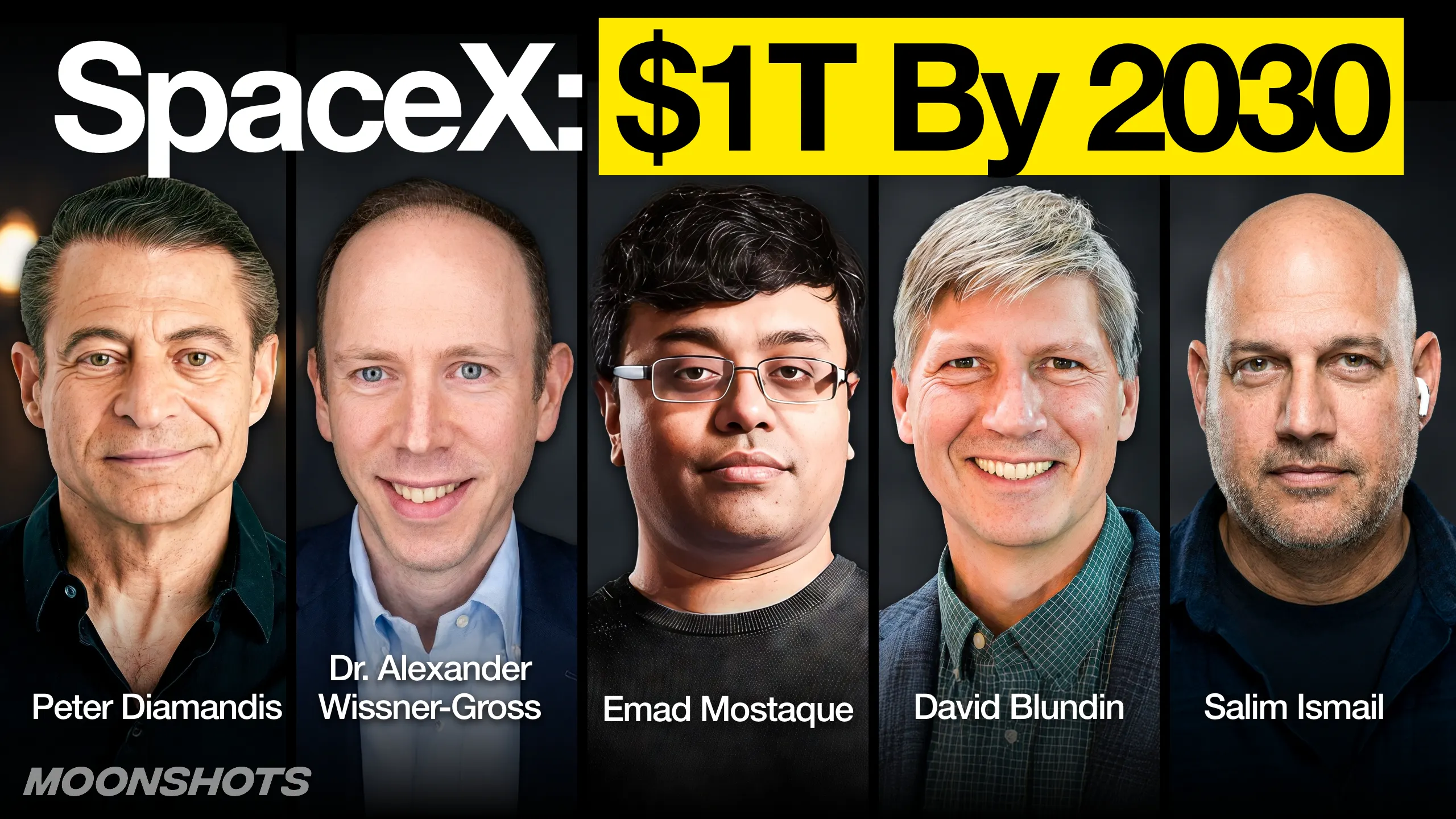
Snapshot · Moonshots with Peter Diamandis
SpaceX plans to reach 2 gigawatts of compute capacity by end of 2026, scaling to 10 gigawatts by end of 2027.
Where this was said
At 1:44:30 · chapter starts 1:44:15
Peter Diamandis runs through the highlights of SpaceX's first-ever public earnings call, including $7.8 billion in quarterly revenue (a 92% year-over-year increase), 12 million Starlink subscribers (doubling year-over-year), $4.3 billion in Starlink revenue, and $6.7 billion in new cloud service deals [1] — Elon Musk "SpaceX $100B ARR by year-end: SpaceX expects to hit $100 billion in annual recurring revenue by end of 2025, with Elon Musk targeting $1 tr…" 1:45:01 . Elon Musk confirmed the $100 billion ARR target for December 2026 and moved up his trillion-dollar revenue forecast from 2031 to 2030. The group plays two audio clips: Musk's $1 trillion projection and a comic aside about the engineering challenge of convincing rockets not to explode. Dave Blundin notes that no company in world history has ever hit $1 trillion in revenue. Peter also announces the SpaceX-NVIDIA partnership to design Rubin GPU and Vera CPU payloads for StarMind orbital data centers, with first satellites expected in orbit in 2027 — a year ahead of schedule.
Starlink has 12 million subscribers as of the SpaceX earnings call, doubling year over year, with revenues growing 66% to $4.3 billion.
SpaceX expects to hit $100 billion in annual recurring revenue by end of 2025, with Elon Musk targeting $1 trillion in total revenue by 2030, moved up from 2031.
There are two routes to a trillion dollars for SpaceX by 2030. The first is the SpaceX-Tesla merger via Optimus dominating physical labor. The second — and more explosive — is SpaceX replacing TSMC as America's chip foundry through TerraFab, partnering with NVIDIA's Jensen Huang to build a domestic semiconductor empire that is TSMC times 10 or 20.

Bhanu and his team built approximately 50 free tools to attract search traffic, each linked back to SiteGPT.
With AI coding tools like Cursor, Bhanu can now create a new free marketing tool in less than 5 minutes by referencing existing tools.
Bhanu filters Ahrefs keyword results to show only those with a keyword difficulty below 10, making them realistic ranking targets for any decent website.
Bhanu sets a minimum search volume of 1,000 monthly searches when selecting keywords to target with free tools.
PropGPT averaged 20 downloads per day right after launching on the App Store through influencer marketing.
Eyal and Yali shut down all marketing and spent 4 months completely rebuilding PropGPT from scratch.
PropGPT has accumulated over 40,000 total downloads since launch.
PropGPT's large language model (AI) operating costs are just $20 per month, and the cost is continually falling.
Ad-based monetization works well for game apps where users spend extended time in-session, as seen with Grid and Wordle.
We use essential and analytics cookies to run Vuci. To understand how the site is used: Privacy Policy.

Install Vuci on your phone
Add it to your home screen for a faster, app-like experience.
Install Vuci on your phone
Tap the Share button, then “Add to Home Screen”.
A new version is available
Reload to get the latest Vuci.