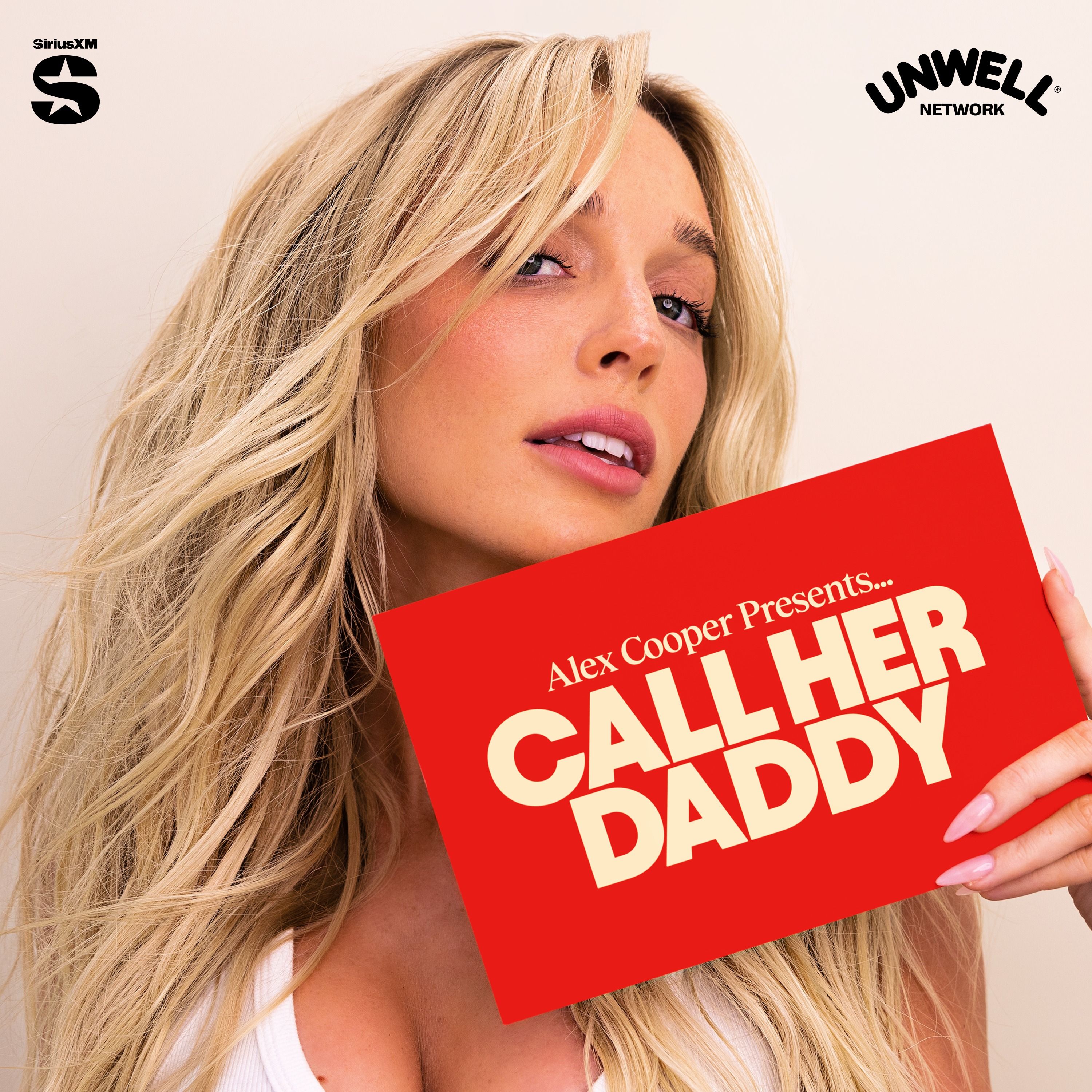
Chloe Bailey: Relationship Red Flags & Redefining Success
Chloe Bailey's debut solo single went platinum despite people in her personal life telling her she'd never make it as a solo artist — and she broke down crying backstage at the VMAs to prove them wrong.
Call Her Daddy
Chloe Bailey: Relationship Red Flags & Redefining Success
Chloe Bailey's debut solo single went platinum despite people in her personal life telling her she'd never make it as a solo artist — and she broke down crying backstage at the VMAs to prove them wrong.
TL;DR
Singer and actress Chloe Bailey joins Alex Cooper for a candid birthday conversation tracing her journey from viral YouTube covers at age 10 to being signed by Beyoncé, landing a platinum debut solo single with "Have Mercy," and collaborating with Timbaland on her mixtape *Resurrection* [1] — Chloe Bailey "After being told by people she knew personally that she'd never succeed as a solo artist, Chloe's debut performance at the VMAs ended with …" 37:00 . Chloe opens up about tying her self-worth to career metrics, the trauma of being cheated on, overcoming people-pleasing, and her dating dealbreakers [2] — Chloe Bailey "Chloe's first solo album sold 10K copies and the industry shunned her. Then her manager booked a tour the week after release. Every show so…" 41:50 . The sharpest takeaway: confidence is something you have to actively protect — people can only control you when you don't know your own worth [3] — Chloe Bailey "Anything that, you know, because hurt people hurt people, so anything that might be in the tuck somewhere, I want to get rid of that." 04:41 .
Chloe Bailey joins Alex Cooper to discuss her career journey from YouTube covers to Beyoncé's label, her solo career breakthrough with Have Mercy, collaborating with Timbaland on the Resurrection mixtape, and her personal growth around people-pleasing, self-worth, and relationship red flags.
-
Before the conversation begins, Alex Cooper delivers sponsored messages for Sephora (beauty and fragrance), Sour Patch Kids (sour-then-sweet candy), and Macy's (end-of-summer and back-to-school shopping). These reads set up the episode as a summer-themed celebration, tonally appropriate given the guest's birthday-episode framing.
-
Alex Cooper introduces Chloe Bailey warmly, noting the coincidence that the episode drops on Chloe's birthday — July 1st, the day she turns 28. Chloe is candid about her feelings: initially anxious about getting older, she has settled into a sense of gratitude and excitement. She plans to jump off a boat in Saint Lucia for her birthday. When Alex pushes on what she's manifesting, Chloe's answer is characteristically grounded: she wants to shed anything 'in the tuck' that might cause her to hurt others, describing her healing journey with quiet earnestness.
-
Chloe Bailey walks Alex through her early manifestation practice with a kind of wonder at her own younger self. She was, by her own description, the number-one Beehive member, and she repeatedly told her sister and everyone around her that they would be the first artists signed to Beyoncé. Her sister was skeptical — Beyoncé would sign a boy band, Halle thought — but Chloe was immovable. [1] — Chloe Bailey "Chloe told everyone she and Halle would be the first artists signed to Beyoncé's label — and it happened. She also put Grammy nominations a…" 05:04 The Grammys went on the mood board. Donald Glover's face went next to a script years before any collaboration seemed possible. Both eventually materialized. The moment carries a tinge of melancholy too: Chloe admits that as we get older, self-doubt erodes the certainty we had as children, and she wishes she could recover that unguarded belief.
-
Alex reveals the extraordinary fact that Chloe's very first acting audition was at age 3, for a role playing a younger Beyoncé. What follows is a cascade of remarkably specific childhood memories: a yellow-pink sunflower dress, mints she hated so much they had to wrap them in strawberry candy to keep filming, Beyoncé picking her up and swinging her at the wrap party. Then there's the story of 5-year-old Chloe and 3-year-old Halle crawling across a red carpet to reach Beyoncé in a diamond dress, only for Halle's baby locs to get caught in the hem. These are the details of a life that was entangled with Beyoncé's world from the very beginning — long before anyone signed anything.
-
The origin story of Chloe x Halle is simultaneously lo-fi and mythic. It was their older sister Skye who pushed them to post YouTube covers, inspired by how Justin Bieber had broken through the same way. The girls were reluctant until 'Best Thing I Never Had' felt undeniable. They burned the instrumental on a CD, plugged a stereo into the wall, pressed record with Skye's toe, and wore their 'dressiest shirts' — later swapped for simpler tank tops. [1] — Chloe Bailey "Chloe and Halle's cover of 'Pretty Hurts' went viral, Beyoncé's mom texted her 'sign these girls,' and Beyoncé replied she already had. The…" 10:00 From that raw footage, a chain reaction began. Their cover of 'Pretty Hurts' eventually hit 23 million views and reached Beyoncé directly. Within a month, Chloe and Halle were meeting her in a dark warehouse, where she was shooting a commercial in a white jumpsuit. When Beyoncé's mother Miss Tina later texted Beyoncé urging her to sign them, Beyoncé replied she already had.
-
Opening for Beyoncé at stadium scale, before they had any mainstream recognition, was both thrilling and absurd. Chloe's beat machine would overheat in the summer heat. Their outfits were, in her own words, 'tacky.' None of it mattered — they danced and performed with complete conviction. [1] — Chloe Bailey "Before mainstream fame, Chloe and Halle opened the Europe leg of Beyoncé's Formation World Tour — triggering songs from a beat machine that…" 11:15 The most enduring thing Beyoncé gave them wasn't the opportunity but the framing for what to do with it: she called them her 'little aliens,' said the world wasn't ready, and told them to let the world catch up rather than diminishing themselves for an unready audience. Chloe notes that her music still regularly experiences this arc — dismissed on release, then rediscovered as a 'bop' months later.
-
Alex Cooper reads a sponsored segment for Ritual's Symbiotic Plus, a once-daily pre-, pro-, and postbiotic supplement marketed for gut health. She ties it to summer social anxiety around digestion and discomfort at dinners and events. The offer is 25% off the first month.
-
Alex delivers a repeat Sephora sponsor read, again highlighting Kayali Eden Plush Pear 23 Eau de Parfum and the 'newest, hottest beauty' products available exclusively at Sephora.
-
Chloe describes the Chloe-Halle relationship in vivid, playful terms: she is Apollo the clingy, zoomies-prone cat; Halle is Poseidon, reserved and cool. [1] — Chloe Bailey "Chloe and Halle were told by acting agents in Atlanta they might get more roles with 'regular hair.' They briefly bought lace front wigs. W…" 20:12 The older sister protective instinct runs so deep that Chloe still catches herself treating Halle like her child, even now that Halle is a mother herself. The internet's attempts to pit the sisters against each other started almost immediately — their first cover posted to WorldStar exposed them to that toxicity early. But the sisters' contrast in style (Chloe's heavy drums vs. Halle's neo-soul and jazz) was always the point. When the comments tried to make them choose, they'd call each other and ask: 'Is this true about me?' And then reassure each other it wasn't.
-
This chapter is about the quiet, grinding pressure to be something other than what you are. Chloe describes drawing herself at age 4 with a straight ponytail — already internalizing the idea that her natural locs weren't the right look. Acting agents explicitly told the Bailey sisters they'd land more roles with conventional hair. They bought lace front wigs, wore them to school orientations, then discarded them. [1] — Chloe Bailey "Chloe and Halle were told by acting agents in Atlanta they might get more roles with 'regular hair.' They briefly bought lace front wigs. W…" 20:12 By age 18 or 19, Chloe wanted to cut her locs entirely. What saved them was learning to style them creatively — wrapping, adding hair, experimenting — until she fell in love with what had always been hers. Alex and Chloe linger on the cruelty of the mechanism: children seeking outer validation for what was simply who they were.
-
The pivot to Chloe's solo career was never a strategic decision — it was circumstance. Halle booked The Little Mermaid and moved to London for what became roughly three years, disrupted by COVID. [1] — Chloe Bailey "Chloe's first solo album sold 10K copies and the industry shunned her. Then her manager booked a tour the week after release. Every show so…" 41:50 Their album Ungodly Hour was already finished before Halle left; they couldn't release it until restrictions lifted. With no Halle to collaborate with, Chloe retreated to her bedroom beat machine. She traveled to London for two months at first, sitting in Halle's trailer all day making music. When travel restrictions made even that impossible, she was truly alone with her ideas for the first time. That isolation became the incubator for her solo identity — and for the realization that she had worth and value independent of her sister.
-
The origin of 'Have Mercy' is a story about taking something intended to be bad and making it irreversibly, undeniably yours. Chloe's sensual Juneteenth TV performance was supposed to be for late-night audiences; it aired on NBC in the afternoon and caused massive online backlash. The noise reached Murda Beatz, who DM'd her about collaborating. He sent ten beats; she heard the one. She turned it off immediately — her personal rule when she loves something: don't listen again until you're ready to create. In a single session with writer T-Ron, she wrote the scratch demo of 'Have Mercy,' channeling her frustration about people policing her body. She released a teaser on her birthday; over 300,000 challenge videos followed before the song was officially out. [1] — Chloe Bailey "After being told by people she knew personally that she'd never succeed as a solo artist, Chloe's debut performance at the VMAs ended with …" 37:00 The VMAs called before the release date.
-
The night of Chloe's VMA debut performance is the episode's emotional climax. [1] — Chloe Bailey "Because there's too much power in that. You can control people and confine them when they don't know how special they are. You can keep the…" 37:48 Having been told by people she knew personally that she wasn't good enough as a solo artist, she stood on that stage and watched herself deliver something that — if the platinum certification wasn't proof enough — made her cry. Halle flew back from London. Her godmother was there, her younger brother, her whole family. And when the performance ended, she went to the side of the stage and fell apart. Not from sadness, but from the relief of having proven to herself — not to the world, but to herself — that she was enough. Alex then draws out Chloe's theory on why confidence in a woman, especially a Black woman, unsettles people: because once you know your worth, you cannot be controlled.
-
The success of 'Have Mercy' brought immediate pressure: everyone insisted the follow-up had to be perfect, so Chloe waited eight months before releasing the next single and lost momentum she couldn't easily rebuild. [1] — Chloe Bailey "One night on tour, Chloe stopped being present. She watched herself perform from the audience in her own head, arms moving, legs moving, bu…" 43:50 When her first album sold around 10,000 copies — a normal figure today but treated as failure then — the industry shunned her. Her manager Charmaine responded counterintuitively, booking a tour immediately. Every show sold out. But the disconnect between the online narrative ('flop') and real life (fans who knew every word) destabilized Chloe until she had a dissociative episode mid-performance, watching herself from the audience. Charmaine found her backstage and delivered a speech that is essentially the spine of this conversation: don't let anyone take what God gave you.
-
Alex delivers an ad for Revolve, emphasizing the platform's daily new arrivals and outfit-building feature, with code CHD for 15% off the first order. She follows with a third Sephora sponsor read reprising the summer beauty and fragrance messaging.
-
Chloe is disarmingly honest about her people-pleasing: she hates people being upset with her, always has, and it runs so deep that she spent years leaving herself entirely out of her own life equation. [1] — Chloe Bailey "Chloe spent her whole life putting others first and avoiding conflict. When she finally started saying no, people labeled her difficult. He…" 49:12 When she finally started drawing boundaries, people who had benefited from her compliance labeled her difficult. Her metaphor for it is precise: people have been throwing rocks at her her whole life, and the moment she picks one up to throw back, they act victimized. Her solution now is deliberate: care less. Not so that people don't react — they will — but so that the reaction loses its weight. If you don't notice it, it becomes invisible.
-
Chloe opens up about the most tangible relationship wound in the episode: being cheated on. The discovery came through multiple channels simultaneously — DMs sent to her godmother, a lash extension on a tile floor (not her texture), and a hair tie. [1] — Chloe Bailey "Chloe found out she was being cheated on through DMs and a lash extension on a shower tile that wasn't her hair texture. She photographed t…" 55:00 What makes the story both poignant and funny is what she did with the knowledge: she photographed the evidence, texted her godmom, then went back to enjoy a full night of cuddles, staring at the ceiling in the dark while the man slept. She confronted him the next morning — and he denied everything. Chloe's response to being cheated on was, in her telling, to start responding to people she'd previously ignored in her DMs, framing it as her definition of 'retaliation.' The conversation evolves into a broader discussion of disrespect: subtle put-downs, being spoken to condescendingly, and having a lover who is indistinguishable from a hater.
-
Alex's dating-dealbreaker scenario round is simultaneously funny and genuinely illuminating. [1] — Chloe Bailey "Alex runs Chloe through dating scenarios. Her verdicts: meet the family in 3 months or it's a red flag, no location sharing (she'll obsess)…" 58:07 Chloe's sister's opinion on a guy? Give him a shot anyway. 'I love you' at one month? She knows it's love bombing — she's been burned — but admits she fell for it and would fall again. He'd rather stay in? She shocks Alex by saying she's not going out with him anyway. Family intro by month three is non-negotiable for her. On cheating history: she doesn't believe in 'once a cheater, always a cheater' — people change for the right person. On location sharing, her answer is the most self-aware in the episode: don't give it to me. She'll spiral every time he's near a CVS.
-
The Resurrection collaboration is a masterclass in how the modern music industry works — and how posting your process can change your career. [1] — Chloe Bailey "Chloe posted a rough beat on Instagram for fun. Timbaland commented 'this is hard,' then DMed her. Two months of trading beats remotely lat…" 1:01:40 Timbaland commented 'this is hard' on one of Chloe's Instagram production videos, then slid into her DMs asking if she was doing anything with the beat. She wasn't — it was just Instagram content. But he proposed a beat video, then a full project. They worked entirely remotely over two months, never in the same room, trading stems and ideas. The project came together so naturally that they made roughly ten more songs than made the final cut. The detail that ties it all together: the mixing engineer turned out to be the same person who had mixed Chloe's very first solo album — and all of Timbaland's catalog. Everything, sonically, came back to the same source.
-
Chloe's new film Strong was shot on location in Cape Town over three months, and she describes it with genuine excitement. The plot is deliberately witheld beyond the broad strokes: deceit, twists, music, and the kind of narrative that keeps you second-guessing. Chloe was drawn to the role of Layla for the messiness of the character and the stunt work — she's an admitted adrenaline junkie who grew up wanting to be a superhero. Alex uses the film's themes of lying and deceit as a bridge back to the cheating conversation, and both women acknowledge the overlap before closing on a warm summary of Chloe's full trajectory.
-
The episode closes with a meditation on what it means to grow up in public and still manage to find yourself. [1] — Chloe Bailey "Chloe's therapist gave her the stepping-on-a-toe framework: you don't catastrophize stepping on someone's toe, you apologize and keep movin…" 1:04:55 Chloe shares her therapist's stepping-on-a-toe analogy — a framework for handling mistakes without catastrophizing or deflecting — and reflects on the difference between where her mind is now and where her emotions still lag behind. Alex ties the whole conversation together: from people-pleasing to saying no, from the YouTube camera to stadium stages, from tying her worth to sales figures to understanding that the same fans cheering now were silent a month ago. The birthday wish is simple: be a better human. And the year ahead is packed: Resurrection, the film Strong, a third album in progress. They part warmly, with Chloe saying she 'received' Alex's wishes for her 28th year.
-
The episode closes with sponsored segments for Bright by Scotch-Brite (kitchen sponges with drain stands), Stouffer's (frozen lasagna and dinner options for quick meals), and Kotex BioCare (a redesigned pad featuring a pH Proactive System to defend against odor and irritants). The Kotex read is delivered in a different voice, suggesting a produced insert.
- Parkwood Entertainment
- Beyoncé's entertainment company and record label, which signed Chloe x Halle after their YouTube covers went viral.
- Love bombing
- A manipulation tactic where someone overwhelms a new partner with affection and declarations of love early on to create emotional dependency.
- 808s
- A reference to the Roland TR-808 drum machine, whose deep bass kick is foundational to hip-hop and R&B production; used here to describe Chloe's signature sound.
- Murda Beatz
- A prolific hip-hop producer known for high-energy trap beats who collaborated with Chloe Bailey on 'Have Mercy.'
- Metro Boomin
- A Grammy-winning super-producer in hip-hop who Chloe Bailey connected with through music industry networks during her early solo work.
- Beehive
- The name for Beyoncé's fanbase; Chloe described herself as 'number one Beehive' to explain why she knew Beyoncé would sign them.
- Scratch demo
- A rough, unpolished initial recording of a song used to capture an idea before a full professional recording session.
- Dissociation
- A psychological experience of feeling detached from one's own mind or body; Chloe described watching herself perform from the audience during a particularly stressful tour date.
- People-pleasing
- A behavioral pattern of prioritizing others' approval and comfort at the expense of one's own needs and boundaries.
- Ungodly Hour
- Chloe x Halle's critically acclaimed second studio album, released in 2020, which elevated the duo's profile and earned Grammy nominations.
- Lace front
- A type of wig with a sheer lace panel at the hairline creating a natural appearance; mentioned as an alternative to natural locs that Chloe and Halle briefly tried under industry pressure.
- Jaded
- Tired and cynical, especially from having experienced too much of something; Chloe used it to describe how adult life erodes youthful confidence.
- Preternatural
- Beyond what is normal or natural; applicable to Chloe's unusually detailed memory of events from age 3–5.
- Adrenaline junkie
- A person who seeks out thrilling or risky activities for the rush they provide; Chloe used this to describe both her love of stunts and her relationship to stage fright.
Chapter 2 · 01:52
Welcome & Turning 28: Chloe's Birthday Intentions
Alex Cooper introduces Chloe Bailey warmly, noting the coincidence that the episode drops on Chloe's birthday — July 1st, the day she turns 28. Chloe is candid about her feelings: initially anxious about getting older, she has settled into a sense of gratitude and excitement. She plans to jump off a boat in Saint Lucia for her birthday. When Alex pushes on what she's manifesting, Chloe's answer is characteristically grounded: she wants to shed anything 'in the tuck' that might cause her to hurt others, describing her healing journey with quiet earnestness.
Chapter 3 · 05:00
Manifesting Beyoncé: Mood Boards and the Power of Belief
Chloe Bailey walks Alex through her early manifestation practice with a kind of wonder at her own younger self. She was, by her own description, the number-one Beehive member, and she repeatedly told her sister and everyone around her that they would be the first artists signed to Beyoncé. Her sister was skeptical — Beyoncé would sign a boy band, Halle thought — but Chloe was immovable. [1] — Chloe Bailey "Chloe told everyone she and Halle would be the first artists signed to Beyoncé's label — and it happened. She also put Grammy nominations a…" 05:04 The Grammys went on the mood board. Donald Glover's face went next to a script years before any collaboration seemed possible. Both eventually materialized. The moment carries a tinge of melancholy too: Chloe admits that as we get older, self-doubt erodes the certainty we had as children, and she wishes she could recover that unguarded belief.

Chloe told everyone she and Halle would be the first artists signed to Beyoncé's label — and it happened. She also put Grammy nominations and a Donald Glover script on her mood board years before either seemed possible, and both came true.
Chloe Bailey placed Grammys and Donald Glover's face on her mood board years before it was realistic, and both eventually came true.
Chapter 4 · 06:45
Age 3: The First Time She Met Beyoncé on Set
Alex reveals the extraordinary fact that Chloe's very first acting audition was at age 3, for a role playing a younger Beyoncé. What follows is a cascade of remarkably specific childhood memories: a yellow-pink sunflower dress, mints she hated so much they had to wrap them in strawberry candy to keep filming, Beyoncé picking her up and swinging her at the wrap party. Then there's the story of 5-year-old Chloe and 3-year-old Halle crawling across a red carpet to reach Beyoncé in a diamond dress, only for Halle's baby locs to get caught in the hem. These are the details of a life that was entangled with Beyoncé's world from the very beginning — long before anyone signed anything.
Chloe Bailey's very first audition was at age 3, where she played a younger version of Beyoncé's character in a film and met Beyoncé on set.
Chapter 5 · 08:30
YouTube Covers, a Red Stereo & Getting Signed
The origin story of Chloe x Halle is simultaneously lo-fi and mythic. It was their older sister Skye who pushed them to post YouTube covers, inspired by how Justin Bieber had broken through the same way. The girls were reluctant until 'Best Thing I Never Had' felt undeniable. They burned the instrumental on a CD, plugged a stereo into the wall, pressed record with Skye's toe, and wore their 'dressiest shirts' — later swapped for simpler tank tops. [1] — Chloe Bailey "Chloe and Halle's cover of 'Pretty Hurts' went viral, Beyoncé's mom texted her 'sign these girls,' and Beyoncé replied she already had. The…" 10:00 From that raw footage, a chain reaction began. Their cover of 'Pretty Hurts' eventually hit 23 million views and reached Beyoncé directly. Within a month, Chloe and Halle were meeting her in a dark warehouse, where she was shooting a commercial in a white jumpsuit. When Beyoncé's mother Miss Tina later texted Beyoncé urging her to sign them, Beyoncé replied she already had.
Chloe and Halle's cover of 'Pretty Hurts' went viral, Beyoncé's mom texted her 'sign these girls,' and Beyoncé replied she already had. The warehouse meeting, the white jumpsuit, the angel in the dark — and a sign from a childhood photo taken when Chloe was 4.
Chloe and Halle's YouTube cover of Beyoncé's 'Pretty Hurts' went viral and directly led to them being signed to Parkwood Entertainment, Beyoncé's label.
Beyoncé's mother Miss Tina also sent Beyoncé the YouTube video saying 'you need to sign these girls,' to which Beyoncé replied she already had.
Before mainstream fame, Chloe and Halle opened the Europe leg of Beyoncé's Formation World Tour — triggering songs from a beat machine that would overheat in the summer heat. They didn't care. They danced and gave it everything.
Chloe x Halle opened for Beyoncé's Formation World Tour on the Europe leg before they had mainstream recognition.
Chapter 6 · 11:25
Formation World Tour: Stadiums, Stage Fright & Beyoncé's Advice
Opening for Beyoncé at stadium scale, before they had any mainstream recognition, was both thrilling and absurd. Chloe's beat machine would overheat in the summer heat. Their outfits were, in her own words, 'tacky.' None of it mattered — they danced and performed with complete conviction. [1] — Chloe Bailey "Before mainstream fame, Chloe and Halle opened the Europe leg of Beyoncé's Formation World Tour — triggering songs from a beat machine that…" 11:15 The most enduring thing Beyoncé gave them wasn't the opportunity but the framing for what to do with it: she called them her 'little aliens,' said the world wasn't ready, and told them to let the world catch up rather than diminishing themselves for an unready audience. Chloe notes that her music still regularly experiences this arc — dismissed on release, then rediscovered as a 'bop' months later.
Chapter 9 · 16:55
Chloe x Halle: Sisters, Sisterhood & Being Pitted Against Each Other
Chloe describes the Chloe-Halle relationship in vivid, playful terms: she is Apollo the clingy, zoomies-prone cat; Halle is Poseidon, reserved and cool. [1] — Chloe Bailey "Chloe and Halle were told by acting agents in Atlanta they might get more roles with 'regular hair.' They briefly bought lace front wigs. W…" 20:12 The older sister protective instinct runs so deep that Chloe still catches herself treating Halle like her child, even now that Halle is a mother herself. The internet's attempts to pit the sisters against each other started almost immediately — their first cover posted to WorldStar exposed them to that toxicity early. But the sisters' contrast in style (Chloe's heavy drums vs. Halle's neo-soul and jazz) was always the point. When the comments tried to make them choose, they'd call each other and ask: 'Is this true about me?' And then reassure each other it wasn't.
Chloe and Halle were told by acting agents in Atlanta they might get more roles with 'regular hair.' They briefly bought lace front wigs. Within a week Chloe came back to school in her locs. Now she says she'll never change them.
Chapter 11 · 25:30
Solo or Together: The Birth of Chloe's Solo Career
The pivot to Chloe's solo career was never a strategic decision — it was circumstance. Halle booked The Little Mermaid and moved to London for what became roughly three years, disrupted by COVID. [1] — Chloe Bailey "Chloe's first solo album sold 10K copies and the industry shunned her. Then her manager booked a tour the week after release. Every show so…" 41:50 Their album Ungodly Hour was already finished before Halle left; they couldn't release it until restrictions lifted. With no Halle to collaborate with, Chloe retreated to her bedroom beat machine. She traveled to London for two months at first, sitting in Halle's trailer all day making music. When travel restrictions made even that impossible, she was truly alone with her ideas for the first time. That isolation became the incubator for her solo identity — and for the realization that she had worth and value independent of her sister.
When Halle moved to London to film The Little Mermaid, Chloe traveled with her for two months and stayed in her trailer all day making beats.
Chapter 12 · 29:35
'Have Mercy': The Performance That Changed Everything
The origin of 'Have Mercy' is a story about taking something intended to be bad and making it irreversibly, undeniably yours. Chloe's sensual Juneteenth TV performance was supposed to be for late-night audiences; it aired on NBC in the afternoon and caused massive online backlash. The noise reached Murda Beatz, who DM'd her about collaborating. He sent ten beats; she heard the one. She turned it off immediately — her personal rule when she loves something: don't listen again until you're ready to create. In a single session with writer T-Ron, she wrote the scratch demo of 'Have Mercy,' channeling her frustration about people policing her body. She released a teaser on her birthday; over 300,000 challenge videos followed before the song was officially out. [1] — Chloe Bailey "After being told by people she knew personally that she'd never succeed as a solo artist, Chloe's debut performance at the VMAs ended with …" 37:00 The VMAs called before the release date.
Chloe Bailey's debut solo single 'Have Mercy' went platinum and she was invited to perform at the VMAs before the song even officially dropped.
Chapter 13 · 36:00
VMA Breakdown, a Platinum Single & Proving It to Herself
The night of Chloe's VMA debut performance is the episode's emotional climax. [1] — Chloe Bailey "Because there's too much power in that. You can control people and confine them when they don't know how special they are. You can keep the…" 37:48 Having been told by people she knew personally that she wasn't good enough as a solo artist, she stood on that stage and watched herself deliver something that — if the platinum certification wasn't proof enough — made her cry. Halle flew back from London. Her godmother was there, her younger brother, her whole family. And when the performance ended, she went to the side of the stage and fell apart. Not from sadness, but from the relief of having proven to herself — not to the world, but to herself — that she was enough. Alex then draws out Chloe's theory on why confidence in a woman, especially a Black woman, unsettles people: because once you know your worth, you cannot be controlled.
After being told by people she knew personally that she'd never succeed as a solo artist, Chloe's debut performance at the VMAs ended with her sobbing in the wings, surrounded by her whole family. It wasn't about the platinum record — it was about proving it to herself.
Chloe's theory: society is uncomfortable with confident women because confidence makes them uncontrollable. When you don't know your worth, you can be kept in a box. The moment you step into it, the game is over.
Chapter 14 · 38:30
Tying Worth to Career & the Mental Health Reckoning
The success of 'Have Mercy' brought immediate pressure: everyone insisted the follow-up had to be perfect, so Chloe waited eight months before releasing the next single and lost momentum she couldn't easily rebuild. [1] — Chloe Bailey "One night on tour, Chloe stopped being present. She watched herself perform from the audience in her own head, arms moving, legs moving, bu…" 43:50 When her first album sold around 10,000 copies — a normal figure today but treated as failure then — the industry shunned her. Her manager Charmaine responded counterintuitively, booking a tour immediately. Every show sold out. But the disconnect between the online narrative ('flop') and real life (fans who knew every word) destabilized Chloe until she had a dissociative episode mid-performance, watching herself from the audience. Charmaine found her backstage and delivered a speech that is essentially the spine of this conversation: don't let anyone take what God gave you.
Chloe's first solo album sold 10K copies and the industry shunned her. Then her manager booked a tour the week after release. Every show sold out. Every fan knew every word. The metrics lied; real life told the truth.
Chloe Bailey's first solo album sold around 10,000 copies, which she says is normal today, but the industry shunned her for the numbers at the time.
During a low point on her first solo tour, Chloe experienced a dissociative episode onstage where she felt she was watching herself perform from the audience rather than being present.
One night on tour, Chloe stopped being present. She watched herself perform from the audience in her own head, arms moving, legs moving, but nobody home. Her godmom-manager Charmaine found her backstage and said: don't ever let them take your gift.
Chapter 15 · 46:00
Sponsor Read: Revolve & Sephora
Alex delivers an ad for Revolve, emphasizing the platform's daily new arrivals and outfit-building feature, with code CHD for 15% off the first order. She follows with a third Sephora sponsor read reprising the summer beauty and fragrance messaging.
Chapter 16 · 48:12
People-Pleasing, Boundaries & Learning to Say No
Chloe is disarmingly honest about her people-pleasing: she hates people being upset with her, always has, and it runs so deep that she spent years leaving herself entirely out of her own life equation. [1] — Chloe Bailey "Chloe spent her whole life putting others first and avoiding conflict. When she finally started saying no, people labeled her difficult. He…" 49:12 When she finally started drawing boundaries, people who had benefited from her compliance labeled her difficult. Her metaphor for it is precise: people have been throwing rocks at her her whole life, and the moment she picks one up to throw back, they act victimized. Her solution now is deliberate: care less. Not so that people don't react — they will — but so that the reaction loses its weight. If you don't notice it, it becomes invisible.
Chloe spent her whole life putting others first and avoiding conflict. When she finally started saying no, people labeled her difficult. Her reframe: she went from a doormat to throwing people's rocks back at them.
Chapter 17 · 52:30
Love, Cheating & Romantic Red Flags
Chloe opens up about the most tangible relationship wound in the episode: being cheated on. The discovery came through multiple channels simultaneously — DMs sent to her godmother, a lash extension on a tile floor (not her texture), and a hair tie. [1] — Chloe Bailey "Chloe found out she was being cheated on through DMs and a lash extension on a shower tile that wasn't her hair texture. She photographed t…" 55:00 What makes the story both poignant and funny is what she did with the knowledge: she photographed the evidence, texted her godmom, then went back to enjoy a full night of cuddles, staring at the ceiling in the dark while the man slept. She confronted him the next morning — and he denied everything. Chloe's response to being cheated on was, in her telling, to start responding to people she'd previously ignored in her DMs, framing it as her definition of 'retaliation.' The conversation evolves into a broader discussion of disrespect: subtle put-downs, being spoken to condescendingly, and having a lover who is indistinguishable from a hater.
Chloe found out she was being cheated on through DMs and a lash extension on a shower tile that wasn't her hair texture. She photographed the evidence, texted her godmom, and went back to enjoy the rest of her night — because she still wanted the cuddles.
Chloe Bailey discovered a past partner was cheating through DMs sent to her godmom and by finding physical evidence like lash extensions and a hair tie at his home.
Chapter 18 · 58:07
Dating Dealbreakers: A Live Scenario Audit
Alex's dating-dealbreaker scenario round is simultaneously funny and genuinely illuminating. [1] — Chloe Bailey "Alex runs Chloe through dating scenarios. Her verdicts: meet the family in 3 months or it's a red flag, no location sharing (she'll obsess)…" 58:07 Chloe's sister's opinion on a guy? Give him a shot anyway. 'I love you' at one month? She knows it's love bombing — she's been burned — but admits she fell for it and would fall again. He'd rather stay in? She shocks Alex by saying she's not going out with him anyway. Family intro by month three is non-negotiable for her. On cheating history: she doesn't believe in 'once a cheater, always a cheater' — people change for the right person. On location sharing, her answer is the most self-aware in the episode: don't give it to me. She'll spiral every time he's near a CVS.
Alex runs Chloe through dating scenarios. Her verdicts: meet the family in 3 months or it's a red flag, no location sharing (she'll obsess), and she's still a sucker for early I love yous — even knowing it's love bombing.
Chloe Bailey's hard dating dealbreaker is not meeting a partner's family within 3 months — she sees it as a sign of being hidden.
Chapter 19 · 1:00:40
Timbaland, Resurrection & Making an Album from Instagram
The Resurrection collaboration is a masterclass in how the modern music industry works — and how posting your process can change your career. [1] — Chloe Bailey "Chloe posted a rough beat on Instagram for fun. Timbaland commented 'this is hard,' then DMed her. Two months of trading beats remotely lat…" 1:01:40 Timbaland commented 'this is hard' on one of Chloe's Instagram production videos, then slid into her DMs asking if she was doing anything with the beat. She wasn't — it was just Instagram content. But he proposed a beat video, then a full project. They worked entirely remotely over two months, never in the same room, trading stems and ideas. The project came together so naturally that they made roughly ten more songs than made the final cut. The detail that ties it all together: the mixing engineer turned out to be the same person who had mixed Chloe's very first solo album — and all of Timbaland's catalog. Everything, sonically, came back to the same source.
Chloe posted a rough beat on Instagram for fun. Timbaland commented 'this is hard,' then DMed her. Two months of trading beats remotely later, they had a full project. The mixer turned out to be the same man who mixed both Timbaland's catalog and Chloe's first album.
Chloe and Timbaland created the mixtape Resurrection entirely remotely over two months by sending beats back and forth without ever meeting in person.
Chapter 20 · 1:03:40
Movie Strong, Cape Town & What's Coming Next
Chloe's new film Strong was shot on location in Cape Town over three months, and she describes it with genuine excitement. The plot is deliberately witheld beyond the broad strokes: deceit, twists, music, and the kind of narrative that keeps you second-guessing. Chloe was drawn to the role of Layla for the messiness of the character and the stunt work — she's an admitted adrenaline junkie who grew up wanting to be a superhero. Alex uses the film's themes of lying and deceit as a bridge back to the cheating conversation, and both women acknowledge the overlap before closing on a warm summary of Chloe's full trajectory.
Chloe's therapist gave her the stepping-on-a-toe framework: you don't catastrophize stepping on someone's toe, you apologize and keep moving. She now uses it to stop spiraling into shame every time she makes a mistake.
No indexed bits in this chapter.
Show stoppers
After being told by people she knew personally that she'd never succeed as a solo artist, Chloe's debut performance at the VMAs ended with her sobbing in the wings, surrounded by her whole family. It wasn't about the platinum record — it was about proving it to herself.
Chloe's theory: society is uncomfortable with confident women because confidence makes them uncontrollable. When you don't know your worth, you can be kept in a box. The moment you step into it, the game is over.
Chloe and Halle's cover of 'Pretty Hurts' went viral, Beyoncé's mom texted her 'sign these girls,' and Beyoncé replied she already had. The warehouse meeting, the white jumpsuit, the angel in the dark — and a sign from a childhood photo taken when Chloe was 4.
Snapshots ()
Key Quotes ()
This episode
Claims & Sources
Factual claims made this episode, and whether a source was named.
Chloe and Halle Bailey's YouTube cover of Beyoncé's 'Pretty Hurts' received 23 million views.
Chloe and Halle Bailey were among the first artists signed to Beyoncé's Parkwood Entertainment label.
Chloe Bailey's debut solo single 'Have Mercy' went platinum.
Chloe Bailey's first solo album sold approximately 10,000 copies, which she describes as a normal number today.
Chloe Bailey and Timbaland created the mixtape Resurrection entirely remotely over approximately two months without meeting in person.
Halle Bailey filmed The Little Mermaid in London for approximately three years, partly due to COVID-19 delays.
Chloe Bailey's 'Have Mercy' challenge video reached 4 million views in one night on the day it officially dropped.
Before 'Have Mercy' officially released, over 300,000 user-generated videos were created for the challenge.
Chloe Bailey filmed her movie Strong in Cape Town, South Africa, over a three-month shoot.
Chloe Bailey's first solo tour was fully sold out, with fans knowing every song word for word, despite the album's modest sales.
Chloe Bailey appeared in a film at age 3 where she played a younger version of Beyoncé's character, and met Beyoncé on set.
Chloe Bailey's Juneteenth 'Feeling Good' performance was originally intended for a late-night TV show but aired on an NBC Juneteenth special instead.
This episode
Cast
-
Chloe Bailey's sister and musical partner in Chloe x Halle, who separately starred in The Little Mermaid and whose move to London sparked Chloe's solo career.
-
Beyoncé is central to the episode as the artist who discovered Chloe and Halle, signed them to Parkwood Entertainment, and gave them early career mentorship.
-
Legendary music producer who collaborated with Chloe Bailey on the mixtape Resurrection after discovering her Instagram production videos.
-
Chloe Bailey's debut solo performance at the MTV VMAs, which led to an emotional backstage breakdown and proved her viability as a solo artist.
-
Beyoncé's 2016 world tour for which Chloe x Halle opened on the European leg, giving them their first experience performing for stadium audiences.
-
Actor/musician Chloe Bailey cited as someone she put on her early mood boards alongside a script, manifesting a future collaboration.
-
Hip-hop icon whom Chloe Bailey cited as a production influence and who appeared as a feature on her album In Pieces.
-
The musical duo formed by Chloe and Halle Bailey, currently on a self-described 'hiatus' as both pursue solo careers.
-
The major record label through which Chloe Bailey released 'Have Mercy' and her first solo album.
-
Beyoncé's entertainment company and record label that signed Chloe x Halle after their YouTube covers went viral.
-
Chloe Bailey's debut solo single, which went viral, earned a VMA performance invite, and became her first platinum record.
-
Chloe Bailey's mixtape produced by Timbaland, created entirely remotely over two months and discussed as a creative and career milestone.
-
The Disney film in which Halle Bailey starred as Ariel, filmed in London over approximately three years, which indirectly triggered Chloe's solo career.
-
Chloe Bailey's debut solo album, which sold around 10,000 copies upon release and was initially met with industry skepticism despite a sold-out tour.
-
South African city where Chloe Bailey filmed her new movie Strong over a three-month shoot.
Stats
Sponsors
Related episodes
No links parsed
We scan show notes for social handles, websites and apps. Nothing matched on this episode.
