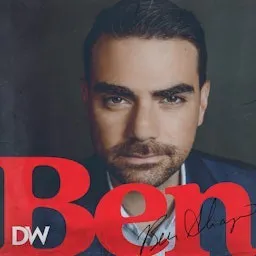
The Supreme Court ruled 6-3 that migrants standing in Mexico have no US constitutional rights — and that the president can unilaterally end Temporary Protected Status for hundreds of thousands of Haitians and Syrians.
Jun 26, 20261:08:40
Difficulty: Intermediate
Played
The Ben Shapiro Show
Ep. 2454 - Trump WIN: SCOTUS Says Send Them Home
The Supreme Court ruled 6-3 that migrants standing in Mexico have no US constitutional rights — and that the president can unilaterally end Temporary Protected Status for hundreds of thousands of Haitians and Syrians.
Jun 26, 20261:08:40
Difficulty: Intermediate
Played
TL;DR
Two landmark 6-3 Supreme Court rulings gave the Trump administration broad authority to bar asylum seekers at the US-Mexico border and terminate Temporary Protected Status for migrants from Haiti, Syria, and other nations[1]— Ben Shapiro"The Supreme Court ruled 6-3 that migrants waiting in Mexico do not have the legal status of having 'arrived in the United States' and there…"11:00. Ben Shapiro argues the Court simply interpreted the law as written — not made policy — while Democrats wrongly attack the institution rather than seeking legislative fixes[2]— Ben Shapiro"The Supreme Court does not make policy — it interprets what the law says. Shapiro argues the left has wanted the Court to be a one-way ratc…"11:40. The episode also covers the Daily Wire's new film *Run Hide Fight: Infidels*, fractures in the Democratic Party over socialist and pro-jihad influences, JD Vance's Iran diplomacy, and a NYC rent freeze that Shapiro says will backfire[3]— Ben Shapiro"JD Vance struck an agreement at the Lake Lucerne Peace Summit to create a military coordination channel between US CENTCOM and Iran's IRGC.…"1:00:40. Key takeaway: if you don't like immigration law, elect a different Congress.
#SCOTUS immigration ruling#Temporary Protected Status#asylum metering policy#Haitian deportation#Run Hide Fight Infidels#Jonathan Majors comeback#Democratic socialist takeover#JD Vance Iran deal#Abraham Accords#rent control failure#birthright citizenship#radical Islam film#Hasan Piker terrorism#NYC housing policy#immigration law interpretation#Supreme Court#immigration#TPS#asylum#Haiti#deportation#Daily Wire#Jonathan Majors#Democratic Party#Iran#JD Vance#Marco Rubio#rent control#Hasan Piker#Tom Homan#radical Islam
The Supreme Court hands the Trump administration two 6-3 immigration victories; Ben Shapiro explains the rulings on asylum metering and TPS termination, pushes back on Democratic attacks on the Court, covers the Daily Wire's new film 'Run Hide Fight: Infidels,' the DSA takeover of the Democratic Party, JD Vance's Iran diplomacy, and a New York City rent freeze.
Chapter list
The episode opens with back-to-back sponsor segments before any news content. NetSuite's AI-powered business suite is pitched as a tool that connects all company data into a single source of truth for faster leadership decisions, with a free trial offer for businesses with at least seven-figure revenues. Blinds.com is presented as the solution to the painful, old-fashioned process of buying window treatments — offering online customization, professional installation, virtual consultations, and a $50 off code. CookUnity rounds out the opening with a pitch for fresh, chef-prepared meals delivered to your door, with 50% off the first order.
With the sponsors out of the way, Ben Shapiro delivers a crisp episode preview, framing the two Supreme Court immigration decisions as clear-cut legal victories twisted by the left into accusations of racism. He teases segments on Democrats embracing communism and radical jihadism, the Daily Wire's forthcoming film targeting both ideologies, and a lighter story about European objections to American air conditioning use. The preview immediately establishes the episode's polemical tone: two legal wins for the Trump administration, and a media and political left incapable of accepting legal outcomes.
Shapiro pauses before the immigration case details to make what he considers a foundational point: the Supreme Court does not make good or bad policy, it reads the law. He traces the left's misunderstanding of this role back to the 1930s, when it began demanding that the Court act as a super-legislature of 'really smart people' who could rewrite policy. He argues what the left actually wants is a Court that validates left-wing actions and invalidates right-wing ones — a one-way ratchet. The practical implication is clear: if you don't like immigration policy, elect a different Congress or president. Attacking the Court for simply reading the law is, Shapiro says, both wrongheaded and dangerous for democratic institutions.
The metering policy was born under Obama in 2016 when border crossings surged, and it exploited a simple legal fact: the US only owes asylum processing to people physically 'in the United States.' Trump expanded and formalized it; Biden ended it. Trump 2.0 reimposed it. The plaintiffs — migrants turned away at the border — argued that waiting in line was legally equivalent to being in the country. Justice Alito's majority opinion demolished that claim with a sequence of everyday analogies: a running back at the one-yard line hasn't scored; a guest knocking on the door hasn't arrived; an army camped outside the walls hasn't entered the city. Shapiro quotes it at length and clearly relishes the clarity. Justice Thomas's concurrence is even starker, holding that Congress has no power to compel the president to bring aliens into the country at all, and that non-citizens who have never entered the US have no constitutional rights under which to sue.
Shapiro breaks from the legal analysis to deliver the Policygenius segment, personalizing the pitch by mentioning his upcoming baby and busy summer. He frames life insurance not as a complicated task but as one that Policygenius simplifies through side-by-side comparison of America's top insurers with no upselling and licensed support. The listener is pointed to policygenius.com/shapiro.
Created in the Immigration Act of 1990 to give temporary refuge to people already in the US when their home country became catastrophically dangerous, TPS started with one designated country: El Salvador. Over 36 years, the list grew to 17 countries, and the average TPS holder has now been in the US for two decades. Shapiro argues that this wasn't accident but strategy: the Obama and Biden administrations opened the borders, allowed mass illegal entry, then labeled the migrants' home countries 'too dangerous' under TPS, effectively converting illegal immigrants into people who couldn't legally be deported. The Trump administration's response is to declare those countries no longer dangerous for deportation purposes — using the same broad executive discretion the law grants. Republicans focus on 'temporary'; Democrats focus on 'protected.'
Shapiro acknowledges Haiti's grim reality head-on: 5,500 murders a year, rampant sex trafficking, gang control, anarchic conditions. Trump calling it a 'bleep-hole country' is offensive in tone but not factually wrong, he argues. The legal drama centers on whether the termination of Haiti's TPS designation violates equal protection — i.e., was it racist? Justice Alito's majority opinion in the second 6-3 ruling dismisses this by pointing to the administration's own stated rationale: they're terminating every TPS designation that comes up for renewal, regardless of country. That race-neutral explanation defeats the equal protection claim. And regardless, the statute says there is 'no judicial review' of TPS termination decisions — so even if there were discriminatory animus, courts have no power to second-guess it.
Two of the Trump administration's most prominent immigration voices react to the rulings. Tom Homan, who has been in the field since 1984, cuts through the debate with a blunt observation: TPS has never once been enforced as temporary by any prior administration, which is why people who received it have been here an average of 20 years. Trump, he says, is simply the first president with the political will to follow the statute. Stephen Miller's argument is more pointed and deliberately provocative: Haitians already live in Haiti, so there's no valid asylum claim. Having high-crime neighborhoods — even as violent as Haiti's — has never legally qualified someone for asylum and never will. Shapiro acknowledges Miller's argument is somewhat cynical given Haiti's actual conditions.
The Democratic response to the rulings is almost uniformly an assault on the Supreme Court as an institution rather than a call for legislative action. Hakeem Jeffries calls the decisions 'reckless rubber-stamping.' Zohran Mamdani vows he will 'never accept' the ruling. Delia Ramirez invokes 'white supremacist authoritarian agendas.' Pramila Jayapal frames deportation as sending people to their death. Shapiro's consistent counter: if you believe the law is wrong, the answer is to elect a Congress that will change it — not to attack the Court for interpreting it correctly. He also dissects the Sotomayor and Kagan dissents: Sotomayor makes a moral argument about Holocaust-era Jewish refugees (the MS St. Louis voyage) that has no bearing on the legal question at hand; Kagan argues Trump's 'eating the dogs' comments constitute racial animus warranting judicial intervention.
The Helix Sleep segment breaks from the immigration content with Shapiro pitching the brand's personalized mattress quiz and wide model selection. He mentions that he and his wife use a Helix mattress and endorses the trial and guarantee. Discounts are emphasized ahead of the upcoming Independence Day holiday.
A congressional hearing on Chinese birth tourism — where illegal immigrants arrive late in pregnancy to deliver anchor babies on US soil — devolves when Congressman Ro Khanna accuses witness Michael Lucci of racism and xenophobia. Lucci's response is devastating: he points out he's the only non-Chinese person in an eight-person household, married to a Chinese-American. The race card, he argues, destroys the ability to have real policy conversations. Shapiro then plays a clip of Zohran Mamdani describing the anxiety of his father's citizenship interview during the mayoral campaign, prompting Shapiro's darkly comic observation that America would have been better off if the Mamdani family had never become citizens. He closes the section with opposition research on congressional candidate Daria Elisa Avila Chevalier, whose rent-abolition politics sit awkwardly alongside her father's Miami rental property income.
The NYC Rent Guidelines Board's 7-1 vote to freeze rents on nearly a million stabilized apartments — covering more than 40% of the city's housing stock — gives Shapiro a classic economics lesson opportunity. Citing H.L. Mencken's quip about democracy giving people what they want 'good and hard,' he argues that rent freezes kill new development by violating property rights and eliminating the economic incentive to build. When maintenance costs exceed rent income, you get what happened in the Bronx in the 1970s: landlords burning down buildings for the insurance money. The freeze applies to leases beginning October 1st and Shapiro predicts it will raise rents for the more than half of the city not covered by stabilization.
Piker complains publicly that people shouldn't call him a terrorist. Shapiro's response: stop calling him a terrorist supporter just because he calls for opponents to be 'gutted' and 'shanked' on stage, says he has 'no issue' with Hezbollah, and openly praises the terror group as a 'pretty successful resistance group.' The clips speak for themselves. Shapiro then zooms out: this ideology is not fringe. It has already taken New York through Mamdani. It is poised to take Los Angeles. It is driving the Michigan Senate race. Graham Plattner in Maine — 'the dude with the Nazi tattoo who also hates America' — is likely to become a senator. The thesis: American politics is being taken over by communists who are also deeply sympathetic to radical jihadism.
Hollywood has consistently refused to name America's enemies since 9/11 — whether jihadists or the Chinese Communist Party (whose forces were digitally swapped for North Koreans in Red Dawn's remake). The Daily Wire's 'Run Hide Fight: Infidels' does what Hollywood won't: it shows jihadists, under an ISIS flag, seizing an American college campus after exploiting a pro-Hamas protest encampment. The teaser plays over images of terror alerts in Northern Virginia, college protests, and that ISIS flag flying over a quad. Shapiro notes the film is set in the 'Run Hide Fight' universe, written and directed by Kyle Rankin, stars Jonathan Majors, and is coming to Daily Wire Plus within months. The blowback, he says, started the moment the teaser dropped — which he takes as proof the movie is hitting something real.
Sonnier explains that the film came together quickly: a conversation with new Daily Wire CEO Mike Richards, who pitched the college campus setting; a call with writer-director Kyle Rankin; and months of script development with Shapiro himself. The result is essentially Red Dawn with jihadists — red-blooded Americans fighting back against an ISIS-affiliated siege that exploits a pro-Hamas campus encampment. Sonnier describes Majors' performance as Brando/Day-Lewis level focused, noting that the actor never hesitated on a single scene or line of dialogue, mentored the younger cast, and took them to dinner, the gym, and acting lessons on his own initiative. Majors is a professing Christian and, Sonnier says, a great husband and 'wonderful human being.' Sonnier pitches the film as a cultural ice pick in The Matrix — designed to both entertain and wake people up. A full trailer is coming within weeks; the film itself within months.
Former DNC Chair Jaime Harrison is essentially begging the DSA insurgents not to use the Democratic Party as a vehicle: 'If you're on the team, be on the team.' Gavin Newsom is moving left on Medicare for All — an acknowledgment that the progressive center of gravity has shifted — while simultaneously admitting the economics don't work. Pennsylvania Governor Josh Shapiro suggests that governing responsibility will moderate the radicals, a prediction that Ben Shapiro dismisses with a historical analogy to Franz von Papen ushering Hitler into office. Gregory Meeks insists this is a 'New York problem' that won't go national. Ben Shapiro's verdict: Democrats will rally behind any Democrat who wins the nomination, including terror-sympathetic candidates like Abdul El-Sayed, whose Blue's Clues campaign ad he plays and lampoons — 'either he's aiming at 6-year-olds or people with the brains of 6-year-olds.'
Sohrab Ahmari's write-up of the Lake Lucerne Peace Summit praises a new security channel between CENTCOM and the IRGC as perhaps the biggest breakthrough of the summit, comparing it to the US-Soviet hotline. Shapiro is not buying it: Iran is still executing dissidents, funding Hezbollah, and attacking ships in the strait. The Gulf states — including the UAE, the most hawkish pro-Israel country in the GCC — are now having direct conversations with Tehran not because they want to, but because the US has left them no choice. Qatar's Prime Minister, in a clip Shapiro plays with barely contained outrage, suggests the key to Middle East stability is an Israeli-Palestinian state — the same idea, Shapiro says, that 'every moron in the State Department' has promoted for 70 years. Advisors to Vance include Sohrab Ahmari (whose ideological journey Shapiro traces from neoconservative to Catholic integralist to apparent pro-Iranian 'restrainer') and Trita Parsi, whom Shapiro calls essentially an Iranian lobbyist.
Marco Rubio's public line is clear and hardline: you cannot have peace and stability in the Middle East while Iran funds and arms non-state actors operating inside sovereign borders. When a reporter asks him directly about the apparent gap between his position and Vance's, Rubio deflects into a statement of administrative unity — everyone is behind the president, the president makes foreign policy, there is no drama. Shapiro takes this at face value but argues it's only reassuring if Trump's actual directive is clear — which, he says, it currently isn't. Showing two different faces in foreign negotiations signals weakness and makes it nearly impossible to close any final deal.
Engine pitches itself as the corporate travel manager for small-to-medium businesses, promising $47,000 in average annual savings, 26% cost reduction, up to 70% off hotels, and zero booking fees. The episode wraps with Shapiro directing listeners to the member-exclusive portion of the show, offering code SHAPIRO for 2 free months on any annual Daily Wire Plus subscription — the gateway to ad-free content, behind-the-scenes access, and the forthcoming 'Run Hide Fight: Infidels' film.
TPS (Temporary Protected Status)
A US immigration designation allowing nationals of certain crisis-hit countries to remain in the US temporarily without deportation; created in the Immigration Act of 1990.
Metering policy
A US border practice, begun under Obama, where border agents limit the number of asylum seekers processed at ports of entry at any given time, requiring others to wait in Mexico.
Asylum
A form of legal protection allowing individuals to remain in the US if they can prove they face a specific, credible threat of persecution in their home country — distinct from general hardship or poverty.
Extraterritoriality
The legal concept that a nation's laws apply beyond its geographic borders; SCOTUS used the 'presumption against extraterritoriality' to reject claims by migrants still in Mexico.
Equal Protection Clause
A provision of the 14th Amendment requiring government to treat similarly situated people equally; the left argued terminating Haiti's TPS violated it, which Thomas's concurrence disputed for immigration contexts.
Judicial review
The power of courts to examine government actions for constitutional or statutory compliance; the TPS statute explicitly bars judicial review of TPS termination decisions, which was central to the ruling.
IRGC (Islamic Revolutionary Guard Corps)
Iran's elite military force, designated as a Foreign Terrorist Organization by the US; Vance's summit reportedly created a coordination channel between US CENTCOM and the IRGC.
Abraham Accords
The 2020 US-brokered diplomatic normalization agreements between Israel and several Arab states (UAE, Bahrain, Sudan, Morocco), considered Trump's signature first-term foreign policy achievement.
CAT claim
A claim for protection under the Convention Against Torture, a treaty-based form of immigration relief separate from standard asylum; referenced by Stephen Miller in the Haitian deportation context.
DSA (Democratic Socialists of America)
A US far-left political organization; referenced by Shapiro as the ideological force he says is capturing the Democratic Party through candidates like Zohran Mamdani and Abdul El-Sayed.
Birthright citizenship
The constitutional principle under the 14th Amendment granting US citizenship to anyone born on US soil, regardless of their parents' immigration status; a forthcoming SCOTUS case is expected to address it.
Super legislature
A pejorative term Shapiro uses for the left's preferred conception of the Supreme Court — an unelected body that rewrites policies it dislikes rather than merely interpreting law.
Restrainers
A foreign policy faction within the GOP who favor reduced US global engagement; Shapiro argues they go further by actively constraining US allies from defending themselves against Iran.
Extirpation
Complete eradication or destruction of something; used by Shapiro to describe language in a founding document of a new congresswoman's organization regarding Western civilization.
Integralism (Catholic integralism)
A political theology advocating for the subordination of civil government to Catholic Church authority; cited by Shapiro as one of Sohrab Ahmari's ideological phases.
Run Hide Fight
A 2020 Daily Wire action thriller about a school shooting; the new film 'Run Hide Fight: Infidels' is set in the same fictional universe with a jihadist-siege premise.
Chapter 3 · 10:50
SCOTUS 101: What the Court Is Actually Supposed to Do
Shapiro pauses before the immigration case details to make what he considers a foundational point: the Supreme Court does not make good or bad policy, it reads the law. He traces the left's misunderstanding of this role back to the 1930s, when it began demanding that the Court act as a super-legislature of 'really smart people' who could rewrite policy. He argues what the left actually wants is a Court that validates left-wing actions and invalidates right-wing ones — a one-way ratchet. The practical implication is clear: if you don't like immigration policy, elect a different Congress or president. Attacking the Court for simply reading the law is, Shapiro says, both wrongheaded and dangerous for democratic institutions.
The Supreme Court ruled 6-3 that migrants waiting in Mexico do not have the legal status of having 'arrived in the United States' and therefore cannot claim asylum rights. Justice Alito's opinion uses unforgettable everyday analogies: a running back at the one-yard line hasn't scored; a guest knocking on the door hasn't arrived.
Both Supreme Court immigration decisions — on asylum metering and TPS terminations — were decided 6-3 along partisan lines, Republican appointees versus Democrat appointees.
The Supreme Court does not make policy — it interprets what the law says. Shapiro argues the left has wanted the Court to be a one-way ratchet for progressive policy since the 1930s, and attacks it as racist when it refuses to play that role. If you don't like the immigration outcome, elect a different Congress.
Mullen v. El Otro Lado: Standing in Mexico ≠ Arriving in America
The metering policy was born under Obama in 2016 when border crossings surged, and it exploited a simple legal fact: the US only owes asylum processing to people physically 'in the United States.' Trump expanded and formalized it; Biden ended it. Trump 2.0 reimposed it. The plaintiffs — migrants turned away at the border — argued that waiting in line was legally equivalent to being in the country. Justice Alito's majority opinion demolished that claim with a sequence of everyday analogies: a running back at the one-yard line hasn't scored; a guest knocking on the door hasn't arrived; an army camped outside the walls hasn't entered the city. Shapiro quotes it at length and clearly relishes the clarity. Justice Thomas's concurrence is even starker, holding that Congress has no power to compel the president to bring aliens into the country at all, and that non-citizens who have never entered the US have no constitutional rights under which to sue.
TPS Explained: How a Temporary Program Became Permanent Amnesty
Created in the Immigration Act of 1990 to give temporary refuge to people already in the US when their home country became catastrophically dangerous, TPS started with one designated country: El Salvador. Over 36 years, the list grew to 17 countries, and the average TPS holder has now been in the US for two decades. Shapiro argues that this wasn't accident but strategy: the Obama and Biden administrations opened the borders, allowed mass illegal entry, then labeled the migrants' home countries 'too dangerous' under TPS, effectively converting illegal immigrants into people who couldn't legally be deported. The Trump administration's response is to declare those countries no longer dangerous for deportation purposes — using the same broad executive discretion the law grants. Republicans focus on 'temporary'; Democrats focus on 'protected.'
Temporary Protected Status was created in 1990 for one country, El Salvador. Through deliberate open-border policies under Obama and Biden, it became a backdoor amnesty mechanism covering 17 countries and hundreds of thousands of migrants who've been in the US for an average of 20 years. The word 'temporary' was stripped of all meaning.
The Temporary Protected Status program was created by the Immigration Act of 1990, making it over three decades old and far outlasting its intended temporary scope.
Haiti has 5,500 murders a year, rampant sex trafficking, and gang rule — Trump called it a 'bleep-hole country.' The Supreme Court says the president can terminate Haiti's TPS designation without judicial review because the law explicitly bars it. The Trump administration's race-neutral rationale: they're ending every TPS renewal they encounter.
23:35
28:40
Chapter 7 · 23:40
The Haiti TPS Case: Racism Claim Meets Race-Neutral Reality
Shapiro acknowledges Haiti's grim reality head-on: 5,500 murders a year, rampant sex trafficking, gang control, anarchic conditions. Trump calling it a 'bleep-hole country' is offensive in tone but not factually wrong, he argues. The legal drama centers on whether the termination of Haiti's TPS designation violates equal protection — i.e., was it racist? Justice Alito's majority opinion in the second 6-3 ruling dismisses this by pointing to the administration's own stated rationale: they're terminating every TPS designation that comes up for renewal, regardless of country. That race-neutral explanation defeats the equal protection claim. And regardless, the statute says there is 'no judicial review' of TPS termination decisions — so even if there were discriminatory animus, courts have no power to second-guess it.
Haiti recorded 5,500 murders in a single year, making it the most dangerous country in the Western Hemisphere by a wide margin, according to Ben Shapiro.
Haitian TPS holders grew from 50,000–70,000 in 2010 to 330,000–350,000 by 2026 — a roughly fivefold increase in 16 years, per USCIS and the Congressional Research Service.
Chapter 8 · 28:20
Tom Homan and Stephen Miller React: Temporary Means Temporary
Two of the Trump administration's most prominent immigration voices react to the rulings. Tom Homan, who has been in the field since 1984, cuts through the debate with a blunt observation: TPS has never once been enforced as temporary by any prior administration, which is why people who received it have been here an average of 20 years. Trump, he says, is simply the first president with the political will to follow the statute. Stephen Miller's argument is more pointed and deliberately provocative: Haitians already live in Haiti, so there's no valid asylum claim. Having high-crime neighborhoods — even as violent as Haiti's — has never legally qualified someone for asylum and never will. Shapiro acknowledges Miller's argument is somewhat cynical given Haiti's actual conditions.
Tom Homan has been in immigration enforcement since 1984 and says flatly that TPS has never been enforced as temporary — until now. Every previous administration lacked the political will. The statute was always clear: when a country stabilizes, people go home. Trump is the first president to actually follow the law.
Border Czar Tom Homan said he has been in immigration enforcement since 1984 and that TPS has never truly been temporary under any previous administration.
Democratic Reaction: Attacking the Court Instead of Changing the Law
The Democratic response to the rulings is almost uniformly an assault on the Supreme Court as an institution rather than a call for legislative action. Hakeem Jeffries calls the decisions 'reckless rubber-stamping.' Zohran Mamdani vows he will 'never accept' the ruling. Delia Ramirez invokes 'white supremacist authoritarian agendas.' Pramila Jayapal frames deportation as sending people to their death. Shapiro's consistent counter: if you believe the law is wrong, the answer is to elect a Congress that will change it — not to attack the Court for interpreting it correctly. He also dissects the Sotomayor and Kagan dissents: Sotomayor makes a moral argument about Holocaust-era Jewish refugees (the MS St. Louis voyage) that has no bearing on the legal question at hand; Kagan argues Trump's 'eating the dogs' comments constitute racial animus warranting judicial intervention.
Hakeem Jeffries stated that more than 350,000 TPS holders face deportation following the Supreme Court's ruling to uphold the Trump administration's TPS terminations.
Chapter 11 · 35:55
Ro Khanna's Race Card, Birthright Citizenship, and the Mamdani Family
A congressional hearing on Chinese birth tourism — where illegal immigrants arrive late in pregnancy to deliver anchor babies on US soil — devolves when Congressman Ro Khanna accuses witness Michael Lucci of racism and xenophobia. Lucci's response is devastating: he points out he's the only non-Chinese person in an eight-person household, married to a Chinese-American. The race card, he argues, destroys the ability to have real policy conversations. Shapiro then plays a clip of Zohran Mamdani describing the anxiety of his father's citizenship interview during the mayoral campaign, prompting Shapiro's darkly comic observation that America would have been better off if the Mamdani family had never become citizens. He closes the section with opposition research on congressional candidate Daria Elisa Avila Chevalier, whose rent-abolition politics sit awkwardly alongside her father's Miami rental property income.
Michael Lucci testified about Chinese birth tourism — illegal immigrants arriving late in pregnancy to give birth on US soil and secure citizenship for their child. Congressman Ro Khanna called him racist. Lucci noted the absurdity: he's the only non-Chinese person in his 8-person household, married to a woman of Chinese origin.
New York City's Rent Guidelines Board voted 7-1 to freeze rents on nearly 1 million stabilized apartments — over 40% of the city's housing stock. Shapiro says this kills new development, violates property rights, and will drive rents higher for everyone else. He invokes the Bronx fires of the 1970s as the logical endpoint.
41:27
43:20
Chapter 12 · 41:30
NYC Rent Freeze and the Eternal Failure of Rent Control
The NYC Rent Guidelines Board's 7-1 vote to freeze rents on nearly a million stabilized apartments — covering more than 40% of the city's housing stock — gives Shapiro a classic economics lesson opportunity. Citing H.L. Mencken's quip about democracy giving people what they want 'good and hard,' he argues that rent freezes kill new development by violating property rights and eliminating the economic incentive to build. When maintenance costs exceed rent income, you get what happened in the Bronx in the 1970s: landlords burning down buildings for the insurance money. The freeze applies to leases beginning October 1st and Shapiro predicts it will raise rents for the more than half of the city not covered by stabilization.
A New York City Rent Guidelines Board voted 7-1 to freeze rents on nearly 1 million rent-stabilized apartments — over 40% of all apartments across the five boroughs.
Hasan Piker, Jihadist Sympathizers, and the Communist Takeover of American Cities
Piker complains publicly that people shouldn't call him a terrorist. Shapiro's response: stop calling him a terrorist supporter just because he calls for opponents to be 'gutted' and 'shanked' on stage, says he has 'no issue' with Hezbollah, and openly praises the terror group as a 'pretty successful resistance group.' The clips speak for themselves. Shapiro then zooms out: this ideology is not fringe. It has already taken New York through Mamdani. It is poised to take Los Angeles. It is driving the Michigan Senate race. Graham Plattner in Maine — 'the dude with the Nazi tattoo who also hates America' — is likely to become a senator. The thesis: American politics is being taken over by communists who are also deeply sympathetic to radical jihadism.
Ben Shapiro played clips of Hasan Piker openly expressing support for Hezbollah and calling for violence against political opponents, labeling him a terrorist supporter.
Hollywood has consistently refused to name America's enemies since 9/11 — whether jihadists or the Chinese Communist Party (whose forces were digitally swapped for North Koreans in Red Dawn's remake). The Daily Wire's 'Run Hide Fight: Infidels' does what Hollywood won't: it shows jihadists, under an ISIS flag, seizing an American college campus after exploiting a pro-Hamas protest encampment. The teaser plays over images of terror alerts in Northern Virginia, college protests, and that ISIS flag flying over a quad. Shapiro notes the film is set in the 'Run Hide Fight' universe, written and directed by Kyle Rankin, stars Jonathan Majors, and is coming to Daily Wire Plus within months. The blowback, he says, started the moment the teaser dropped — which he takes as proof the movie is hitting something real.
Hollywood has refused to name America's enemies since 9/11 — whether jihadists or the Chinese government — out of market fear. The Daily Wire's new film 'Run Hide Fight: Infidels' does exactly that: jihadists exploit a pro-Hamas campus encampment to seize a college. It's starring Jonathan Majors and is described as the most controversial film of the decade.
The Daily Wire announced 'Run Hide Fight: Infidels,' a film set on a college campus taken over by jihadists exploiting a pro-Hamas encampment, starring Jonathan Majors.
Chapter 15 · 48:10
Interview: Dallas Sonnier on Making 'Run Hide Fight: Infidels'
Sonnier explains that the film came together quickly: a conversation with new Daily Wire CEO Mike Richards, who pitched the college campus setting; a call with writer-director Kyle Rankin; and months of script development with Shapiro himself. The result is essentially Red Dawn with jihadists — red-blooded Americans fighting back against an ISIS-affiliated siege that exploits a pro-Hamas campus encampment. Sonnier describes Majors' performance as Brando/Day-Lewis level focused, noting that the actor never hesitated on a single scene or line of dialogue, mentored the younger cast, and took them to dinner, the gym, and acting lessons on his own initiative. Majors is a professing Christian and, Sonnier says, a great husband and 'wonderful human being.' Sonnier pitches the film as a cultural ice pick in The Matrix — designed to both entertain and wake people up. A full trailer is coming within weeks; the film itself within months.
Jonathan Majors is a professing Christian who took the cast to dinner, the gym, and acting lessons on set. Producer Dallas Sonnier compared his focus to Marlon Brando, Joaquin Phoenix, and Daniel Day-Lewis — and says he never hesitated on a single scene or line of dialogue. This is his audacious Hollywood comeback.
52:55
55:10
Chapter 16 · 55:50
Democratic Party Civil War: Moderates vs. the DSA Insurgency
Former DNC Chair Jaime Harrison is essentially begging the DSA insurgents not to use the Democratic Party as a vehicle: 'If you're on the team, be on the team.' Gavin Newsom is moving left on Medicare for All — an acknowledgment that the progressive center of gravity has shifted — while simultaneously admitting the economics don't work. Pennsylvania Governor Josh Shapiro suggests that governing responsibility will moderate the radicals, a prediction that Ben Shapiro dismisses with a historical analogy to Franz von Papen ushering Hitler into office. Gregory Meeks insists this is a 'New York problem' that won't go national. Ben Shapiro's verdict: Democrats will rally behind any Democrat who wins the nomination, including terror-sympathetic candidates like Abdul El-Sayed, whose Blue's Clues campaign ad he plays and lampoons — 'either he's aiming at 6-year-olds or people with the brains of 6-year-olds.'
Mainstream Democrats like Jaime Harrison and Josh Shapiro are trying to contain the DSA takeover, with Gavin Newsom moving left on Medicare for All to survive. Shapiro argues this moderation attempt will fail — pointing to Abdul El-Sayed in Michigan, who made a Blue's Clues campaign ad while being openly sympathetic to terrorism.
Gavin Newsom signaled openness to Medicare for All, admitting the economics are challenging but framing it as politically inevitable, in a potential leftward shift ahead of a presidential run.
Chapter 17 · 1:00:40
JD Vance's Iran Gambit: Obama Part 2?
Sohrab Ahmari's write-up of the Lake Lucerne Peace Summit praises a new security channel between CENTCOM and the IRGC as perhaps the biggest breakthrough of the summit, comparing it to the US-Soviet hotline. Shapiro is not buying it: Iran is still executing dissidents, funding Hezbollah, and attacking ships in the strait. The Gulf states — including the UAE, the most hawkish pro-Israel country in the GCC — are now having direct conversations with Tehran not because they want to, but because the US has left them no choice. Qatar's Prime Minister, in a clip Shapiro plays with barely contained outrage, suggests the key to Middle East stability is an Israeli-Palestinian state — the same idea, Shapiro says, that 'every moron in the State Department' has promoted for 70 years. Advisors to Vance include Sohrab Ahmari (whose ideological journey Shapiro traces from neoconservative to Catholic integralist to apparent pro-Iranian 'restrainer') and Trita Parsi, whom Shapiro calls essentially an Iranian lobbyist.
JD Vance struck an agreement at the Lake Lucerne Peace Summit to create a military coordination channel between US CENTCOM and Iran's IRGC. Shapiro says this is Obama-era foreign policy repackaged — abandoning Gulf allies, destroying the Abraham Accords, and rewarding an Iran that just attacked a ship in the Strait of Hormuz.
Rubio vs. Vance: The Administration's Split Face on Iran
Marco Rubio's public line is clear and hardline: you cannot have peace and stability in the Middle East while Iran funds and arms non-state actors operating inside sovereign borders. When a reporter asks him directly about the apparent gap between his position and Vance's, Rubio deflects into a statement of administrative unity — everyone is behind the president, the president makes foreign policy, there is no drama. Shapiro takes this at face value but argues it's only reassuring if Trump's actual directive is clear — which, he says, it currently isn't. Showing two different faces in foreign negotiations signals weakness and makes it nearly impossible to close any final deal.
Marco Rubio publicly stated there can be no regional peace while Iran funds non-state terror groups. When asked about the gap between his position and Vance's, Rubio insisted the administration is 'completely aligned behind the president.' Shapiro says showing an unstable foreign policy face makes any final deal almost impossible.
The Supreme Court ruled 6-3 that migrants waiting in Mexico do not have the legal status of having 'arrived in the United States' and therefore cannot claim asylum rights. Justice Alito's opinion uses unforgettable everyday analogies: a running back at the one-yard line hasn't scored; a guest knocking on the door hasn't arrived.
Hollywood has refused to name America's enemies since 9/11 — whether jihadists or the Chinese government — out of market fear. The Daily Wire's new film 'Run Hide Fight: Infidels' does exactly that: jihadists exploit a pro-Hamas campus encampment to seize a college. It's starring Jonathan Majors and is described as the most controversial film of the decade.
45:20
52:40
Snapshots ()
Key Quotes ()
This episode
Claims & Sources
4 / 12 cited (33%)
Factual claims made this episode, and whether a source was named.
⚠
The average Temporary Protected Status holder in the United States has been in the country for 20 years.
Ben Shapirono source cited
⚠
Haiti has 5,500 murders per year, making it the most dangerous country in the Western Hemisphere.
Ben Shapirono source cited
✓
Haitian TPS holders grew from 50,000–70,000 in 2010 to 330,000–350,000 by 2026.
Ben ShapiroUS Citizenship and Immigration Services (USCIS) and Congressional Research Serv…
⚠
Congress initially designated only El Salvador under TPS when it was created in the Immigration Act of 1990.
Ben Shapirono source cited
⚠
There are now 17 countries whose nationals are covered by Temporary Protected Status in the United States.
Ben Shapirono source cited
✓
The Supreme Court ruled 6-3 in Mullen v. El Otro Lado that migrants waiting in Mexico have not 'arrived in the United States' under immigration law.
Ben ShapiroSupreme Court majority opinion in Mullen v. El Otro Lado, written by Justice Sa…
✓
The TPS statute explicitly bars judicial review of any TPS termination decision.
Ben ShapiroJustice Alito's majority opinion in the TPS case
✓
The New York City Rent Guidelines Board voted 7-1 to freeze rents on nearly 1 million rent-stabilized apartments, covering more than 40% of all apartments in the five boroughs.
Ben ShapiroNew York Times
⚠
Tom Homan has been working in immigration enforcement since 1984.
Tom Homanno source cited
⚠
The Democratic party gave Zohran Mamdani's father a citizenship interview while Mamdani was running for mayor, causing the candidate to fear his father's arrest.
Zohran Mamdanino source cited
⚠
Daria Elisa Avila Chevalier's father owns a condo in Miami purchased for approximately $92,000 in 1998 and rents out units.
Ben Shapirono source cited
⚠
Stephen Miller argued that having high-crime neighborhoods has never been recognized as a basis for asylum under US immigration law.
Stephen Millerno source cited
This episode
Cast
Mayor of New York City and DSA leader cited by Shapiro as emblematic of the radical left's takeover of the Democratic Party.
Progressive political streamer accused by Shapiro of supporting terrorism and representing the online face of the radical DSA movement.
Vice President criticized by Shapiro for pursuing a diplomatic channel with Iran's IRGC at the Lake Lucerne Peace Summit.
Lead actor in 'Run Hide Fight: Infidels,' making a Hollywood comeback after being cast out following allegations Shapiro says were largely untrue.
Wrote concurrences in both immigration cases, going further than Alito to argue Congress cannot compel presidents to admit aliens and that equal protection does not apply to immigration law.
Author of both 6-3 majority opinions on asylum metering and TPS termination; praised by Shapiro as a 'great justice.'
Secretary of State who argued no Middle East peace is possible while Iran funds non-state terror groups, contrasting with Vance's outreach.
Read her dissent from the bench in the TPS case, invoking the Holocaust-era MS St. Louis story to argue for expansive asylum rights.
Trump's Border Czar who argued that TPS has never been enforced as temporary in his 40+ years in immigration enforcement.
Michigan Senate candidate described by Shapiro as a terrorist supporter who nonetheless has Democratic Party backing; made a Blue's Clues-style campaign ad.
California governor shown signaling support for Medicare for All in an apparent leftward shift, which Shapiro predicts will not be sufficient to contain the DSA insurgency.
Senior Trump administration official whose argument — that Haitians already live in Haiti and crime rates alone don't justify asylum — is quoted by Shapiro.
Central to the episode as it handed down two 6-3 immigration rulings validating Trump's asylum metering and TPS termination policies.
Conservative media company that produced 'Run Hide Fight: Infidels' and hosts the Ben Shapiro Show.
Lebanese militant group praised by Hasan Piker in archival clips played by Shapiro as evidence of Piker's terrorism support.
Focal country in the TPS termination case; described as the most dangerous country in the Western Hemisphere with 5,500 murders annually.
Central to the foreign policy discussion; Shapiro criticizes the Vance-led diplomatic outreach to the IRGC as dangerous appeasement.
State whose Prime Minister Shapiro accuses of pushing a Palestinian-state framework that undermines the Abraham Accords and serves Iranian interests.