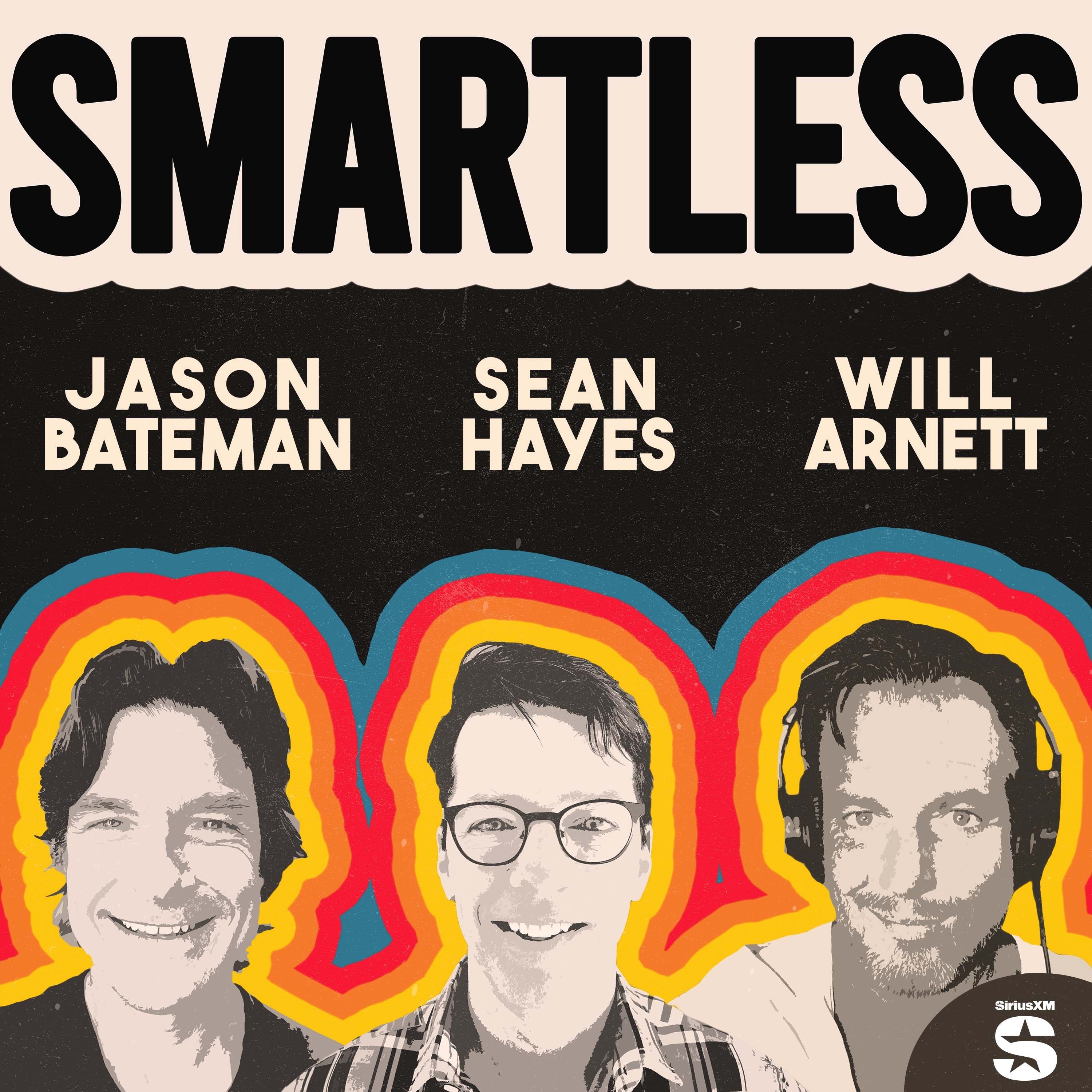
Even A-list actors think like freelancers. Jason Bateman frames his entire career as a constant hustle — always building a bridge to the next paycheck, never taking stability for granted.

Where this was said
At 3:13 · chapter starts 1:17
The episode opens with the hosts gently roasting Jason Bateman for his austere diet of sugar-free granola and unsweetened almond milk chased with yerba mate — a routine Will Arnett predicts will leave Bateman looking young in a casket. The banter pivots to Bateman's current solo living situation while working in London, with Will admitting he will soon be across the street from Jason in New York before moving to his own place. The hosts discover they all share a peculiar habit: immediately claiming the best couch spot in any room, always perpendicular to the television. Will shouts out his brother Chuck Arnett after Jason asks his name mid-thought. Sean raises whether Bateman misses human contact during his isolated stints, and Bateman explains that during a shoot he spends 12 hours with his 'new family' on set, so the isolation at home is actually welcome. The segment captures the easy, warm dynamic that defines SmartLess at its best — three longtime friends in genuine, unrehearsed conversation.
Jason Bateman admits he instantly creates a 'cave' wherever he goes — couch perpendicular to the TV, same corner every time. His friends know not to sit in his spot, and he knows he's in theirs.
Running Point, co-created by Ike Barinholtz and Mindy Kaling, was renewed for a second season.
Will Arnett introduces Ike Barinholtz as one of those rare people you're always happy to see — a Mad TV veteran, co-creator of Running Point, and breakout star of The Studio. The warmth in the room is instant.
Sam built Algrow, a SaaS for finding viral content formats, with zero coding experience using ChatGPT and Cursor. Six months later: 10,000 users, $14K/month in revenue.
Sam's first MVP threw an application error on its very first user — and he shipped it anyway. The core idea worked, and that was enough to validate the product and keep users coming back.
Sam joined Discord voice chats, muted himself, and silently screen-shared his product. Users in the chat started tagging him asking what the tool was. No pitch needed — curiosity did the selling.
Most founders post links in Discord and immediately get banned for self-promotion. Sam's approach was the opposite: build rapport, help people with the tool, let word of mouth do the work.
Find where your ICP lives. Listen before building. Validate with DMs and Loom recordings. Build in public with users inside your own Discord server. Turn early adopters into advocates with free access.
Instead of fearing the self-promo ban in large Discord servers, create your own private server for your product. You funnel in ideal customers and build a relationship that email can't replicate.
Algrow helps creators find and replicate viral video formats, starting at $25/month. It analyzes subscriber counts, average views, and trending formats — and can even generate the videos with AI.
After weeks of Sam silently screen-sharing in a Discord server, the server owner — unprompted — made a full YouTube promotional video about Algrow. Sam paid nothing and asked for nothing.
Producer Gus admits Discord never crossed his mind as a customer acquisition channel. Pat connects the insight to a broader lesson: match your distribution channel to where your actual customers live.
We use essential and analytics cookies to run Vuci. To understand how the site is used: Privacy Policy.
Install Vuci on your phone
Add it to your home screen for a faster, app-like experience.
Install Vuci on your phone
Tap the Share button, then “Add to Home Screen”.
A new version is available
Reload to get the latest Vuci.