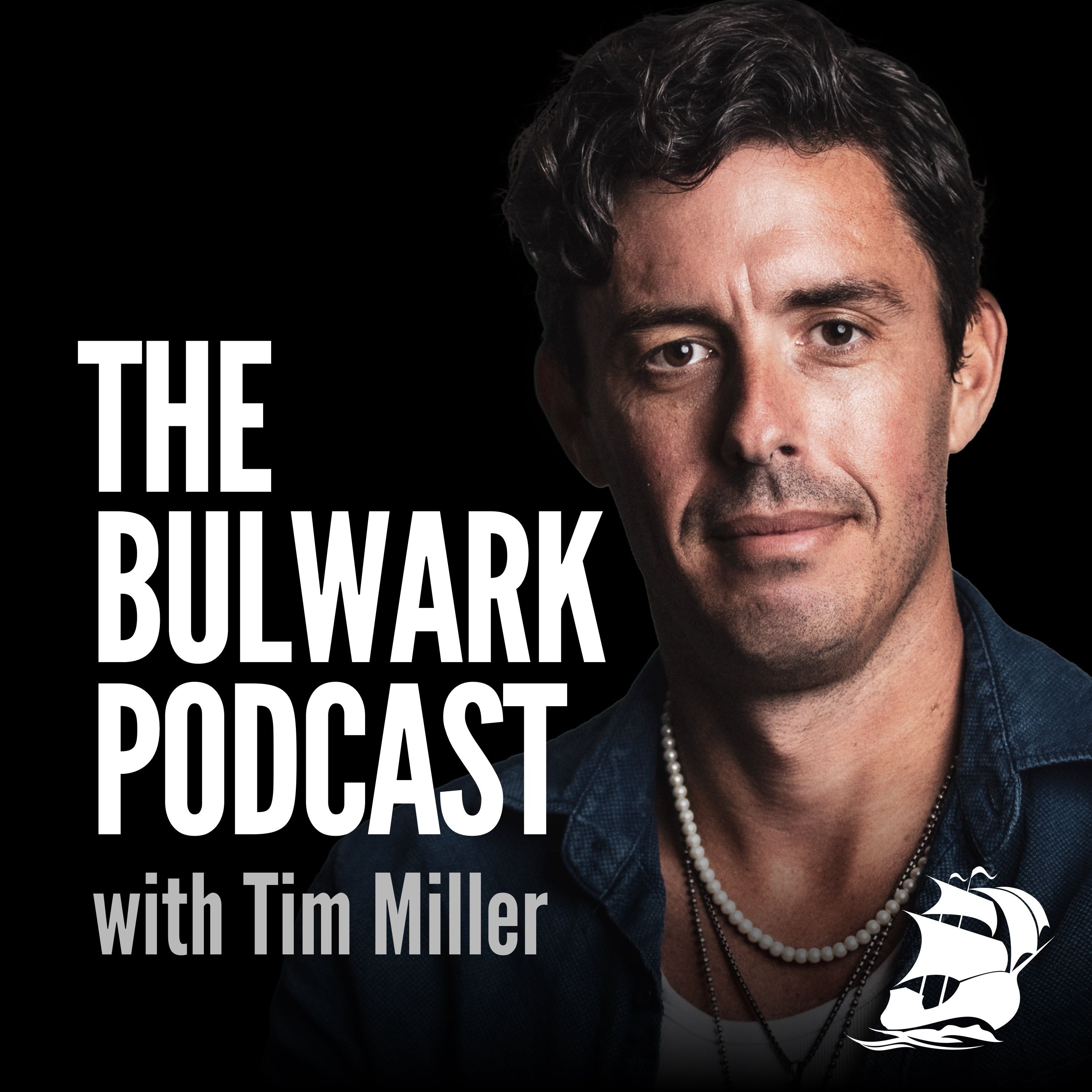
Samuel Alito once decried anti-Italian racism in The Sopranos but found zero racism in Trump's documented anti-Haitian rhetoric. Conservative justices can see racism only when it touches them personally — for everyone else, the blinders stay on.
Podbit · The Bulwark Podcast
Samuel Alito once decried anti-Italian racism in The Sopranos but found zero racism in Trump's documented anti-Haitian rhetoric. Conservative justices can see racism only when it touches them personally — for everyone else, the blinders stay on.
Where this was said
At 3:31 · chapter starts 1:40
Tim Miller opens the substantive portion of the podcast with what he describes as his greatest source of rage that morning: the Supreme Court's TPS decision, which he says effectively retroactively made illegal the status of over 300,000 Haitians who had lived and worked in the US under humanitarian protections. Jane Coaston broadens the frame immediately — the ruling affects Syrians and others too — before zooming in on the ruling's most striking detail: a split-screen between Justice Alito's majority opinion finding no racial animus in Trump's statements and Justice Kagan's dissent, which methodically catalogued Trump's anti-Haitian slurs, including calling Haiti a 'shithole country' and claiming Haitian immigrants were bringing AIDS. Coaston delivers the episode's sharpest early line: the conservative justices can see racism only when it targets them. [1] — Jane Coaston "Samuel Alito once decried anti-Italian racism in The Sopranos but found zero racism in Trump's documented anti-Haitian rhetoric. Conservati…" 03:31 As evidence she notes Alito once complained about the anti-Italian portrayal in The Sopranos — a vivid illustration of the selective outrage at work.
The Supreme Court ruling on TPS stripped legal status from over 300,000 Haitians who had fled their country under humanitarian protections.
The Supreme Court's TPS ruling affects not only Haitians but also people from Syria and other countries on temporary protective status.
Justice Alito found no racism in Trump's anti-Haitian rhetoric while Justice Kagan's dissent catalogued Trump's explicit slurs — a man who once criticized anti-Italian racism in The Sopranos.
Fei-Fei Li went back to Stanford from Google in 2018 specifically to build a multi-stakeholder governance framework for AI. Her argument: market forces are not societal norms. Just as biology uses IRBs and cars have safety laws, AI needs layered oversight from educators, governments, and the public — not just a few industry titans.
Andrew Santino's personal MCU of political villains is collapsing. He and Bobby speculated that a circulating photo of Mitch McConnell with a Chinese official was AI-generated compositing two separate images.
Mass surveillance is here to stay. The real battle isn't stopping cameras — it's ensuring judges and laws keep that data out of family court and civil disputes, admitting it only for violent crimes and national security. The surveillance economy currently yields more upside than downside, but only if we build the legal guardrails now.
When people cite Scandinavia as proof socialism works, Galloway says they've got it backwards. Northern Europe runs highly competitive free-market economies with more competition in many sectors than the US — they just make sure taxes are actually paid and redistributed. Billionaires and universal healthcare can coexist.
Two percent adjustments to income tax and stamp duty tweaks are deck-chair rearrangements. The UK's competitiveness hinges on four structural levers: currency valuation, energy costs, regulatory burden, and tax rates. Devalue the pound, build 56 nuclear plants, slash red tape, introduce a flat tax — and the country transforms.
Lisbon had one of Europe's worst heroin crises. Then Portugal legalised drugs and redirected all enforcement money into rehabilitation and housing. Crime collapsed. Addiction fell. Then politics moved the money elsewhere, and the problem started creeping back. Chesterton's Fence: you forget why you were spending that money.
Congress passed the Boland Amendment 411 to 0, explicitly banning CIA and Defense Department funds for the Contras. Reagan signed it — then immediately moved the operation deeper underground, essentially responding to a bipartisan prohibition by going more illegal.
The CIA planted mines in Nicaraguan commercial harbors, wrote the Contras' press releases taking credit, and promptly blew up ships from four allied nations. The Wall Street Journal broke the story, Congress erupted, and the Boland Amendments multiplied.
Oliver North was a decorated Marine and devout Catholic with zero covert operations experience. He ran the entire shadow war against Congress — planes, airstrips, arms shipments, shell companies — learning on the job. And by every operational measure, he crushed it.
We use essential and analytics cookies to run Vuci. To understand how the site is used: Privacy Policy.
Install Vuci on your phone
Add it to your home screen for a faster, app-like experience.
Install Vuci on your phone
Tap the Share button, then “Add to Home Screen”.
A new version is available
Reload to get the latest Vuci.
