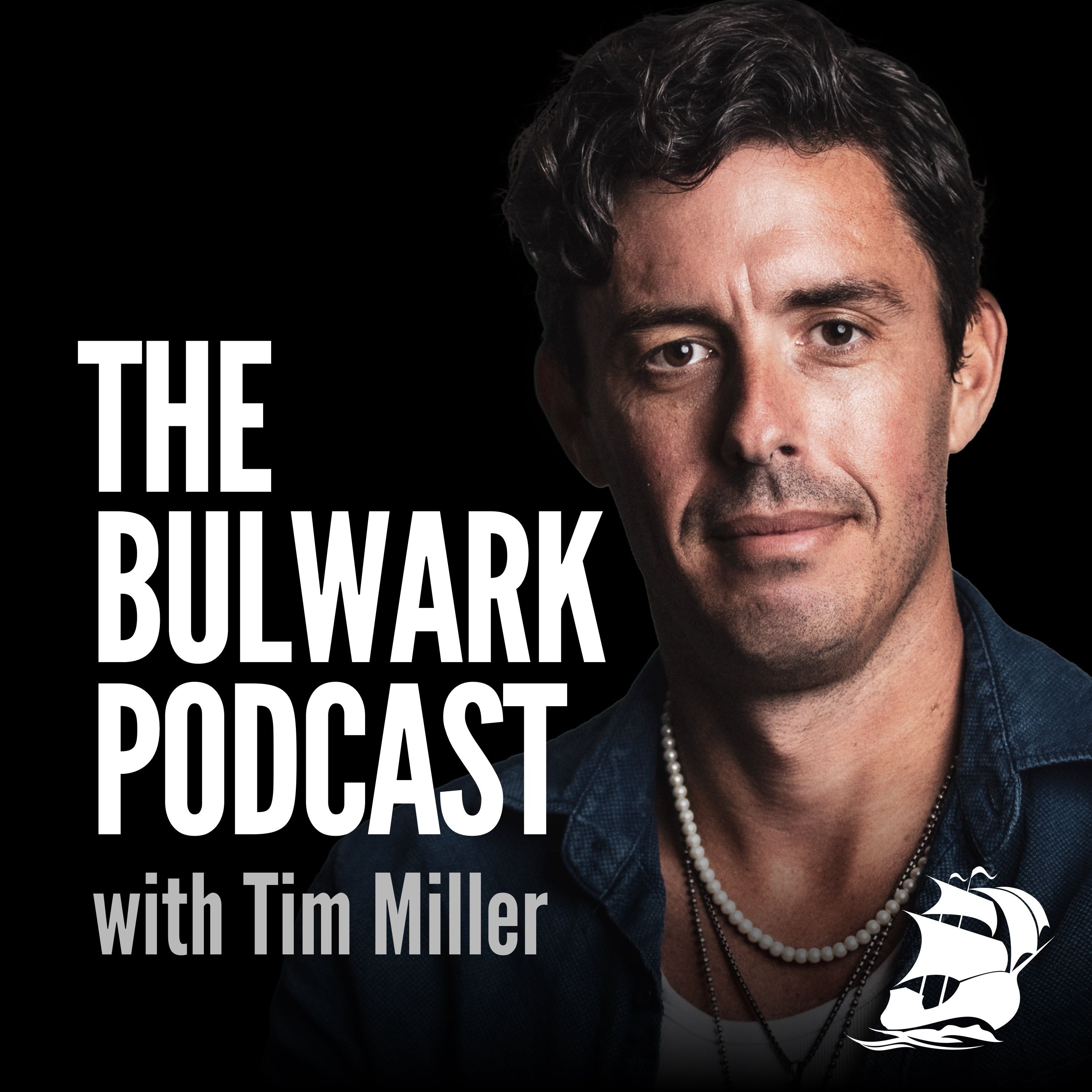
Rubio personally negotiated with El Salvador's Bukele in his palace to create the CECOT deportation arrangement, which ultimately sent innocent people to the foreign prison.
Snapshot · The Bulwark Podcast
Rubio personally negotiated with El Salvador's Bukele in his palace to create the CECOT deportation arrangement, which ultimately sent innocent people to the foreign prison.
Where this was said
At 14:30 · chapter starts 10:40
Haberman turns to one of the most astonishing periods in the book: the Musk co-presidency. Musk rejected his cramped West Wing 'hovel' and relocated to the magnificent Secretary of War suites in the Eisenhower Executive Office Building, which he made his own with large video game screens. According to Haberman's reporting, he would call Trump late at night to propose cutting government entities — including, in one instance, the Equal Employment Opportunity Commission. His unilateral decisions often surprised Trump's own official staff. He didn't always align with Stephen Miller or Russell Vought on methods, creating internal friction. His most aggressive target was USAID — a congressionally established agency — which he effectively dismantled, leaving Marco Rubio to clean up the mess. The Musk era, Haberman notes, feels like ancient history now, but it dominated the first several months of the presidency and had lasting consequences.
Elon Musk operated out of grand Secretary of War suites in the EEOB, making unilateral decisions about cutting government agencies while often leaving Trump's own staff in the dark.
Rubio sat with El Salvador's Bukele in his palace and personally hashed out the CECOT arrangement, which was supposed to target only verified gang members. The vetting proved to be fiction — innocent people, including Venezuelans with no-deportation orders, ended up in the gulag. Rubio is not the moderate anyone hoped for.
A total of 8 states have filed lawsuits against social media platforms, including an ongoing case in Tennessee, using product liability and public nuisance theories to seek accountability.
France built 56 nuclear plants in the 1970s and now has the cheapest energy in Europe, making it independent of Russian or Middle Eastern energy geopolitics.
Estonia has a single tax form, a law preventing the government from asking citizens for the same information twice, and a flat rate of tax — enabling competitive taxation.
Portugal's Lisbon, once a city with a major heroin problem, legalised drugs and redirected enforcement spending into rehabilitation and housing, dramatically reducing crime.
The first Boland Amendment banning CIA and Defense Department funds for the Contras passed the House unanimously — yet the Reagan administration ignored it.
Over just two years, Saudi Arabia alone donated $32 million to the Contra rebels, giving loosely affiliated factions millions they had no way to spend on arms.
The National Endowment for the Preservation of Liberty raised $6.3 million for the Contras but only $3.3 million reached them — a shockingly low 52% program expense rate.
Richard Secord and Albert Hakim marked up their arms shipments to the Contras by as much as 300%, making enormous personal profits from the covert operation.
Lieutenant Colonel Oliver North, tapped to run the entire covert Contra support operation, had no prior experience in covert operations whatsoever — he was learning as he went.
We use essential and analytics cookies to run Vuci. To understand how the site is used: Privacy Policy.
Install Vuci on your phone
Add it to your home screen for a faster, app-like experience.
Install Vuci on your phone
Tap the Share button, then “Add to Home Screen”.
A new version is available
Reload to get the latest Vuci.
