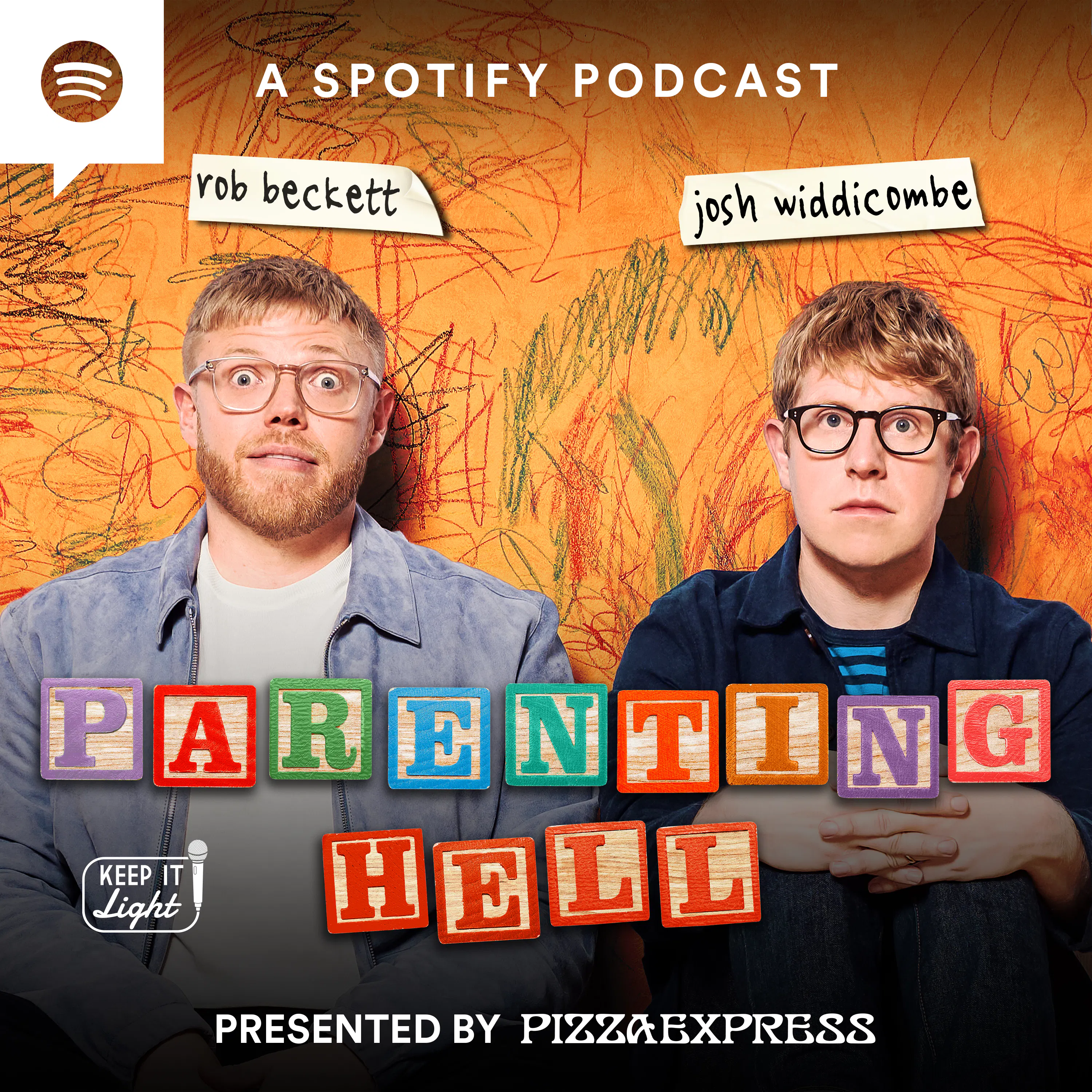
Rob diagnosed dyslexic
Rob Beckett revealed he was diagnosed with dyslexia and received a full report he has never been able to read — a fact that became a joke in his stand-up show.
Snapshot · Parenting Hell with Rob Beckett and Josh Widdicombe
Rob Beckett revealed he was diagnosed with dyslexia and received a full report he has never been able to read — a fact that became a joke in his stand-up show.
Where this was said
At 43:02 · chapter starts 42:00
Rob has been watching music documentaries about bands from his youth and feeling grateful — and quietly humbled — by how many equally talented people with equally strong work ethics just didn't get the lucky breaks he did. This opens a conversation that is unusually honest for a comedy podcast: Josh articulates the survivorship bias at the heart of most 'follow your dreams' advice, pointing out that the successful person giving it has a sample size of exactly one. Most equally talented, equally hardworking people didn't make it — and pretending they would if they just tried harder is a lie. Rob adds the sharpest point: 'If it does happen, that's not all because of you. And if it doesn't happen, that's not all because of you.' The whole exchange is one of the episode's genuine highlights — unexpectedly insightful in the middle of what has otherwise been a very light-hearted hour. [1] — Josh Widdicombe "Successful people giving motivational advice are drawing on exactly one data point: themselves. Rob and Josh argue that for every person wh…" 41:47 [2] — Rob Beckett "If it does happen, that's not all because of you. And if it doesn't happen, that's not all because of you." 42:38
Rob and Josh agreed that career success involves significant luck, and telling people 'follow your dreams and it'll happen' is misleading because most equally talented, hardworking people don't break through.
Producer Michael revealed he only needs 15 minutes to get ready, setting his alarm at 7:45 for an 8 AM departure because he has no hair to worry about and wears an effective uniform.

Despite predictions that AI would eliminate radiologists, the Mayo Clinic's radiology staff grew 55% after AI arrived at reading scans.
In 2025, radiology was the second-highest paid medical specialty in America, with average incomes 48% higher than a decade ago.
A study across 3 hospitals found radiologists spent only 36% of their time reading scans — the part AI can do — with the rest being human judgment.

Robert Greene notes that one in six Americans is on some form of drug to deal with depression, suggesting a deep societal disconnection from meaningful experience.
Spencer Greenberg and Jeremy Stevenson analyzed almost 500 self-improvement techniques and found they all reduce to just 12 underlying psychological drivers.
Cold exposure has good short-term alertness benefits but the evidence base for long-term health benefits is much weaker than popularly believed.
In a randomized study of 20 habit-formation techniques run on hundreds of people, almost none of the techniques produced statistically meaningful results.
People given a tiny-habit fallback option (e.g. 10 squats instead of gym) were actually MORE successful at completing the full habit, not less.
The most effective habit-formation technique was 'habit reflection' — recalling a past successful habit, writing down what helped, then applying those lessons to a new habit.
We use essential and analytics cookies to run Vuci. To understand how the site is used: Privacy Policy.

Install Vuci on your phone
Add it to your home screen for a faster, app-like experience.
Install Vuci on your phone
Tap the Share button, then “Add to Home Screen”.
A new version is available
Reload to get the latest Vuci.