Confidence is not a prerequisite for brave action — it's a consequence of it. Your brain only builds genuine confidence after collecting repeated evidence that you can survive hard things.
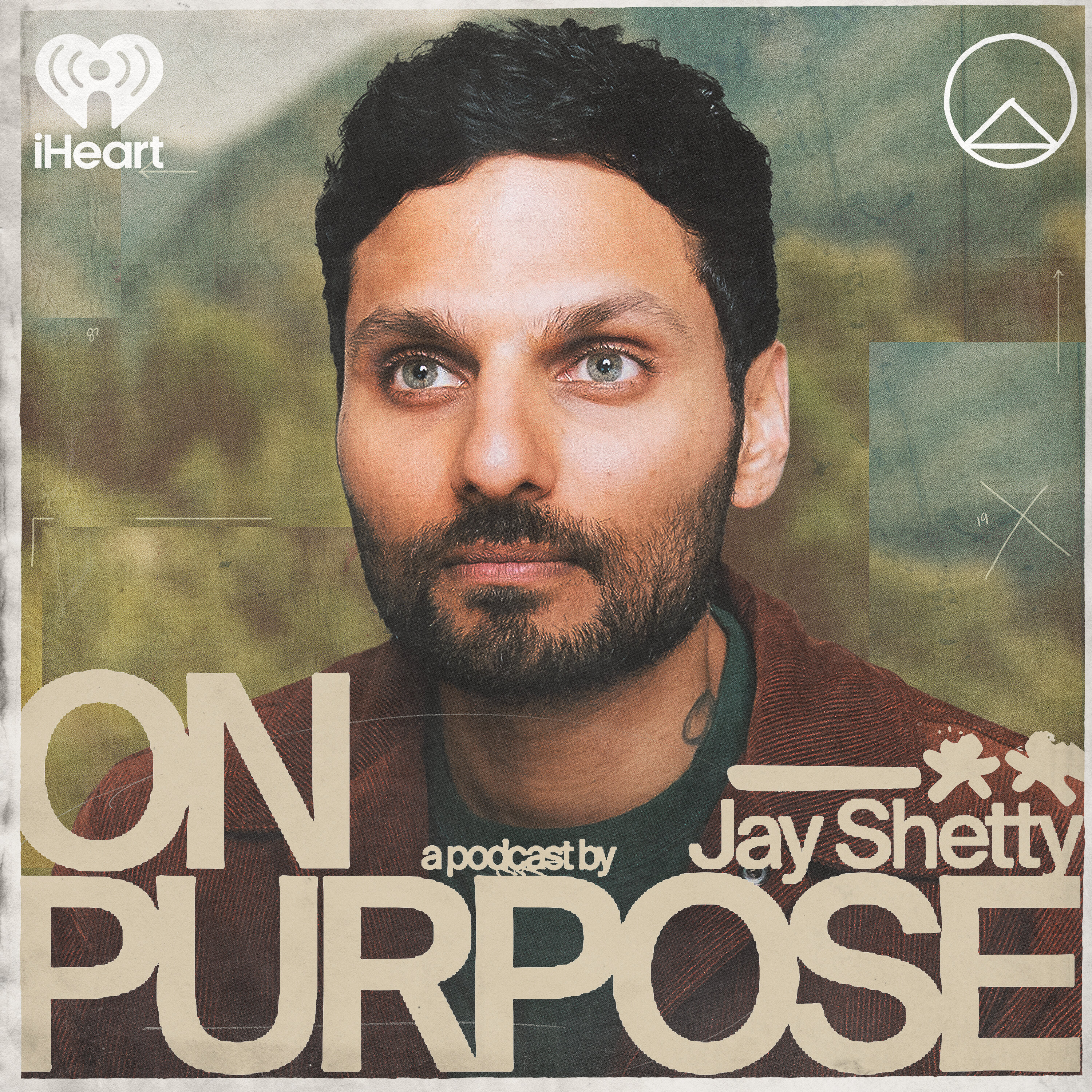
Podbit · On Purpose with Jay Shetty
Confidence is not a prerequisite for brave action — it's a consequence of it. Your brain only builds genuine confidence after collecting repeated evidence that you can survive hard things.
Where this was said
At 7:18 · chapter starts 6:12
One of Jay's most counterintuitive points in the episode is about the nature of the body's signals before a scary act. We wait to feel calm before acting, he says, because we assume the racing heart and butterflies mean we are unsafe. But anxiety and excitement are physiologically identical — both high-arousal states produced by the same nervous system [1] — Jay Shetty "Anxiety and excitement are both high-arousal states. The racing heart and sweaty palms your body produces before a scary moment aren't alwa…" 06:25 . The butterflies before asking someone on a date and the butterflies before jumping out of a plane feel the same in your body. Your nervous system, Jay explains, genuinely cannot always distinguish between danger and growth. This reframe has practical power: if you can accept that physical discomfort before a risky action is ambiguous — not necessarily a warning but possibly your body preparing you to do something more expansive — then you no longer need to wait for calm before you act. Confidence, he emphasizes, does not come first. Confidence only accumulates after your brain collects enough evidence that you've repeatedly handled situations you once thought were impossible for you.
Anxiety and excitement are both high-arousal states. The racing heart and sweaty palms your body produces before a scary moment aren't always warning signs — sometimes they're your body preparing you to expand.
Anxiety and excitement are both high arousal emotional states; the racing heart and sweaty palms don't always mean danger — sometimes it means your body is preparing for growth.
Anxiety is not fear. Fear has an object — a wolf, a threat. Anxiety is the vertigo of standing at the edge of infinite possibility and knowing that choosing any one thing closes off all the others. Kierkegaard argued that the depth of your anxiety is proportional to the depth of your potential.
AI nailed Andrew Huberman's vertigo-vs-low-blood-pressure diagnosis because that pattern has been reported millions of times. But every patient's liver is different and data on liver surgeries is scarce worldwide — making solo robot surgery dangerous. The rule is simple: data abundance means AI can help; data scarcity means keep the human in the loop.
Fei-Fei Li's father had liver surgery performed by a da Vinci robot guided by a surgeon. The result: 10 times less blood loss than a typical procedure. This isn't replacement — it's the gold standard of human-machine collaboration, where the human's judgment and the robot's precision combine.
US drug overdose deaths fell from 110,000 to roughly 70,000 — the biggest CDC-recorded single-year drop ever. Men's rates fell 27% in one year, and the steepest decline of all was among 15–24-year-olds, down 37%. The crisis narrative around young men needs to make room for signs of genuine progress.
Kessler thought his grief expertise would protect him. It didn't. When his son David died unexpectedly, he found himself on the floor — and eventually realized that acceptance alone wasn't enough. That unmet need became the sixth stage: finding meaning.
Grief isn't just death — it's any unwanted change. Kessler lectured at Coca-Cola and General Mills not because they had lots of funerals, but because change management is grief management. People who grieve well live well.
Witnessing someone's grief isn't just emotional support — it's an essential act of healing. Kessler argues grief is a severance and connection heals it. But real witnessing has two steps: seeing the pain AND affirming the person's capacity to recover.
Avoiding grief isn't free — it's exhausting. Kessler's beach ball metaphor nails it: pushing a small balloon down is easy, but holding a massive beach ball underwater takes constant, draining energy. Unattended feelings don't disappear; they just consume you.
Most people try to control their environment to avoid triggers. Kessler flips this entirely: triggers aren't problems to manage around — they're a detailed map to your pain and your healing. Every trigger points directly to what needs attention.
We use essential and analytics cookies to run Vuci. To understand how the site is used: Privacy Policy.
Install Vuci on your phone
Add it to your home screen for a faster, app-like experience.
Install Vuci on your phone
Tap the Share button, then “Add to Home Screen”.
A new version is available
Reload to get the latest Vuci.
