Speaker
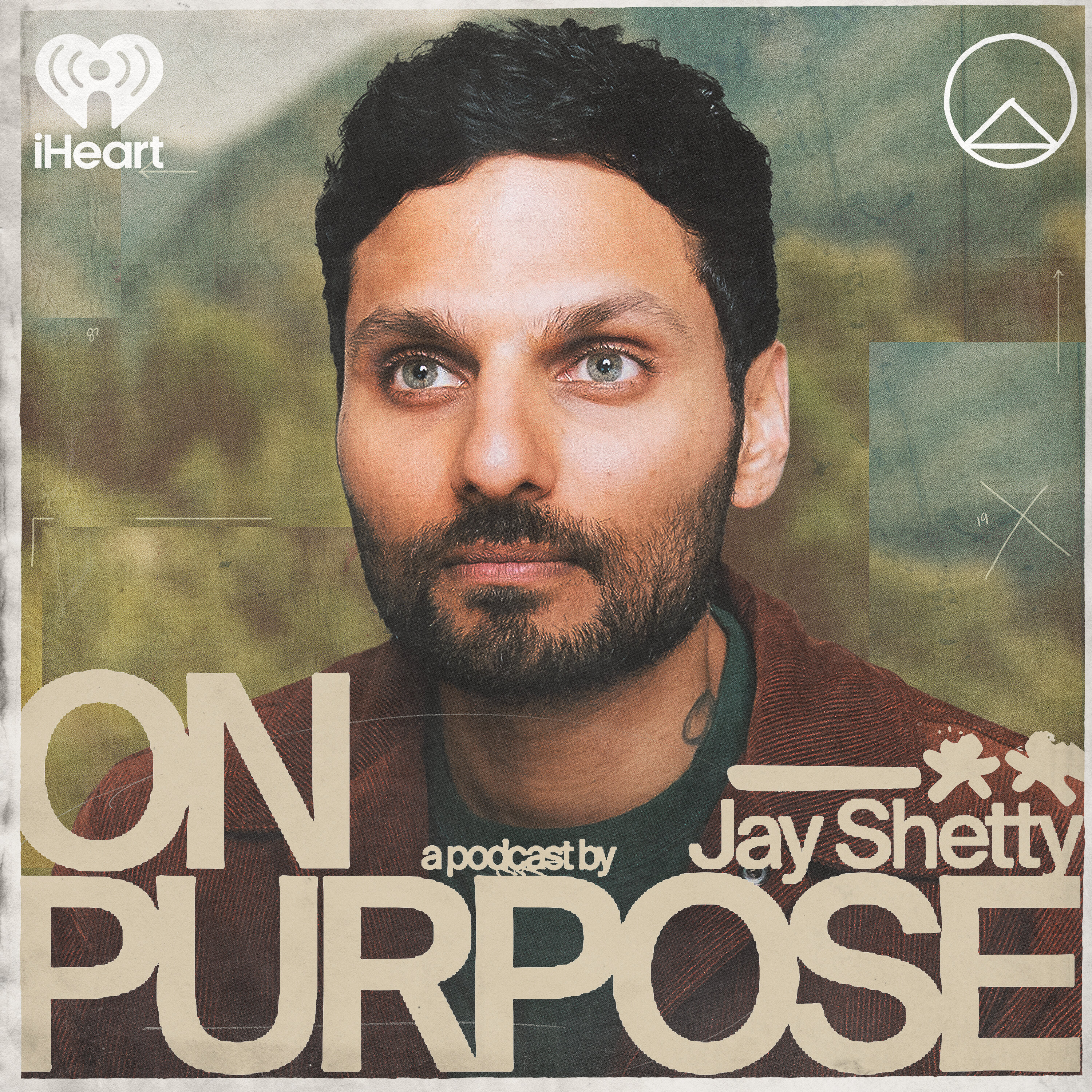
Jay Shetty
Appearances over time
11 episodes
Episodes
11 CAMILA MENDES: "Perfectionism Was Ruining My Life"
 Your Dream Life Is 3 Brave Decisions Away
 JAKE SHANE: “I Was Scared People Would Find Out Who I Am”
How to Let Go & Start Over (4 Shifts That Will Change Your Life)
JAKE SHANE: “I Was Scared People Would Find Out Who I Am”
How to Let Go & Start Over (4 Shifts That Will Change Your Life)
 Jay’s Must-Listens: The Biggest Lessons From 10 of Our Most Inspiring Conversations
 Lucy Guo: The Fastest Way to Build a Business Today (The #1 Strategy That Saves You Months of Wasted Work)
 John Mackey: Not Sure You're on the Right Path In Your Career? (Use THIS Framework When You Feel Lost About What's Next)
 Dr. Jill Biden: The Hardest Moments No One Saw (The Untold Story of the White House Years)
 Riz Ahmed: How to Silence Your Inner Critic (And Build REAL Self Worth)
 Miles Chamley-Watson: #1 Mindset Shift That Changes Everything (Try THIS to Stay Sharp, Focused, and In Control)
 7 Mindset Shifts That ACTUALLY Work (Finally Change How You Think, React & Show Up)
Podcasts
Quotes & moments

Treating pain as a temporary visitor rather than a permanent identity is what separates people who recover from those who get stuck.
Psychologists describe loss aversion as a cognitive bias where the emotional impact of a loss feels roughly twice as intense as the joy of an equivalent gain.
Under Mackey's 44-year tenure, Whole Foods grew from a single Austin, Texas store to 540 locations across the US, UK, and Canada with $22B in annual sales.
Jay Shetty argues courage is not an innate personality trait but a learnable skill that can be trained through repeated behavior.
The sunk cost fallacy describes how people keep investing in something simply because of what they've already spent, even when continuing no longer makes sense.
The show Bait, starring and created by Riz Ahmed, scored 95% on Rotten Tomatoes and sparked widespread cultural conversations about identity, shame, and mental health.
One year of repeatedly interrupting avoidance — not one giant decision — can completely alter the trajectory of your life.
Martin Seligman found people who explain setbacks as temporary, specific, and external recover faster and more completely than those who see them as permanent and personal.
Waiting to feel ready is one of the biggest illusions keeping people stuck; readiness is built through action, not preparation.
Aaron Beck, founder of CBT, found that automatic thoughts in people with depression feel like unquestionable truth but are actually distorted hypotheses that can be tested.
Research on regret shows people regret actions more intensely short-term, but over the long term they regret inactions more deeply because the mind returns to the life that might have been.
Psychological transference means a disproportionate emotional reaction to a present person is usually activating unresolved wounds from much earlier relationships.
Every time you avoid something uncomfortable, your brain experiences relief and learns that avoidance was the correct decision, making fears grow stronger over time.
Jay's key clarity question: if this relationship, job, or goal walked into your life today exactly as it is, would you choose it again — removing nostalgia from the equation.
Jay argues that the years you still have ahead matter more than the years already spent — stop making your future pay for your past.
Disproportionate emotional reactions are almost never about the present moment — they're the sum of every past hurt that person reactivated in your nervous system. Jung's shadow concept adds another layer: what infuriates you in others often reflects what you've suppressed in yourself.
Waiting for clarity before acting is the most common form of self-sabotage. Csikszentmihalyi's flow research and neuroscience both confirm that the brain generates meaning retrospectively from lived experience — meaning is a byproduct of doing, not thinking.
Your self-narrative predicts your resilience more reliably than what actually happened to you. Dan McAdams at Northwestern found that people who frame their past as leading to growth are measurably more psychologically healthy than those who frame it as evidence of damage.
The arrogance that infuriates you, the neediness that exhausts you — Jung observed that what we most dislike in others is frequently what we most refuse to see in ourselves. Your reactions are not a verdict on them. They are a map of you.
The ancient Indian concept of sangha — deliberately surrounding yourself with people whose presence pulls you toward your highest self — was a practical behavioral design strategy, not spiritual fluff. Modern social contagion research validates it completely.
Two people can go through identical hardships and construct completely different narratives. McAdams found that those who story their past as leading to growth are significantly more resilient — not because of what happened, but because of how they chose to tell it.
Most people don't just feel pain after a setback — they move into it and redecorate. Jay Shetty's postcard metaphor draws on Martin Seligman's explanatory style research: people who see setbacks as temporary and specific recover faster and more completely than those who make pain their permanent identity.
You don't change by understanding a mindset — you change by practicing it until it becomes the lens through which you automatically see. That takes repetition, time, and the courage to apply the idea even when the situation makes the old habit easier.
You're not just influenced by your five closest friends — you're shaped by their friends' friends too. Nicholas Christakis's decades-long Yale study found that happiness, obesity, loneliness, and smoking spread through social networks up to three degrees of separation.
Willpower is not the problem. Environment is. James Clear's research — backed by hundreds of studies — shows that behavior is primarily driven by environmental cues, not conscious intention. Designing your environment is more powerful than any vision board or motivational speech.
Passion is biologically designed to fade — it's a starter motor, not an engine. The relationships that last are built on daily, mundane choices to turn toward each other, what John Gottman calls bids for connection. Love is a practice, not a state.
When Riz Ahmed was 8, skinheads pressed a knife to his brother's throat. That moment of violent othering didn't just scar him — it sparked his entire creative identity, launching a lifelong code-switch between cultures that eventually became his art.
Riz Ahmed started filming Star Wars: Rogue One — his first-ever studio movie — and one week in, woke up unable to walk. He was hospitalised for 2.5 months, dropped to under 50 kilograms, and feared he might die. While friends texted about his Star Wars photos, he was desperately trying to get a nurse's attention so he wouldn't wet the bed.
Riz Ahmed told people from marginalised backgrounds that the very thing creating resistance in their lives is also the key that unlocks something no one else can offer. He felt like an alien at Oxford. He's grateful now he stuck it out. The obstacle is the way.
Automatic thoughts feel like certified letters from reality — but Aaron Beck proved they're just distorted hypotheses. The radical shift is treating every negative thought not as truth, but as a claim that needs evidence before you give it your belief.
Analysis
What they talk about
- Society & Culture 44%
- Health & Fitness 30%
- Business 8%
- Education 8%
- Science 6%
- Religion & Spirituality 4%
Connections
Shows they appear on and people they share episodes with. Drag to explore.
