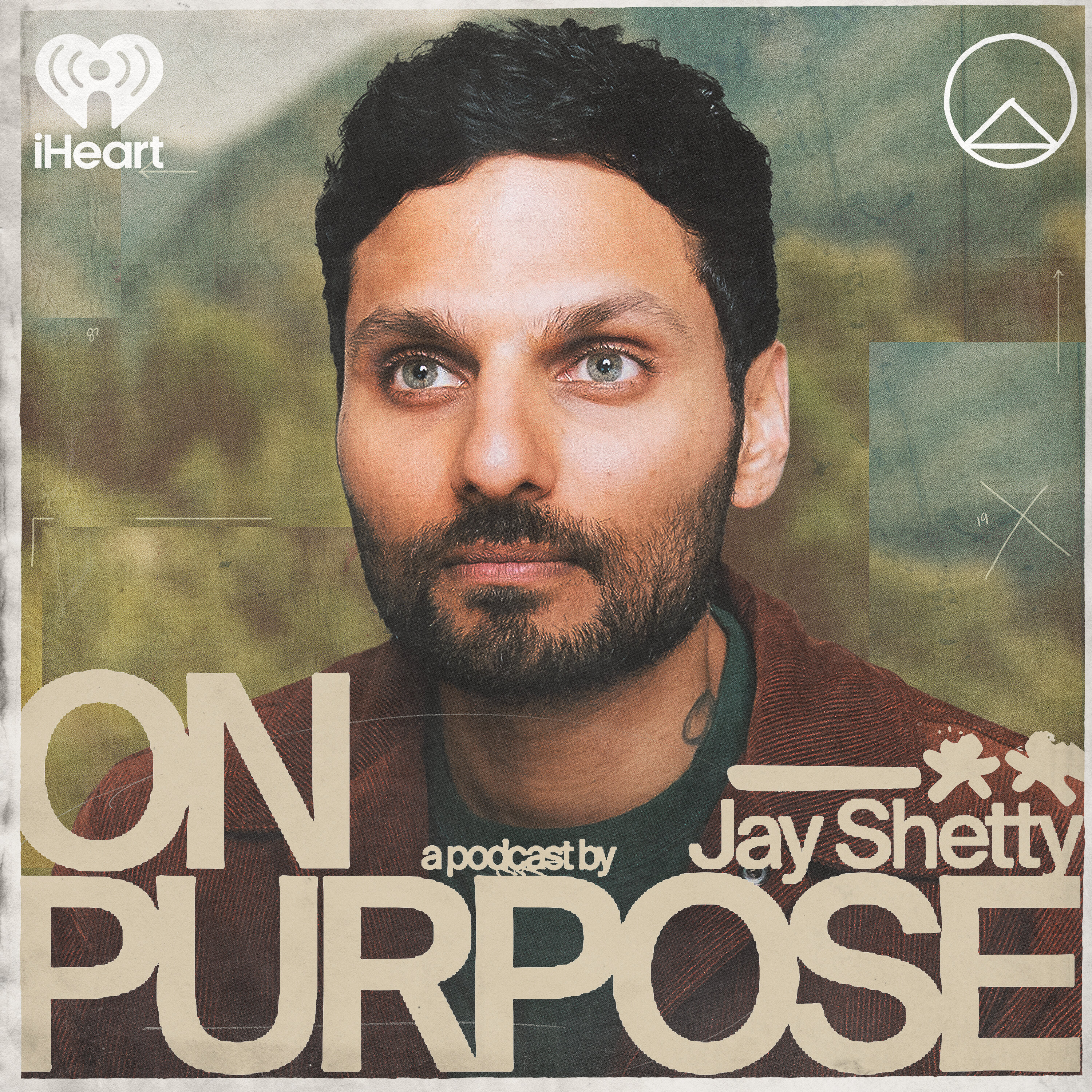
Jay's key clarity question: if this relationship, job, or goal walked into your life today exactly as it is, would you choose it again — removing nostalgia from the equation.
Snapshot · On Purpose with Jay Shetty
Jay's key clarity question: if this relationship, job, or goal walked into your life today exactly as it is, would you choose it again — removing nostalgia from the equation.

Where this was said
At 6:30 · chapter starts 2:30
This chapter delivers the episode's sharpest psychological content. Jay explains loss aversion — the cognitive bias where the emotional sting of a loss registers as roughly twice as painful as an equivalent gain feels good — and applies it directly to real life decisions [1] — Jay Shetty "Loss aversion: losses feel 2x as painful: Psychologists describe loss aversion as a cognitive bias where the emotional impact of a loss fee…" 03:15 . The result: your brain isn't asking 'how will this help me?' but 'what am I about to lose?' and when the answer is familiarity, identity, status, or comfort, it becomes fiercely protective. He then introduces the sunk cost fallacy, illustrated with relatable small-scale examples — finishing a book you hate, eating a meal you're full from — before escalating to the high-stakes version: staying in a five-year relationship or ten-year career because you don't know who you'd be without it [2] — Jay Shetty "Sunk cost fallacy keeps people stuck: The sunk cost fallacy describes how people keep investing in something simply because of what they've…" 04:55 . The key insight lands clearly: the years already spent are not the only years that matter. The years ahead matter more. And sometimes the most loving act toward your future self is to stop making it pay the debt of your past.
Psychologists describe loss aversion as a cognitive bias where the emotional impact of a loss feels roughly twice as intense as the joy of an equivalent gain.
Loss aversion makes the emotional pain of letting go feel twice as intense as any possible gain. Pair that with the sunk cost fallacy and your brain will keep you chained to situations you've already outgrown.
The sunk cost fallacy describes how people keep investing in something simply because of what they've already spent, even when continuing no longer makes sense.
Jay argues that the years you still have ahead matter more than the years already spent — stop making your future pay for your past.
Strip away nostalgia and ask one question: if this situation walked into your life today, exactly as it is right now, would you choose it? If the answer is no, the work is learning to let go without turning the past into a mistake.
Kierkegaard's concept of anxiety as 'the dizziness of freedom' predates Freud's psychological framework by roughly 60 years, yet modern research has since validated his core claims about commitment and identity.
Between 2003 and 2020, Americans accumulated roughly 24 extra hours per month spent alone — the equivalent of a part-time job's worth of isolation, and that's before the pandemic.
Median age at first marriage climbed from 21 (women) and 23 (men) in the 1970s to nearly 29 (women) and 30 (men) today — a rise of 6–8 years per gender, extending the 'emerging adulthood' liminal phase.
San Francisco's average rent rose 18% over the past two years to $3,728/month, surpassing New York City as the most expensive rental market in the country.
San Francisco's average monthly rent now stands at $3,728, surpassing New York City to become the most expensive rental city in the United States.
At a childhood sleepover, Bobby Lee's friends drew penises on his face and he walked 7 miles home on a dirt road before being picked up by Eric Purvis's mom.
In 1950, about 60% of the world lived in extreme poverty; today it's about 1 in 10, attributable to capitalist economic growth.
From 2021 to 2024, 6 million children fell below the poverty line in the US after the expanded child tax credit expired.
Private domestic infant and international adoptions typically cost $40,000 to $70,000, while foster care adoption is the most affordable route at $0 to $2,000.
We use essential and analytics cookies to run Vuci. To understand how the site is used: Privacy Policy.
Install Vuci on your phone
Add it to your home screen for a faster, app-like experience.
Install Vuci on your phone
Tap the Share button, then “Add to Home Screen”.
A new version is available
Reload to get the latest Vuci.