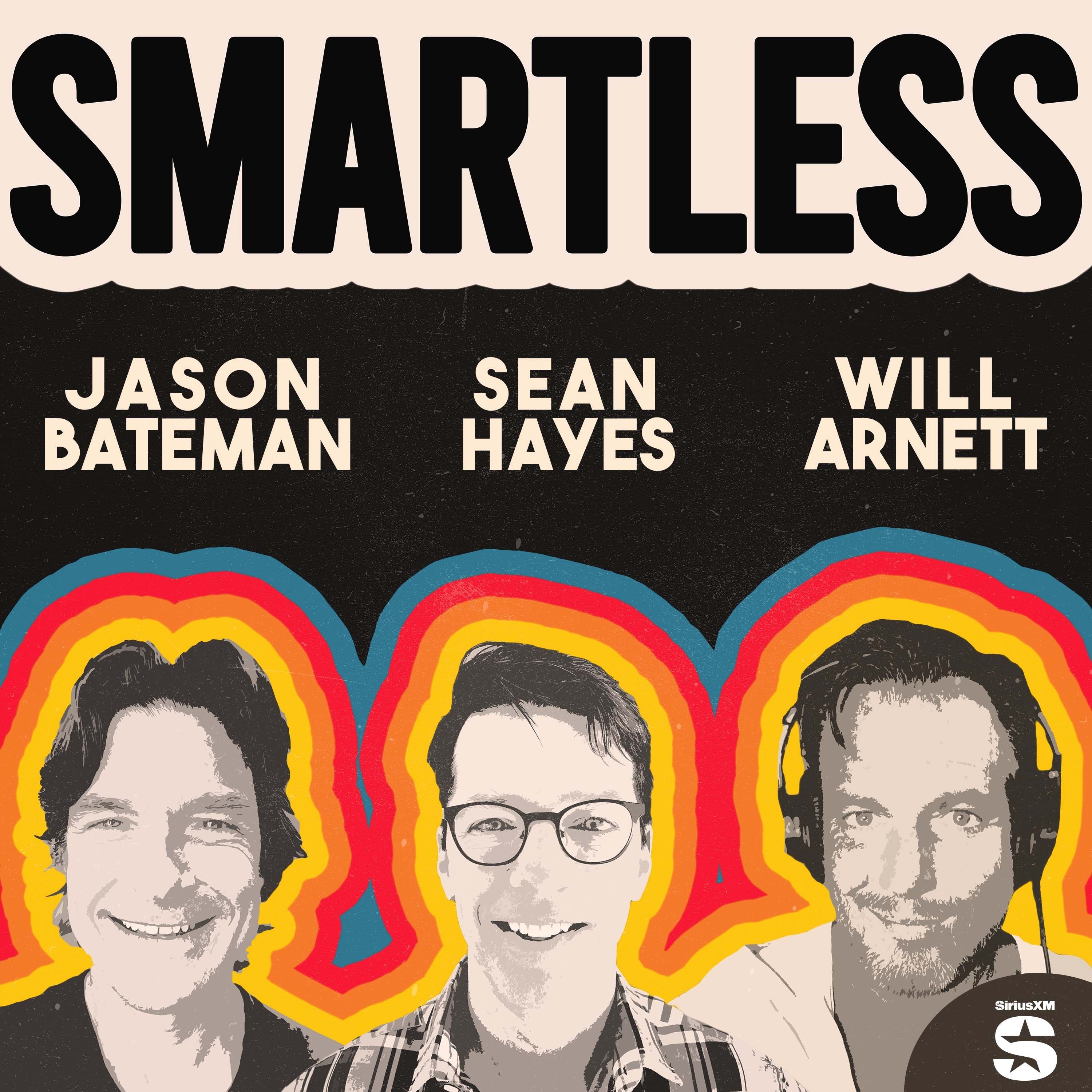
SmartLess

Podbit · SmartLess

"Marcus Mumford"

Explore episode Jul 27, 2026
Society & Culture
Why Famous People Shouldn't Go Backstage

"Marcus Mumford" · Jul 27, 2026 Society & Culture

Going backstage uninvited after a show is arrogant, not flattering. Both Jason and Marcus agree: sharing fame doesn't mean you're welcome in someone's dressing room.


Where this was said

Backstage Etiquette: Costner, Kendrick, and the Rules of Fame

At 9:00 · chapter starts 7:10

Jason argues it's presumptuous for famous audience members to assume they're welcome backstage — you're not doing the performer a favour by showing up. Marcus agrees instinctively, then pivots to a story that perfectly illustrates the opposite: Kendrick Lamar headlined Bonnaroo and 'sent word down from on high' that Kendrick would like to see Marcus. When Kendrick summons you, you go. Marcus walked in to find Kendrick already stripped to his underwear, utterly unconcerned. Pure gumption. Sean then counters with the most famous backstage slight in pop history: Kevin Costner telling a post-show, sweat-drenched Madonna that her show was 'really neat.' She turned to the camera the moment he left and essentially dismissed him on the spot. The contrast between Kendrick's radical confidence and Costner's polite cluelessness gives the segment its brilliant comic energy.

Similar podbits

Society & Culture
Kierkegaard's Prophecy: Why Infinite Options Create Maximum Misery

Finding Your Life Path, Solved · Sep 2, 2026 Society & Culture

More freedom doesn't produce more happiness — it produces more anxiety. Kierkegaard identified this 180 years ago: the more options you have, the more you feel the 'dizziness of freedom,' a paralytic unease at having to choose any single one. The freest generation in history is, by his prediction, exactly the most anxious.

Society & Culture
The Infinite vs. the Finite: The Core Tension That Defines You

Finding Your Life Path, Solved · Sep 2, 2026 Society & Culture

Every person lives in constant tension between infinite possible selves and the finite, limited self they actually are. Tipping too far toward infinite possibility produces a loss of identity; too much confinement in the finite produces stagnation. Kierkegaard argued that this tension is never solved — only managed.

Society & Culture
The Cold Pool Metaphor: Why Commitment Feels Like Liberation

Finding Your Life Path, Solved · Sep 2, 2026 Society & Culture

Standing outside a cold pool imagining reasons not to jump is the exact experience of pre-commitment anxiety. Once you jump, the shock passes and you wonder why you ever hesitated. The same mechanism governs every significant commitment in life — the dread is always on the outside, the relief on the inside.

Society & Culture
The Extended Adolescence Trap: How Modern Culture Engineered a Decade of Indecision

Finding Your Life Path, Solved · Sep 2, 2026 Society & Culture

Traditional societies had rites of passage that closed off childhood and opened adulthood. Modern society kept the in-between liminal phase but eliminated the ritual that resolved it. The result is 'emerging adulthood' — a decade or more stuck in the transition — engineered by rising education requirements, women entering the workforce, and delayed marriage.

Society & Culture
Positive vs. Negative Freedom: What Commitment Actually Gives You

Finding Your Life Path, Solved · Sep 2, 2026 Society & Culture

When Mark Manson proposed to his wife, software he didn't know was running — the low-level assessment of sexual market value and other options — suddenly shut down. Commitment doesn't take freedom away. It trades optionality (freedom to do many things) for focus (freedom from distraction). John Dewey called these positive and negative freedom, and the latter is more powerful.

Society & Culture
Mark Manson's Aesthetic Years: The Nomad Who Had to Narrow Down

Finding Your Life Path, Solved · Sep 2, 2026 Society & Culture

Mark Manson spent years as a location-independent digital nomad — always a new country, a new woman, a new venture. Then the diminishing returns kicked in: countries started feeling the same, dates felt identical, businesses all frustrated him. The cure wasn't more novelty. It was narrowing: one place, one person, one career.

Society & Culture
Seth Godin's Dip Applied to Life: Why Institutions Kept Us From Quitting

Finding Your Life Path, Solved · Sep 2, 2026 Society & Culture

Every meaningful commitment has a dip — an initial peak of excitement, a brutal trough of difficulty, and a second higher peak for those who push through. Institutions once kept people in the dip long enough to reach the other side. With infinite optionality and no institutions, everyone bails at the bottom and restarts the cycle of shallow first peaks.

Society & Culture
Kierkegaard's Three Stages of Commitment

Finding Your Life Path, Solved · Sep 2, 2026 Society & Culture

Stage one — the aesthetic — is the default: chasing sensation, novelty, and keeping every door open. Stage two — the ethical — is learning to choose with eyes wide open, accepting the trade-offs. Stage three — the religious — is when a commitment becomes so total that it no longer feels like a choice. It just feels like who you are.

Society & Culture
The Religious Stage: When Commitment Becomes Absurd — and That's the Point

Finding Your Life Path, Solved · Sep 2, 2026 Society & Culture

The ethical stage is rational commitment — you can explain your choices. The religious stage is when your commitment exceeds rational justification. You can't explain why. It just feels like it chose you. Kierkegaard called this the 'virtue of the absurd' — and it's represented not just in faith but in the entrepreneurs, artists, and athletes who can't imagine doing anything else.