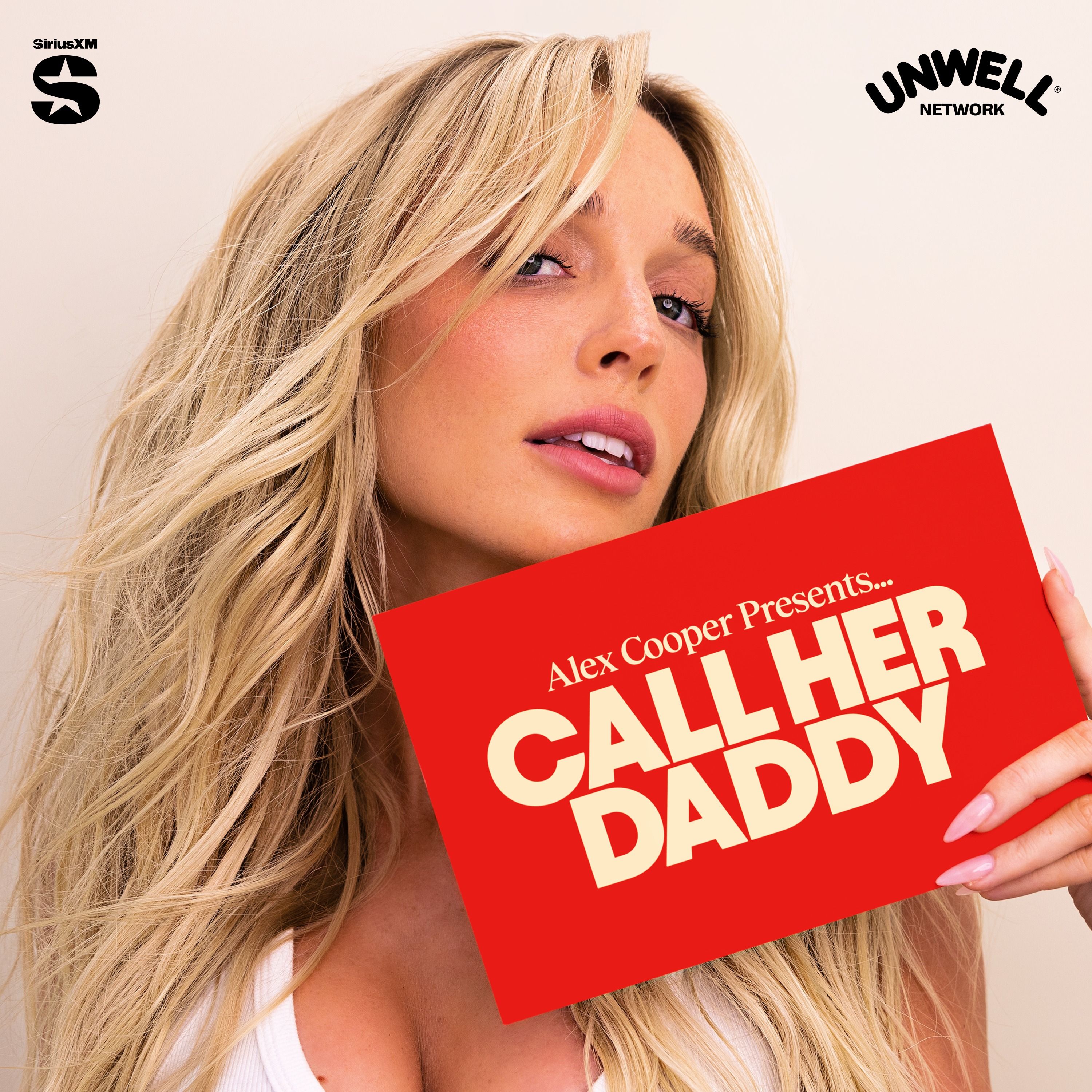
Paris Hilton learned a boyfriend had cheated on her not from a friend or a confrontation, but from TMZ. She says she reacts to cheating by going completely silent — no confrontation, just a permanent ghost.
Podbit · Call Her Daddy
Paris Hilton learned a boyfriend had cheated on her not from a friend or a confrontation, but from TMZ. She says she reacts to cheating by going completely silent — no confrontation, just a permanent ghost.

Where this was said
At 16:16 · chapter starts 13:13
Alex asks about first kisses and gets two stories for the price of one. The first happened in sixth grade at a classmate's house: spin the bottle, two best friends, Bert and Jared. The second was Vegas, which prompts the real revelation. Nicole, using her parents' divorce as cover, told her mom she was with her dad and her dad she was with her mom — then joined Paris's family trip to Las Vegas at age 11. [1] — Nicole Richie "Nicole Richie used her parents' divorce as cover to sneak to Vegas at age 11. She and Paris would sneak into the Starlight Express musical …" 16:57 By day, they'd take taxis off the Strip to exotic pet stores at the Boulevard Mall, buying ferrets and chinchillas to smuggle back into California. By night, they snuck into Starlight Express. The boys who got kissed in Vegas were from their school, apparently not present for the chinchilla portion of the trip. The whole section paints a picture of two children whose privileged but surprisingly unsupervised lives gave them an appetite for low-stakes adventure.
Paris Hilton and Nicole Richie have been friends since they were two years old, attending the same school and sharing piano and tap lessons.
Paris Hilton and Nicole Richie have been inseparable since the age of two. Their lives were so intertwined growing up — same school, same extracurriculars, matching outfits bought by Nicole's mom — that they were treated as a single unit. If one got socially exiled, both were out.
Nicole Richie's first real boyfriend had an AOL screen name of Playa4life. He cheated on her three times — including once on the Peter Pan ride at Disneyland. She uncovered the last betrayal through an elaborate conference-call trap before eventually confronting a girl at a party who physically launched her across the room.
Nicole Richie's first real boyfriend, whose AOL name was Playa4life, cheated on her three times — once on the Peter Pan ride at Disneyland.
Paris Hilton revealed she once found out a boyfriend had cheated on her by reading about it on TMZ, calling it humiliating on top of heartbreaking.
More freedom doesn't produce more happiness — it produces more anxiety. Kierkegaard identified this 180 years ago: the more options you have, the more you feel the 'dizziness of freedom,' a paralytic unease at having to choose any single one. The freest generation in history is, by his prediction, exactly the most anxious.
Every person lives in constant tension between infinite possible selves and the finite, limited self they actually are. Tipping too far toward infinite possibility produces a loss of identity; too much confinement in the finite produces stagnation. Kierkegaard argued that this tension is never solved — only managed.
Standing outside a cold pool imagining reasons not to jump is the exact experience of pre-commitment anxiety. Once you jump, the shock passes and you wonder why you ever hesitated. The same mechanism governs every significant commitment in life — the dread is always on the outside, the relief on the inside.
Traditional societies had rites of passage that closed off childhood and opened adulthood. Modern society kept the in-between liminal phase but eliminated the ritual that resolved it. The result is 'emerging adulthood' — a decade or more stuck in the transition — engineered by rising education requirements, women entering the workforce, and delayed marriage.
When Mark Manson proposed to his wife, software he didn't know was running — the low-level assessment of sexual market value and other options — suddenly shut down. Commitment doesn't take freedom away. It trades optionality (freedom to do many things) for focus (freedom from distraction). John Dewey called these positive and negative freedom, and the latter is more powerful.
Mark Manson spent years as a location-independent digital nomad — always a new country, a new woman, a new venture. Then the diminishing returns kicked in: countries started feeling the same, dates felt identical, businesses all frustrated him. The cure wasn't more novelty. It was narrowing: one place, one person, one career.
Every meaningful commitment has a dip — an initial peak of excitement, a brutal trough of difficulty, and a second higher peak for those who push through. Institutions once kept people in the dip long enough to reach the other side. With infinite optionality and no institutions, everyone bails at the bottom and restarts the cycle of shallow first peaks.
Stage one — the aesthetic — is the default: chasing sensation, novelty, and keeping every door open. Stage two — the ethical — is learning to choose with eyes wide open, accepting the trade-offs. Stage three — the religious — is when a commitment becomes so total that it no longer feels like a choice. It just feels like who you are.
The ethical stage is rational commitment — you can explain your choices. The religious stage is when your commitment exceeds rational justification. You can't explain why. It just feels like it chose you. Kierkegaard called this the 'virtue of the absurd' — and it's represented not just in faith but in the entrepreneurs, artists, and athletes who can't imagine doing anything else.
We use essential and analytics cookies to run Vuci. To understand how the site is used: Privacy Policy.
Install Vuci on your phone
Add it to your home screen for a faster, app-like experience.
Install Vuci on your phone
Tap the Share button, then “Add to Home Screen”.
A new version is available
Reload to get the latest Vuci.