
Sean Hayes: honorary doctorate in music
Sean Hayes revealed he never finished his undergraduate degree but received an honorary doctorate in music, news that surprised his co-hosts live on air.
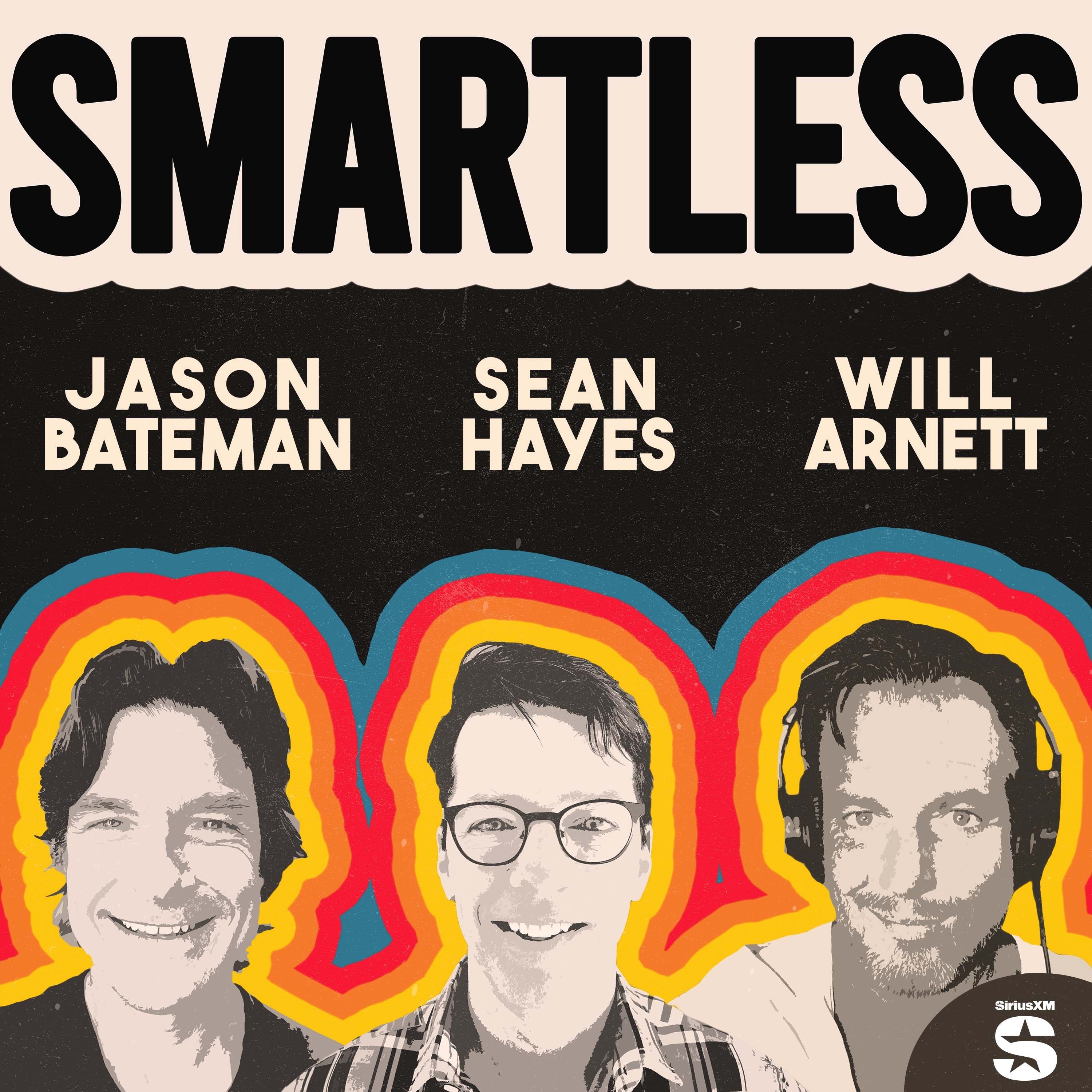
Sean Hayes revealed he never finished his undergraduate degree but received an honorary doctorate in music, news that surprised his co-hosts live on air.
Where this was said
At 27:32 · chapter starts 23:30
Bateman and Arnett dig into Olyphant's origin story. He grew up in Modesto, with a mother who warned him against show business ('they're all divorced and on drugs') — a woman who was herself later divorced. He went to USC to study fine arts because he loved drawing and couldn't believe it was an actual major. He nearly went for a master's in fine arts before deciding to try the things on his list: stand-up, acting, a band. He saw it partly as pre-empting a midlife crisis. He hadn't graduated at the time but went back — during COVID or a strike — to complete an independent study with his original professor, Ruth Weisberg, received his degree, and then gave the commencement address at USC's fine arts graduation. He quips that it took him 32 years to accomplish in what the students had done in 4, which made giving them advice feel 'hilarious.'
Timothy Olyphant completed 4 years of a fine arts degree at USC but didn't officially receive his degree until about 32 years later, finishing it during COVID or a strike.

Huberman's protocols book audiobook, read by him, runs 19 hours but is structured so listeners can navigate directly to any section independently.

U.S. college enrollment surged from just 14% in the 1970s to roughly 60% by the 1990s, extending the educational and exploratory phase of young adulthood and delaying commitment.

Kavak's internal Jedi Academy trains every employee — from CEO to mechanics — to build and deploy AI agents to production in 6 weeks.

May, a 33-year-old with $69,000 in combined debt, is considering a forensic pathologist career that would require 11–13 years of medical school training.

Boys are twice as likely to be suspended for the exact same behavior as a girl, and five times as likely if the boy is Black.

A person can become a psychiatrist, therapist, or coach without completing even one hour of grief education, which Kessler calls a critical gap.

Godin illustrates sunk cost fallacy with a parking example: even after pre-paying $35 for a lot, passing a free street space triggers irrational hesitation to switch — yet the rational choice is always the free space.
Citing Daniel Kahneman's work on loss aversion, Bartlett explains that humans need to find £20 to emotionally offset the pain of losing £10 — pleasure and pain are not symmetrical.

College students who saw an age-progressed photo of their future selves were more motivated to start a savings account, demonstrating imagination's real behavioral impact.
We use essential and analytics cookies to run Vuci. To understand how the site is used: Privacy Policy.

Install Vuci on your phone
Add it to your home screen for a faster, app-like experience.
Install Vuci on your phone
Tap the Share button, then “Add to Home Screen”.
A new version is available
Reload to get the latest Vuci.