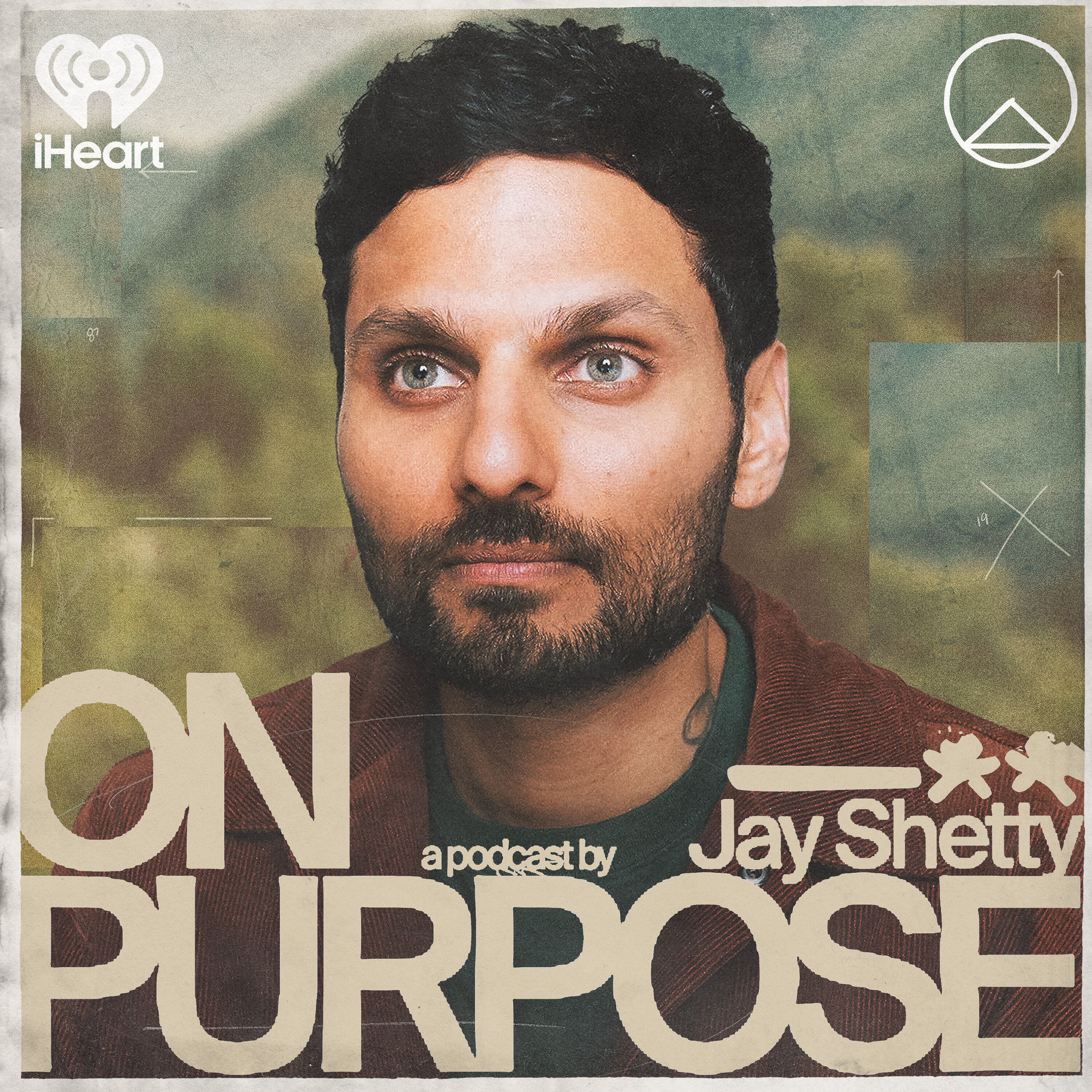
Jay closes with three questions: What am I holding onto only because it feels familiar? What identity am I afraid to release? What is the next honest step toward the chapter that is trying to begin?
Snapshot · On Purpose with Jay Shetty
Jay closes with three questions: What am I holding onto only because it feels familiar? What identity am I afraid to release? What is the next honest step toward the chapter that is trying to begin?
Where this was said
At 28:00 · chapter starts 25:41
Jay's closing is both a summation and a send-off. He returns to the episode's opening line — most people don't struggle with starting over, they struggle with letting go — and reframes the stakes one final time [1] — Jay Shetty "Every ounce of energy spent trying to recreate a chapter that's already ended is energy that can't be invested in the chapter trying to beg…" 26:50 . Life doesn't move backwards; we don't get old chapters back. What we get is the opportunity to build something new from what we've learned, and every ounce of energy spent trying to recreate what's already ended is energy that can't flow toward what's beginning. He distinguishes between honouring the past and being imprisoned by it: the future doesn't ask you to forget, just to stop living there [2] — Jay Shetty "The future doesn't ask you to forget your past. It asks you to stop living there." 27:35 . Three final reflection questions anchor the episode's practical takeaway: What are you holding onto only because it feels familiar? What identity are you afraid to release? What is the next honest step toward the chapter that is trying to begin? Jay closes with personal testimony — he has taken many terrifying leaps himself — and with the conviction that every person he's ever met who was afraid to leap has ultimately been grateful they did. The episode closes with a recommendation to listen to his conversation with Matthew Hussey on getting over an ex.
Every ounce of energy spent trying to recreate a chapter that's already ended is energy that can't be invested in the chapter trying to begin. Life doesn't move backwards. What we get is the opportunity to build something new from what we've learned.
What are you holding onto only because it feels familiar? What identity are you afraid to release? What is the next honest step toward the chapter that is trying to begin? You don't need certainty — just honesty.
Only 42% of young men think women understand their problems, and only 25% of young women say the same about men — a mutual comprehension deficit that previous generations largely closed as they aged.
In focus groups across Philadelphia and Raleigh, every hand went up when asked if parents discussed financial stability and education, but no hands went up for marriage or parenthood.
The share of American families with only children has risen dramatically, meaning more young people grow up without the negotiation, compromise, and friction that siblings naturally impose.
Young liberal women report experiencing sexual harassment online more frequently than conservative or moderate women, partly due to higher political posting activity drawing hostile responses.
Among Gen Z, a majority of women identify as feminist while only about 40% of men do — a 15-point gap that barely existed among Boomers, Gen X, or Millennials.
A study conducted before and after the pandemic found that the share of Americans with a regular third space — a community gathering spot outside home and work — fell roughly 20 percentage points and has not recovered.
Survey data shows a massive generational divide: most over-50s believe their parents viewed them as average, while a majority under-50 say their parents viewed them as special.
When asked whether a woman cheating is morally wrong, young women were far less likely to take a hardline stance than older women or men, suggesting a shared-fate or experiential factor is shaping the judgment.
Survey data shows that men with more close friends are significantly more likely to have recently gone on a date or be in a committed relationship, highlighting the link between social integration and romantic success.
We use essential and analytics cookies to run Vuci. To understand how the site is used: Privacy Policy.
Install Vuci on your phone
Add it to your home screen for a faster, app-like experience.
Install Vuci on your phone
Tap the Share button, then “Add to Home Screen”.
A new version is available
Reload to get the latest Vuci.