
37 venture-backed fusion companies
Peter Diamandis counted 37 venture-backed fusion energy companies currently operating, reflecting unprecedented private-sector investment in the space.
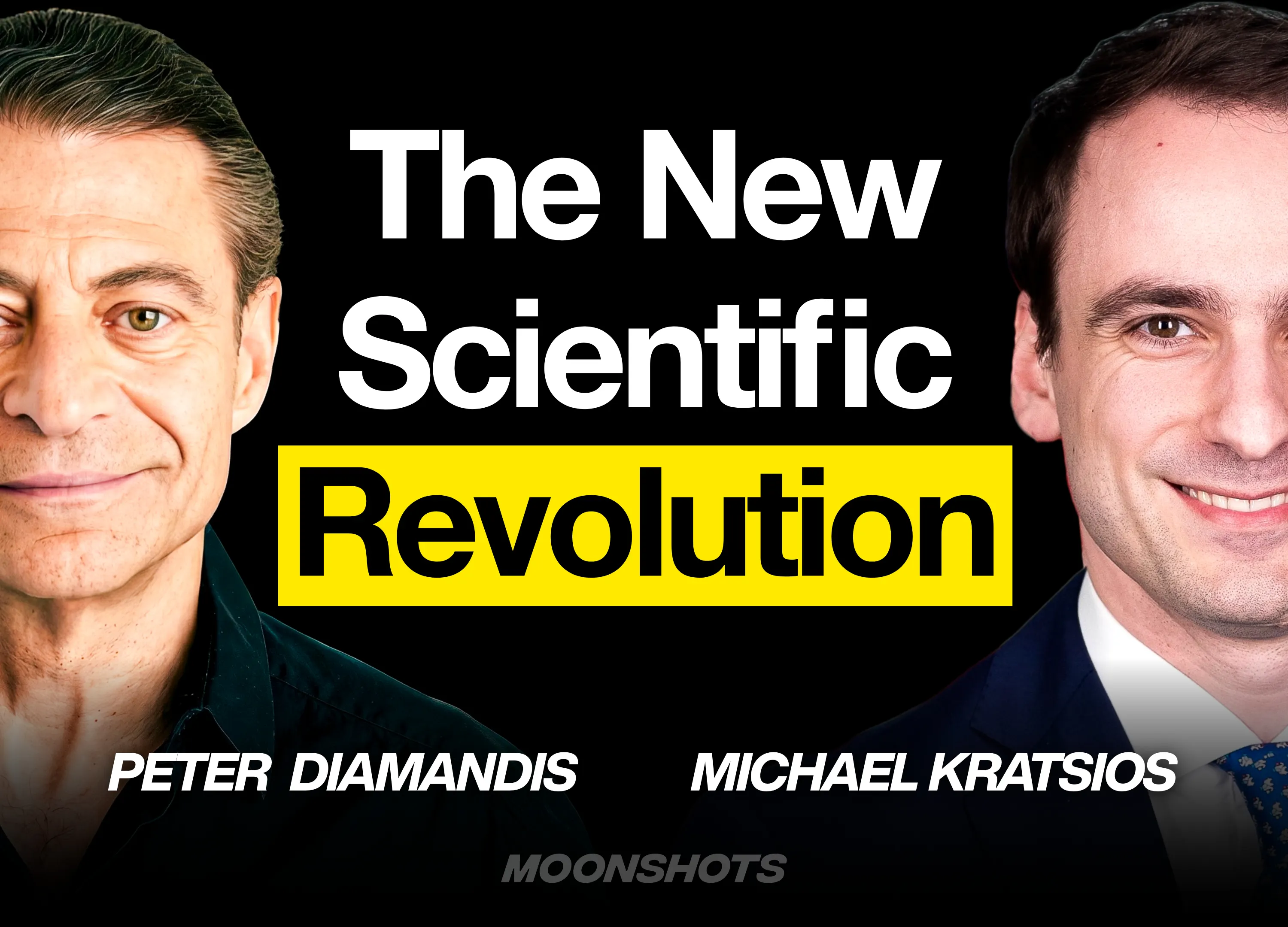
Snapshot · Moonshots with Peter Diamandis
Peter Diamandis counted 37 venture-backed fusion energy companies currently operating, reflecting unprecedented private-sector investment in the space.
Where this was said
At 19:22 · chapter starts 15:05
Peter asks Kratsios to paint the long-term vision for America, pushing beyond incremental healthcare wins. Kratsios frames his answer in terms of national missions — bold, specific goals that generate national pride and inspire young people the way Apollo once did. [1] — Michael Kratsios "Returning humans to the Moon by 2028, building the first elements of a lunar base by 2030, and launching a nuclear reactor into space — all…" 16:25 The list is staggering: humans on the Moon in 2028, the first elements of a lunar base by 2030, a nuclear reactor in space (with Mars propulsion capability) by 2028, a scientifically relevant quantum computer by the end of the president's term (directed through executive order), and an evolving national fusion strategy backed by more private investment than at any point in history — including 37 venture-backed fusion companies. Kratsios is most personally excited about quantum's applications in pharmaceuticals, where the ability to model molecular interactions could be transformational. The conversation reveals a government that is, for the first time in decades, willing to stake out ambitious, falsifiable timelines for moonshot-level achievements.
Returning humans to the Moon by 2028, building the first elements of a lunar base by 2030, and launching a nuclear reactor into space — all within the current administration's timeline. Kratsios frames these as the Apollo-era national missions needed to inspire a new generation into STEM.
The administration's space missions include returning humans to the Moon by 2028, building the first lunar base elements by 2030, and launching a nuclear reactor in space by 2028.

Ad-based monetization works well for game apps where users spend extended time in-session, as seen with Grid and Wordle.
Tool-focused apps like PuffCount are poor candidates for ad monetization because users don't stay in-session long enough.
A hard paywall is a screen that blocks all app features unless the user pays or starts a free trial — it cannot be dismissed.
Mobile apps are primarily monetized through either ads (best for games) or in-app purchases/subscriptions (best for tools).
According to the episode, YouTube outperforms every other social platform for building trust and driving SaaS conversions.
Vasco stated that the majority of his app's user base came directly from his YouTube channel.
SEO Bot features a 'Boost My Domain Rating' button that routes users directly to Listing Bot, an example of in-product cross-selling.
The founder's entire product portfolio is AI-related, making it easier to package products attractively for directories.
The founder attached their SaaS demo to the trending debate about whether AI coding is actually good enough to build a full SaaS product.
We use essential and analytics cookies to run Vuci. To understand how the site is used: Privacy Policy.

Install Vuci on your phone
Add it to your home screen for a faster, app-like experience.
Install Vuci on your phone
Tap the Share button, then “Add to Home Screen”.
A new version is available
Reload to get the latest Vuci.