Speaker
Michael Kratsios
Appearances over time
1 episodes
Episodes
1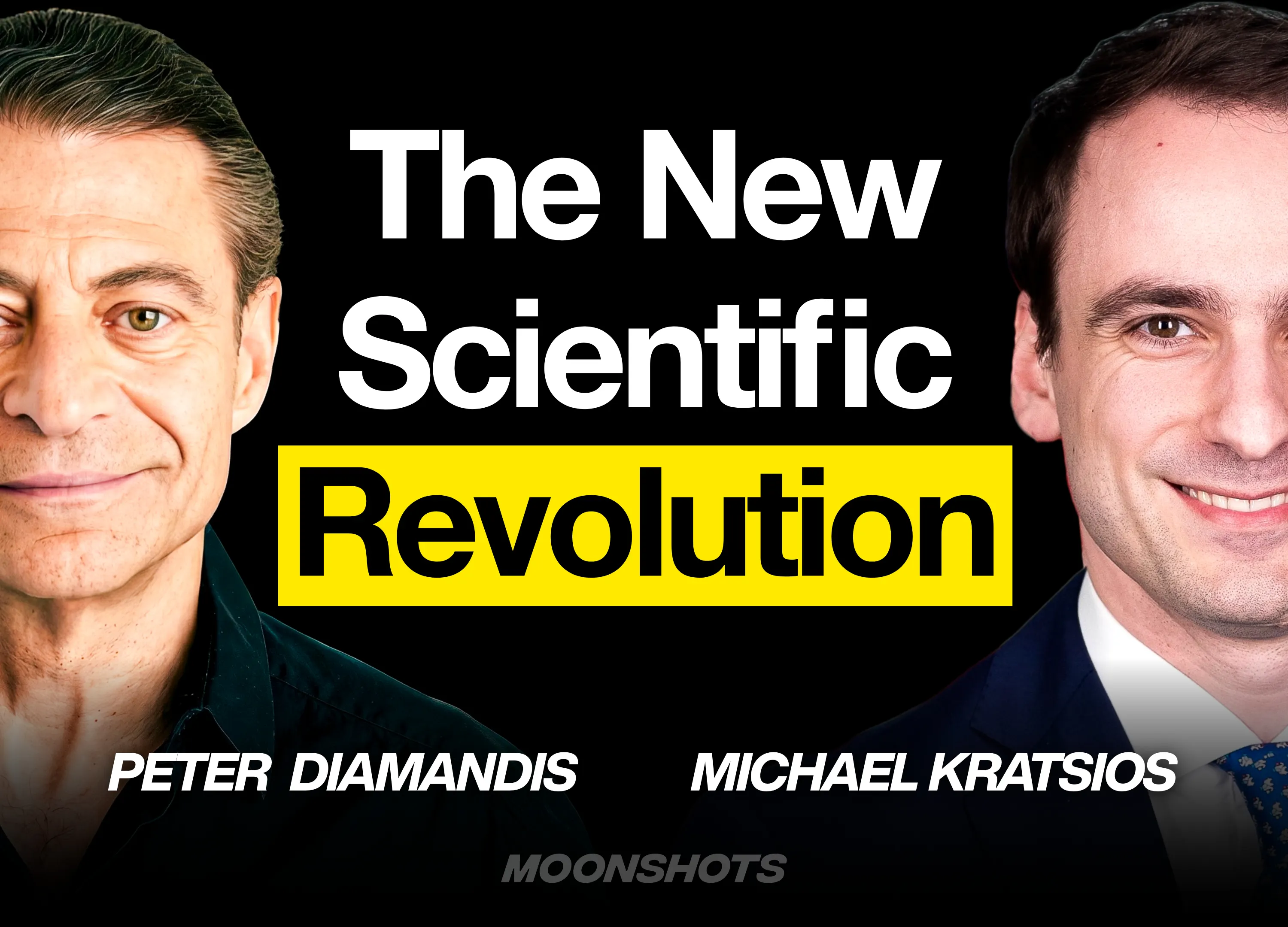
Podcasts

Quotes & moments

A National Academies study found that researchers spend 45% of their time on administrative grant-related work rather than actual science.
Despite NIH's budget growing to nearly $45 billion, the cost of drugs is higher than ever, indicating declining returns on science spending.
The median age of an intramural NIH scientist — those conducting research inside NIH itself — is 71, despite Nobel Prize-winning work typically being done in one's 20s.
The administration's space missions include returning humans to the Moon by 2028, building the first lunar base elements by 2030, and launching a nuclear reactor in space by 2028.
In 1951, 70% of US R&D was government-funded and 30% private. Today those figures are almost entirely reversed, with the private sector now dominant.
The White House announced approximately $5 billion in Genesis Mission grants at a recent summit, with many focused on biotech and AI for science.
The US federal government spends approximately $200 billion per year on R&D, with roughly $45 billion of that at NIH for biomedical research.
The Genesis Mission is the administration's crown jewel: a government-wide initiative to apply AI to scientific discovery across every federal agency, not just one. Kratsios wants to double scientific productivity over the next decade — and has now privately upgraded that ambition to 10x.
Returning humans to the Moon by 2028, building the first elements of a lunar base by 2030, and launching a nuclear reactor into space — all within the current administration's timeline. Kratsios frames these as the Apollo-era national missions needed to inspire a new generation into STEM.
Kratsios makes a blunt admission: right now, the cheapest open-source AI model available to bootstrapped American entrepreneurs is Chinese. The US has to cultivate its own vibrant open-source ecosystem, and the administration's American AI Exports Program is the first step toward making the American AI stack the world's default.
Rather than letting China replicate the Huawei telecom playbook with AI, the US launched a program at Commerce to bundle the best American chips, models, and applications into a turnkey AI stack for foreign governments. Export-Import Bank and Development Finance Corporation financing makes it economically viable for developing nations.
The NIH budget has ballooned to $45 billion yet drugs are more expensive than ever. Researchers spend 45% of their time on grant paperwork. The median intramural NIH scientist is 71. Kratsios argues the problem isn't money — it's that the scientific enterprise refuses to experiment on itself.
The Genesis Mission's stated goal of doubling scientific productivity was set before the AI explosion of the last six months. On air, Kratsios admits the number should probably be 10x — and that Anthropic's revenue going from $10 billion to over $70 billion in seven months shows exactly why the original target is already outdated.
AI proposes the hypothesis, robots run the experiment, the model reads results and designs the next one — continuously, with no humans required. Kratsios wants federal dollars funding these autonomous labs, and believes universities will be among the first to build them to attract top scientists.
US national labs hold 70 years of scientific data across every domain that has never been made AI-ready. Getting that data into models is the core insight behind the Genesis Mission. Kratsios draws the analogy to NOAA weather data — once made freely available, it became the foundation for every weather app in existence.
Kratsios splits all technologies into two categories: 'born free' (like the 1990s internet) where government should do nothing, and 'born in captivity' (like medical AI and commercial drones) where government must act or the technology never reaches the public. The EU AI Act was finalized before ChatGPT even existed — a cautionary tale in regulatory overreach.
Each reviewer on a grant panel gets 1–3 golden tickets, allowing them to unilaterally fund a proposal regardless of what the rest of the committee thinks. This does two things: it incentivizes bolder proposals from applicants and attracts higher-quality reviewers who want the power of a golden ticket.
Kratsios describes a future where states and cities compete to attract tech companies by offering the most innovation-friendly regulatory environments. He traces the lineage from the 2017 drone Innovation Pilot Program through the current eVTOL EIPP, and argues Texas is currently winning the race.
The most radical proposal in the Golden Age report: a decentralized scientific marketplace where AI agents post bounties, run autonomous lab experiments, verify results cryptographically, and release payments via smart contracts — operating at machine speed, 24/7, with human experts reserved only for judgment calls on which questions matter.
Three-quarters of Americans fear AI, and Kratsios blames a decade of government-driven doom narratives — culminating in the Bletchley Park AI safety summit that was almost entirely framed around fear. The fix, he argues, is showcasing AI's impact on healthcare where Americans' emotional connection is strongest.
XPRIZE has launched $600 million in prizes and catalyzed $30 billion in R&D. The Golden Age Report explicitly endorses prize challenges, advanced market commitments, and pay-for-results models as alternatives to traditional grants — with the administration eyeing prizes in the $100 million range for major national challenges.
Analysis
What they talk about
- Technology 59%
- Science 25%
- Government 8%
- Health & Fitness 8%
Connections
Shows they appear on and people they share episodes with. Drag to explore.
