
Will Arnett's birthday episode
The episode was recorded on Will Arnett's birthday; he received a two-wick Jenny Kane candle from Jason Bateman and a spa gift from Sean Hayes.
Jon Bernthal accidentally joined a theater class thinking it was a movie screening, then cried making up a fake deathbed story about his living mother — and that lie launched his entire acting career.
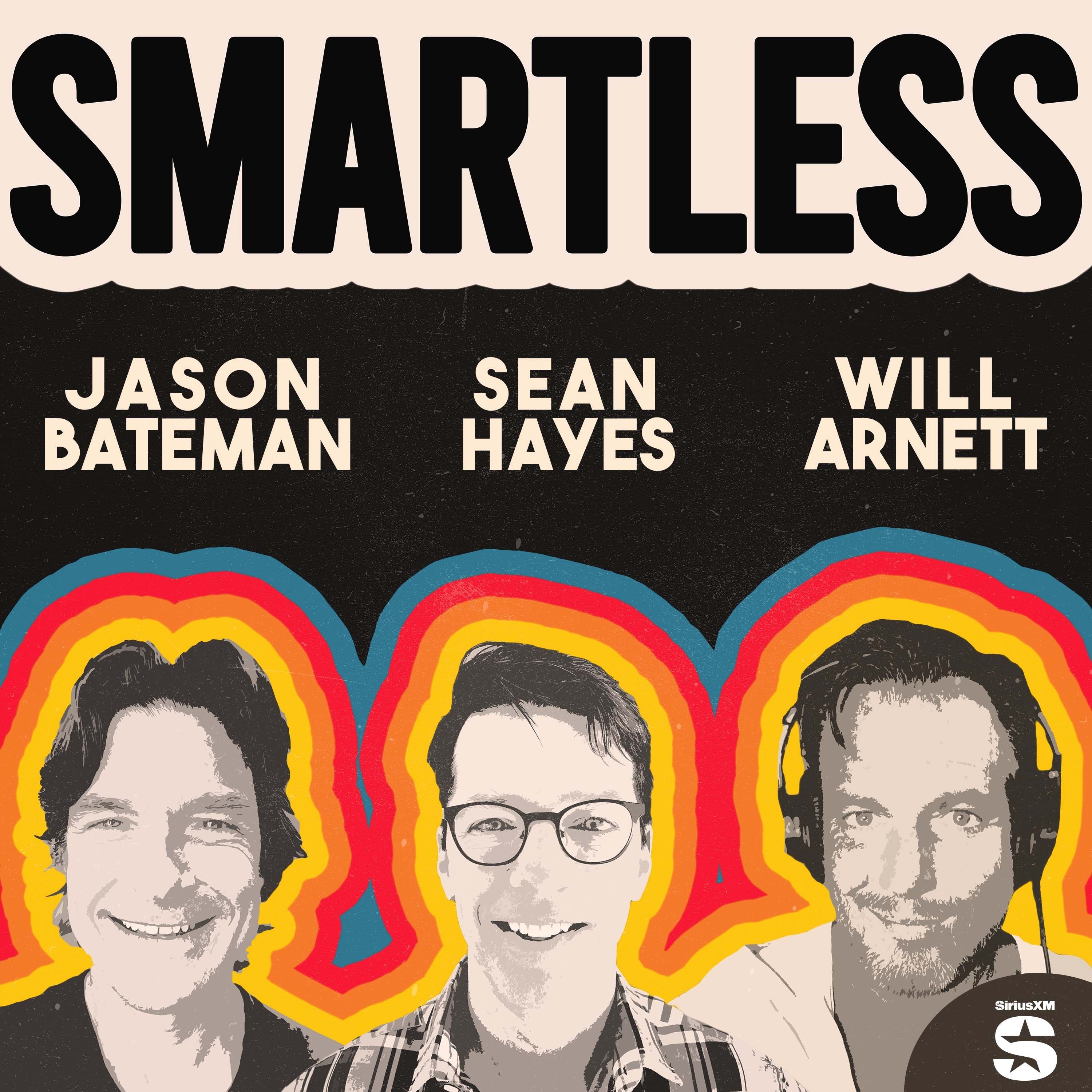
SmartLess
Jon Bernthal accidentally joined a theater class thinking it was a movie screening, then cried making up a fake deathbed story about his living mother — and that lie launched his entire acting career.
TL;DR
Jon Bernthal joins Jason Bateman, Sean Hayes, and Will Arnett to share his extraordinary journey from troubled athlete to Broadway star. He accidentally signed up for a theater class, improvised a tearjerker story about his mom's deathbed (she was alive), and ended up studying at the Moscow Art Theatre [1] — Jon Bernthal "Bernthal's first theater teacher, after catching him fabricate that deathbed story, sent him to the Moscow Art Theatre as both a punishment…" 17:30 . Now starring in Dog Day Afternoon on Broadway, Bernthal opens up about parenting, adversity, playing corrupt cop Wayne Jenkins in We Own the City, working with Christopher Nolan on The Odyssey, and his decade-long friendship with Tom Holland [2] — Jon Bernthal "To play Wayne Jenkins in We Own the City, Bernthal rode out with Baltimore city and county SWAT teams every night for three straight months…" 51:40 . The core takeaway: hitting every wall can be the best preparation for greatness.
Jon Bernthal joins Jason Bateman, Sean Hayes, and Will Arnett on SmartLess. Topics include the accidental start of Bernthal's acting career, studying at the Moscow Art Theatre, Dog Day Afternoon on Broadway, parenting through adversity, We Own the City, working with Christopher Nolan on The Odyssey, and a behind-the-scenes story about making Tom Holland's Spider-Man audition tape.
The episode opens not with hosts but with a pair of pre-roll sponsor segments. ACANA Pet Food is pitched as the 'A-lister food' for pets, emphasizing whole-food ingredients like pasture-raised beef, cranberries, and turmeric. Allstate's home insurance ad follows, using the relatable image of forcing grown siblings into matching pajamas for the annual family photo. Both reads are voiced by Jason Bateman and conclude just before the SmartLess intro jingle drops.
Sean Hayes kicks off the SmartLess welcome with characteristic bravado, but the first order of business is celebrating Will Arnett's birthday. Will's joke that he finally 'shit out' the lucky horseshoe that had been up his ass prompts Jason to add 'the horse is still up there.' The candle gift debate is unexpectedly substantive: Jason delivers a passionate defense of the two-wick burn, arguing that three-wick candles produce uneven melts and a 'weak side.' Will received books from friends Danny and Dottie, and Sean gave a spa experience so indulgent it apparently can't be described on air. The conversation drifts into gift-giving philosophy — Jason believes you always show up with something, even just a cookie — before pivoting to the birthday dinner, where Will invited the kids to weigh in on global events, producing surprisingly thoughtful responses that impressed all three hosts.
Will Arnett builds the suspense for the guest reveal with an unusually detailed bio drop, noting studies at the Moscow Arts Theatre, probable Harvard MFA training, credits in Wolf of Wall Street, Sicario, Baby Driver, Wind River, Ford v Ferrari, King Richard, The Walking Dead, We Own the City, The Accountant, and more. Jason and Sean half-heartedly guess Adrian Brody before Will delivers the reveal: Jon Bernthal. The energy in the room shifts immediately, with all three hosts expressing genuine excitement.
Bernthal opens by wishing Will a happy birthday and complimenting his recent film — calling the performance a deep dive into fatherhood, husbandhood, artistry, and falling back in love with a partner. Will notes that Bernthal's co-star in Dog Day Afternoon is mutual friend Johnny O. Bernthal then describes the show's remarkable cultural impact: it's drawing buses from Staten Island filled with people for whom this is not just their first time on Broadway, but their first time in a theater at all. [1] — Jon Bernthal "Dog Day Afternoon on Broadway isn't just a hit — it's doing something rarer: expanding who goes to the theater at all. Bernthal says people…" 09:26 For Bernthal, this is the point — theater in Russia was never for the gentry, it was vital for everybody, and he's thrilled to see that ideal realized on a Broadway stage.
Bernthal was a football and baseball player in college who was 'running into every wall' and getting in all kinds of trouble. Athletes told him he needed an arts credit, so he signed up for what he thought was a lecture hall full of 600 kids watching movies. It was an intimate class of 10 serious theater students. The first assignment: bring in something deeply important and share it. Bernthal had nothing, but he had his catcher's glove in his bag for practice. So he invented an elaborate story about his mother giving him the glove on her deathbed. His mother was alive and well in D.C. He cried. The class cried. Snot ran. [1] — Jon Bernthal "Bernthal signed up for an intro theater class thinking it was 600 kids watching movies in the back of a lecture hall. Instead it was 10 peo…" 19:30 Teacher Alma Becker cleared the room, tore into him for violating the sanctity of her studio — and then told him he had something. His punishment was to audition for the play. When he eventually got in trouble and couldn't finish school, it was Becker who told him there was no conventional pathway: go to Moscow, study at the Art Theatre. [2] — Jon Bernthal "Bernthal's first theater teacher, after catching him fabricate that deathbed story, sent him to the Moscow Art Theatre as both a punishment…" 17:30 That blind faith in one teacher changed everything.
Jason asks whether Bernthal would go back to Russia today, given the news. Bernthal says he'd love to but can't now. In 1999, Moscow was what everyone called the Wild West: shootings at the Duma, Chechen apartment building bombings, and a social landscape unlike anything he'd ever encountered. [1] — Jon Bernthal "When Bernthal arrived in Russia in 1999, there were shootings at the Duma and Chechen apartment building bombings happening in the city. He…" 15:00 As a boxer who fancied himself street-smart, the physical danger didn't deter him. What arrested him was the contrast: real brutality on the streets, and on every corner a statue of a playwright or a poet. Acting was a revered, masculine pursuit. His teachers had been part of a generation that performed in subway tunnels and abandoned buildings when public gatherings were outlawed, risking prison for themselves and their audiences because theater was that vital to them — it was religious. [2] — Jon Bernthal "Bernthal's first theater teacher, after catching him fabricate that deathbed story, sent him to the Moscow Art Theatre as both a punishment…" 17:30 Bernthal thinks he would not have responded the same way to American theater training. The Russian context cracked him open in the exact way he needed.
A mid-episode sponsor block covers four brands. Will Arnett reads for Pure Leaf Iced Tea, framing afternoon energy dips as the perfect moment for a naturally caffeinated real-brewed iced tea. ACANA Pet Food gets a second read emphasizing whole-food ingredients. A Paris Hilton Hilton Honors giveaway spot follows — offering listeners the chance to win 'Paris points' for summer travel. BetterHelp closes the block with a personal testimonial from Will about the value of talking through difficult conversations with a therapist before having them, with a 10% discount code at betterhelp.com/smartless.
Jason asks Bernthal whether he does vocal warm-ups to protect his voice through 8 shows a week — something Sean Hayes knows intimately from his own Broadway experience. Bernthal confirms it's unlike anything he's done physically, but notes that he naturally speaks in a higher register in the show, which helps. He mentions voice coach Kate Wilson as 'one of one.' Jason then reveals his own recent theater injury: a walking boot from the repetitive stress of doing the same movement in every performance of his recent play The Unknown. Sean and Will barely suppress their laughter at the contrast between Jason's boot and Bernthal's daily boxing regimen. The joke lands: Jason mainlines Ding Dongs and gets 1,100 steps a day; Bernthal goes to the gym every day.
The question seems to catch Bernthal mid-thought and he answers with startling precision. His best friends growing up were wild kids, and their way of expressing love was taking crazy risks together. When he found theater, he recognized immediately that it demanded the exact same energy: reckless abandonment, throwing everything away, going completely without a safety net. [1] — Jon Bernthal "Bernthal's best friends growing up were wild kids whose way of saying they loved each other was taking crazy risks together. When he found …" 27:45 The difference was that acting brought joy to people and let him access parts of himself he already knew how to reach — but this time it wasn't landing him in jail or getting him expelled. He'd found a use for everything dangerous inside him. The hosts are visibly moved by this framing, with Sean nodding through the whole answer.
Will presses Bernthal on The Walking Dead as a turning point, and Bernthal says it was pivotal both professionally and personally. He married his wife — an ICU trauma nurse he met the day he returned from Russia — right after Season 1, and had his first child at the beginning of Season 2. He credits Frank Darabont for building a culture of total humility and total commitment to the premise. [1] — Jon Bernthal "The Walking Dead succeeded because every single actor was 100% committed to the premise — zombies are real and terrifying. If one person di…" 30:14 His key insight: put 6 or 7 people in the woods with zombies, and if even one person isn't 100% committed to that truth, everything falls apart. The show's tension came entirely from that collective belief. None of them expected it to become the juggernaut it did. Will calls the show's ability to sustain narrative tension 'taut,' and agrees that one distracted actor would have broken the whole spell.
Sean's question is layered: when did Bernthal go from using acting to escape his demons to truly embracing it as a career and identity? Bernthal resists the framing of 'arrival.' He says the healthiest relationship he can have with the work is to always be chasing it, knowing he'll fail, and treating each failure as an opportunity for connection and growth — exactly as he does with his children. He's grateful to still be terrified at this stage of his life while doing this play. His life simplified precisely when his family grew alongside his career, and the two are now inseparable. He connects his point to a documentary about soccer coach José Mourinho, who told a dejected team at halftime: the other team is going to score, that's the game, what matters is what you do next. Bernthal applies this constantly to both acting and parenthood.
Sean opens up about having two teenage boys and battling the contradiction of wanting to protect them while knowing that his own mistakes shaped him. Bernthal understands this completely and names it precisely: adversity is non-negotiable for growth, but the stakes in his own youth were razor-close to catastrophic — he's lost people, lost his freedom, been in situations that could have gone either way. [1] — Jon Bernthal "Bernthal knows adversity shaped everything good about him. He also knows it came razor-close to destroying him — and he's lost people who d…" 38:50 So he puts his kids in hard situations under a safe umbrella: martial arts, swimming, boxing, outdoor survival. And crucially, he asks his sons not just to be protectors and providers — but to be sensitive, kind, vulnerable, open, curious, and genuinely interested in people who look, feel, and pray differently than they do. Will admits he's not sure he's managed any of this and needs Bernthal's guidance. The hosts all laugh, but the room is moved.
Will draws a contrast between his own privileged upbringing and Jon's, noting that Jason and Sean also came up without industry connections. Bernthal describes his father as a D.C. neighborhood institution: when kids in trouble didn't know where to turn, they went to his dad. Not for validation, not for a lecture — for someone who would say, let's work through this, deal with the judgment later. [1] — Jon Bernthal "Bernthal has lived in Ojai, California for 15 years and watched the community shift as Angelenos moved in and the public school system suff…" 48:30 Bernthal has tried to be that man in Ojai, where he's lived for 15 years, coaching youth football for six of them and teaching boxing. [2] — Jon Bernthal "I hit every wall you can hit. But like, it's never too late." 49:58 The town has changed significantly as Angelenos have moved in, and he's watched the public school theater program suffer. His community theater in an old defunct school building sends all its proceeds back to that department. He tells every kid who comes to him — his own or anyone else's: I hit every wall you can hit. It's never too late. He tells them their parents love them, whether they left or not, whether they're incarcerated or not.
Bernthal elaborates on what he's built in Ojai beyond coaching sports. The town has a beautiful community, he says, with deep-rooted 'institutional Ojai families' whose culture is: grow up here, go see the world, come back and raise your family. But the influx of Angelenos has changed the town's character — and the public school, once a bastion of education, has suffered. So Bernthal and his community found an old defunct school building and turned it into a theater. All the proceeds go to the public school theater department. [1] — Jon Bernthal "Bernthal has lived in Ojai, California for 15 years and watched the community shift as Angelenos moved in and the public school system suff…" 48:30 He raised significant funds this way. Will jokes that Sean has now agreed to perform there next year. Sean looks confused.
Will says We Own the City blew him away and he can now see how Bernthal's personal history informed the performance. Bernthal sets the context: the project came to him in the wake of Freddie Gray and George Floyd, a time when Baltimore was at the tip of the spear on race and policing. He describes his revulsion at flag-wavers on both sides who've never actually been in the valleys or rubbed elbows with the other side — the only way to access empathy is to actually be there. He had David Simon's Wire credibility as a key to the city: Baltimore cops watch The Wire every year as required viewing. He spent 3 months on nightly SWAT raids with city and county teams. [1] — Jon Bernthal "To play Wayne Jenkins in We Own the City, Bernthal rode out with Baltimore city and county SWAT teams every night for three straight months…" 51:40 What he found: corrupt policing doesn't just devastate victims and communities — it destroys good cops too, terrorizing their careers and safety. And the key to Jenkins himself: everyone who knew him said the same thing. Mid-robbery, mid-false-arrest, if one of his kids needed him, he ran home. That contradiction was the whole character.
Four sponsor reads fill this mid-episode break. Will reads for Audible, teasing the star-studded cast of Heads Will Roll: Heir Apparent including Kate McKinnon, Richard Kind, Jimmy Fallon, and Carrie Coon. Sean reads a Whole Foods Market cookout spot. Jason pitches Southern New Hampshire University's online degrees to the dog-owner demographic. The segment closes with a Principal Financial Group ad about employee benefits and retirement planning.
Will asks about The Odyssey and working with Nolan. Bernthal is immediately enthusiastic: Nolan is a man doing exactly what he was put on this earth to do, and watching that is a rare gift. Everyone warned him the shoot would be grueling — 8 months, 8 countries. Bernthal loved hearing it. What surprised him was a paradox: within Nolan's extraordinary structural precision and total command of his vision, he still not just allowed but demanded genuine creative freedom and exploration from every actor in every moment. [1] — Jon Bernthal "Everyone warned Bernthal that Nolan's sets are brutally rigorous. He was delighted. What surprised him was that within Nolan's airtight str…" 58:50 Bernthal names the opposite of this as mediocrity's clearest signal — directors who need everything a certain way. He also mentions other great directors he's worked with: Denis Villeneuve, Scorsese, Polanski — all enormously different, but all characterized by the same paradox of deep knowledge enabling real freedom.
Will brings up Spider-Man: Brand New Day and the Punisher special Bernthal wrote that's releasing the following week. Bernthal has known Tom Holland since he was 17 — they shot a film together in Ireland where Holland made Bernthal's Punisher audition tape and Bernthal made Holland's Spider-Man tape. [1] — Jon Bernthal "When Bernthal and a 17-year-old Tom Holland were filming together in Ireland, Holland made Bernthal's Punisher audition tape and Bernthal s…" 1:01:40 A 17-year-old Holland told Bernthal with complete conviction: I am Spider-Man. Bernthal privately thought: mathematically, I just don't know, man. A decade later, they're doing two movies back to back together. Bernthal is effusive: Holland was raised beautifully, his family is wonderful, he's become the human ambassador the role demanded. He loves Holland's relationship with his partner and is genuinely proud of the man and movie star he's become.
The group closes the conversation with Bernthal recapping his upcoming projects: the Punisher special drops the following week, Spider-Man: Brand New Day opens July 31st, The Odyssey opens June 17th, and Dog Day Afternoon continues on Broadway. Sean teases Jon about finding a work ethic before they meet again. Jason asks for a tragic theater story next time — Bernthal promises he has tons. After the call ends, Sean puts Bernthal on his short list of all-time favorite interviews alongside Alicia Keys and Lionel Richie. Jason adds a characteristically sincere observation: he doesn't think you can be that talented without being that smart, and he doesn't know many dumb people who are truly talented. Will agrees, pointing out that Bernthal's complex performances draw directly on a checkered past he stays genuinely in touch with.
Will closes out the episode by attributing production to Michael Grant Terry, Rob Armcharf, and Bennett Barbaco. The episode ends with two sponsor segments: Principal Financial Group, focused on employee retirement and benefits planning, and Harvey AI, an AI operating system purpose-built for legal work — advertised as trusted by more than 60% of the AmLaw 100 and leading Fortune 500 legal teams. The Harvey spot emphasizes AI agents that can plan, research, draft, and execute legal work end-to-end while leaving judgment to human lawyers.
Chapter 2 · 01:18
Sean Hayes kicks off the SmartLess welcome with characteristic bravado, but the first order of business is celebrating Will Arnett's birthday. Will's joke that he finally 'shit out' the lucky horseshoe that had been up his ass prompts Jason to add 'the horse is still up there.' The candle gift debate is unexpectedly substantive: Jason delivers a passionate defense of the two-wick burn, arguing that three-wick candles produce uneven melts and a 'weak side.' Will received books from friends Danny and Dottie, and Sean gave a spa experience so indulgent it apparently can't be described on air. The conversation drifts into gift-giving philosophy — Jason believes you always show up with something, even just a cookie — before pivoting to the birthday dinner, where Will invited the kids to weigh in on global events, producing surprisingly thoughtful responses that impressed all three hosts.
The episode was recorded on Will Arnett's birthday; he received a two-wick Jenny Kane candle from Jason Bateman and a spa gift from Sean Hayes.
Chapter 4 · 08:55
Bernthal opens by wishing Will a happy birthday and complimenting his recent film — calling the performance a deep dive into fatherhood, husbandhood, artistry, and falling back in love with a partner. Will notes that Bernthal's co-star in Dog Day Afternoon is mutual friend Johnny O. Bernthal then describes the show's remarkable cultural impact: it's drawing buses from Staten Island filled with people for whom this is not just their first time on Broadway, but their first time in a theater at all. [1] — Jon Bernthal "Dog Day Afternoon on Broadway isn't just a hit — it's doing something rarer: expanding who goes to the theater at all. Bernthal says people…" 09:26 For Bernthal, this is the point — theater in Russia was never for the gentry, it was vital for everybody, and he's thrilled to see that ideal realized on a Broadway stage.
Dog Day Afternoon on Broadway isn't just a hit — it's doing something rarer: expanding who goes to the theater at all. Bernthal says people are coming backstage saying it's not just their first time on Broadway but their first time in a theater, period. Buses from Staten Island. That's the Russia effect in real time: theater should be vital and for everybody, not an exclusive thing for the gentry.
Bernthal says buses are coming from Staten Island to see the Broadway show, with many audience members attending the theater for the very first time in their lives.
Chapter 5 · 12:20
Bernthal was a football and baseball player in college who was 'running into every wall' and getting in all kinds of trouble. Athletes told him he needed an arts credit, so he signed up for what he thought was a lecture hall full of 600 kids watching movies. It was an intimate class of 10 serious theater students. The first assignment: bring in something deeply important and share it. Bernthal had nothing, but he had his catcher's glove in his bag for practice. So he invented an elaborate story about his mother giving him the glove on her deathbed. His mother was alive and well in D.C. He cried. The class cried. Snot ran. [1] — Jon Bernthal "Bernthal signed up for an intro theater class thinking it was 600 kids watching movies in the back of a lecture hall. Instead it was 10 peo…" 19:30 Teacher Alma Becker cleared the room, tore into him for violating the sanctity of her studio — and then told him he had something. His punishment was to audition for the play. When he eventually got in trouble and couldn't finish school, it was Becker who told him there was no conventional pathway: go to Moscow, study at the Art Theatre. [2] — Jon Bernthal "Bernthal's first theater teacher, after catching him fabricate that deathbed story, sent him to the Moscow Art Theatre as both a punishment…" 17:30 That blind faith in one teacher changed everything.
When Bernthal arrived in Russia in 1999, there were shootings at the Duma and Chechen apartment building bombings happening in the city. He considered himself street-smart and a boxer, but nothing prepared him for a place with a completely different alphabet, language, and a jarring blend of brutality and profound reverence for the arts — statues of playwrights and poets on every corner.
When Bernthal was in Russia in 1999, there were shootings at the Duma (the Russian Senate) and Chechen apartment building bombings — conditions he describes as 'the Wild West.'
Chapter 6 · 17:30
Jason asks whether Bernthal would go back to Russia today, given the news. Bernthal says he'd love to but can't now. In 1999, Moscow was what everyone called the Wild West: shootings at the Duma, Chechen apartment building bombings, and a social landscape unlike anything he'd ever encountered. [1] — Jon Bernthal "When Bernthal arrived in Russia in 1999, there were shootings at the Duma and Chechen apartment building bombings happening in the city. He…" 15:00 As a boxer who fancied himself street-smart, the physical danger didn't deter him. What arrested him was the contrast: real brutality on the streets, and on every corner a statue of a playwright or a poet. Acting was a revered, masculine pursuit. His teachers had been part of a generation that performed in subway tunnels and abandoned buildings when public gatherings were outlawed, risking prison for themselves and their audiences because theater was that vital to them — it was religious. [2] — Jon Bernthal "Bernthal's first theater teacher, after catching him fabricate that deathbed story, sent him to the Moscow Art Theatre as both a punishment…" 17:30 Bernthal thinks he would not have responded the same way to American theater training. The Russian context cracked him open in the exact way he needed.
Bernthal's first theater teacher, after catching him fabricate that deathbed story, sent him to the Moscow Art Theatre as both a punishment and a revelation. His teachers there had performed illegal plays in subway tunnels and abandoned buildings during times when public gatherings were outlawed, risking prison for art they believed in religiously. That combination of danger, reverence, and masculine cultural respect for the arts hit Bernthal differently than anything America could have offered him at that age.
Bernthal's Russian teachers performed plays in subway tunnels and abandoned buildings during times when public gathering was outlawed, risking prison for themselves and audiences.
Jon Bernthal lived and studied theater in Russia from 1999 to 2001, a formative experience he credits with saving his life.
Bernthal signed up for an intro theater class thinking it was 600 kids watching movies in the back of a lecture hall. Instead it was 10 people who took it very seriously. When his turn came to share something meaningful, he had nothing — except his catcher's glove — and launched into a completely fabricated story about his mother giving it to him on her deathbed. His mom was alive and well in D.C. The whole class, including Bernthal, burst into tears. His teacher recognized something real in the chaos and changed his life forever.
Bernthal improvised a fictional story about his living mother giving him a baseball glove on her deathbed, moved the class to tears, and got discovered as an actor.
Chapter 7 · 21:00
A mid-episode sponsor block covers four brands. Will Arnett reads for Pure Leaf Iced Tea, framing afternoon energy dips as the perfect moment for a naturally caffeinated real-brewed iced tea. ACANA Pet Food gets a second read emphasizing whole-food ingredients. A Paris Hilton Hilton Honors giveaway spot follows — offering listeners the chance to win 'Paris points' for summer travel. BetterHelp closes the block with a personal testimonial from Will about the value of talking through difficult conversations with a therapist before having them, with a 10% discount code at betterhelp.com/smartless.
Bernthal's first theater teacher, Alma Becker, later officiated his wedding, representing a lifelong bond that began with the punishment of an audition.
Chapter 9 · 27:00
The question seems to catch Bernthal mid-thought and he answers with startling precision. His best friends growing up were wild kids, and their way of expressing love was taking crazy risks together. When he found theater, he recognized immediately that it demanded the exact same energy: reckless abandonment, throwing everything away, going completely without a safety net. [1] — Jon Bernthal "Bernthal's best friends growing up were wild kids whose way of saying they loved each other was taking crazy risks together. When he found …" 27:45 The difference was that acting brought joy to people and let him access parts of himself he already knew how to reach — but this time it wasn't landing him in jail or getting him expelled. He'd found a use for everything dangerous inside him. The hosts are visibly moved by this framing, with Sean nodding through the whole answer.
Bernthal's best friends growing up were wild kids whose way of saying they loved each other was taking crazy risks together. When he found theater, he realized it demanded the exact same energy — reckless abandonment, the high-wire act, a willingness to throw everything away. The difference: acting channeled all of it toward joy and connection instead of jail. He didn't stop being that guy. He just found a use for him.
The Walking Dead succeeded because every single actor was 100% committed to the premise — zombies are real and terrifying. If one person didn't believe it completely, Bernthal says, everything else falls apart instantly. That total commitment, not the zombies, was what kept audiences on the edge of their seats for years. He credits Frank Darabont for building that culture from day one.
Chapter 10 · 30:20
Will presses Bernthal on The Walking Dead as a turning point, and Bernthal says it was pivotal both professionally and personally. He married his wife — an ICU trauma nurse he met the day he returned from Russia — right after Season 1, and had his first child at the beginning of Season 2. He credits Frank Darabont for building a culture of total humility and total commitment to the premise. [1] — Jon Bernthal "The Walking Dead succeeded because every single actor was 100% committed to the premise — zombies are real and terrifying. If one person di…" 30:14 His key insight: put 6 or 7 people in the woods with zombies, and if even one person isn't 100% committed to that truth, everything falls apart. The show's tension came entirely from that collective belief. None of them expected it to become the juggernaut it did. Will calls the show's ability to sustain narrative tension 'taut,' and agrees that one distracted actor would have broken the whole spell.
Chapter 11 · 34:50
Sean's question is layered: when did Bernthal go from using acting to escape his demons to truly embracing it as a career and identity? Bernthal resists the framing of 'arrival.' He says the healthiest relationship he can have with the work is to always be chasing it, knowing he'll fail, and treating each failure as an opportunity for connection and growth — exactly as he does with his children. He's grateful to still be terrified at this stage of his life while doing this play. His life simplified precisely when his family grew alongside his career, and the two are now inseparable. He connects his point to a documentary about soccer coach José Mourinho, who told a dejected team at halftime: the other team is going to score, that's the game, what matters is what you do next. Bernthal applies this constantly to both acting and parenthood.
Bernthal has three biological children aged 14, 12, and 10, plus a 4-year-old niece who has come to live with the family in recent years.
Chapter 12 · 38:10
Sean opens up about having two teenage boys and battling the contradiction of wanting to protect them while knowing that his own mistakes shaped him. Bernthal understands this completely and names it precisely: adversity is non-negotiable for growth, but the stakes in his own youth were razor-close to catastrophic — he's lost people, lost his freedom, been in situations that could have gone either way. [1] — Jon Bernthal "Bernthal knows adversity shaped everything good about him. He also knows it came razor-close to destroying him — and he's lost people who d…" 38:50 So he puts his kids in hard situations under a safe umbrella: martial arts, swimming, boxing, outdoor survival. And crucially, he asks his sons not just to be protectors and providers — but to be sensitive, kind, vulnerable, open, curious, and genuinely interested in people who look, feel, and pray differently than they do. Will admits he's not sure he's managed any of this and needs Bernthal's guidance. The hosts all laugh, but the room is moved.
Bernthal knows adversity shaped everything good about him. He also knows it came razor-close to destroying him — and he's lost people who didn't make it through. So he teaches his kids to swim, to box, to survive the outdoors. He puts them in hard, challenging situations under a safe umbrella. And above all, he asks them: are you a protector? Are you sensitive? Are you curious about people who look and pray differently than you?
Chapter 13 · 42:50
Will draws a contrast between his own privileged upbringing and Jon's, noting that Jason and Sean also came up without industry connections. Bernthal describes his father as a D.C. neighborhood institution: when kids in trouble didn't know where to turn, they went to his dad. Not for validation, not for a lecture — for someone who would say, let's work through this, deal with the judgment later. [1] — Jon Bernthal "Bernthal has lived in Ojai, California for 15 years and watched the community shift as Angelenos moved in and the public school system suff…" 48:30 Bernthal has tried to be that man in Ojai, where he's lived for 15 years, coaching youth football for six of them and teaching boxing. [2] — Jon Bernthal "I hit every wall you can hit. But like, it's never too late." 49:58 The town has changed significantly as Angelenos have moved in, and he's watched the public school theater program suffer. His community theater in an old defunct school building sends all its proceeds back to that department. He tells every kid who comes to him — his own or anyone else's: I hit every wall you can hit. It's never too late. He tells them their parents love them, whether they left or not, whether they're incarcerated or not.
Bernthal has been coaching football in his Ojai community for six years and also teaches kids to box.
Chapter 14 · 48:30
Bernthal elaborates on what he's built in Ojai beyond coaching sports. The town has a beautiful community, he says, with deep-rooted 'institutional Ojai families' whose culture is: grow up here, go see the world, come back and raise your family. But the influx of Angelenos has changed the town's character — and the public school, once a bastion of education, has suffered. So Bernthal and his community found an old defunct school building and turned it into a theater. All the proceeds go to the public school theater department. [1] — Jon Bernthal "Bernthal has lived in Ojai, California for 15 years and watched the community shift as Angelenos moved in and the public school system suff…" 48:30 He raised significant funds this way. Will jokes that Sean has now agreed to perform there next year. Sean looks confused.
Bernthal has lived in Ojai, California for 15 years and watched the community shift as Angelenos moved in and the public school system suffered. His response: build a community theater in an old defunct school building and direct all proceeds to the public school theater department. He's also been coaching youth football there for six years and teaches boxing to kids. The goal is to be the kind of man his father was — someone every kid in the neighborhood could count on.
Bernthal built a theater in a defunct school building in Ojai, with all proceeds going to the public school theater department.
Chapter 15 · 51:00
Will says We Own the City blew him away and he can now see how Bernthal's personal history informed the performance. Bernthal sets the context: the project came to him in the wake of Freddie Gray and George Floyd, a time when Baltimore was at the tip of the spear on race and policing. He describes his revulsion at flag-wavers on both sides who've never actually been in the valleys or rubbed elbows with the other side — the only way to access empathy is to actually be there. He had David Simon's Wire credibility as a key to the city: Baltimore cops watch The Wire every year as required viewing. He spent 3 months on nightly SWAT raids with city and county teams. [1] — Jon Bernthal "To play Wayne Jenkins in We Own the City, Bernthal rode out with Baltimore city and county SWAT teams every night for three straight months…" 51:40 What he found: corrupt policing doesn't just devastate victims and communities — it destroys good cops too, terrorizing their careers and safety. And the key to Jenkins himself: everyone who knew him said the same thing. Mid-robbery, mid-false-arrest, if one of his kids needed him, he ran home. That contradiction was the whole character.
To play Wayne Jenkins in We Own the City, Bernthal rode out with Baltimore city and county SWAT teams every night for three straight months. He came in with David Simon's Wire credibility behind him — which turns out is literally required watching among Baltimore cops. What he discovered was that corrupt policing devastates not just communities and victims but also good cops, whose safety and careers are destroyed by it.
Bernthal rode out with Baltimore SWAT teams every night for 3 straight months to research his role as Wayne Jenkins in We Own the City.
Bernthal describes his character Wayne Jenkins as considered the most corrupt, most vicious, and most vile police officer in the history of Baltimore.
Bernthal knew he couldn't play Wayne Jenkins as a pure monster. He found his key when everyone who knew Jenkins told him the same thing: no matter what Jenkins was doing — robbing a drug dealer, making a false arrest — if one of his kids needed him, he would run home immediately. That contradiction, corruption coexisting with devoted fatherhood, was everything. The character isn't redeemed by it. But it makes him human.
Chapter 16 · 57:15
Four sponsor reads fill this mid-episode break. Will reads for Audible, teasing the star-studded cast of Heads Will Roll: Heir Apparent including Kate McKinnon, Richard Kind, Jimmy Fallon, and Carrie Coon. Sean reads a Whole Foods Market cookout spot. Jason pitches Southern New Hampshire University's online degrees to the dog-owner demographic. The segment closes with a Principal Financial Group ad about employee benefits and retirement planning.
Will Arnett noted that the Spider-Man: Brand New Day trailer broke viewing records when it was released, with Bernthal appearing as the Punisher.
Chapter 17 · 58:35
Will asks about The Odyssey and working with Nolan. Bernthal is immediately enthusiastic: Nolan is a man doing exactly what he was put on this earth to do, and watching that is a rare gift. Everyone warned him the shoot would be grueling — 8 months, 8 countries. Bernthal loved hearing it. What surprised him was a paradox: within Nolan's extraordinary structural precision and total command of his vision, he still not just allowed but demanded genuine creative freedom and exploration from every actor in every moment. [1] — Jon Bernthal "Everyone warned Bernthal that Nolan's sets are brutally rigorous. He was delighted. What surprised him was that within Nolan's airtight str…" 58:50 Bernthal names the opposite of this as mediocrity's clearest signal — directors who need everything a certain way. He also mentions other great directors he's worked with: Denis Villeneuve, Scorsese, Polanski — all enormously different, but all characterized by the same paradox of deep knowledge enabling real freedom.
Everyone warned Bernthal that Nolan's sets are brutally rigorous. He was delighted. What surprised him was that within Nolan's airtight structure and total vision, he still demanded real creative freedom from his actors — not just allowed it, demanded it. For Bernthal, needing it to be a certain way is the biggest telltale sign of mediocrity. Nolan, somehow, has maximum structure and maximum freedom simultaneously.
The cast of Christopher Nolan's The Odyssey filmed for 8 months across 8 different countries; Bernthal was part of the group for a couple of months.
Chapter 18 · 1:01:30
Will brings up Spider-Man: Brand New Day and the Punisher special Bernthal wrote that's releasing the following week. Bernthal has known Tom Holland since he was 17 — they shot a film together in Ireland where Holland made Bernthal's Punisher audition tape and Bernthal made Holland's Spider-Man tape. [1] — Jon Bernthal "When Bernthal and a 17-year-old Tom Holland were filming together in Ireland, Holland made Bernthal's Punisher audition tape and Bernthal s…" 1:01:40 A 17-year-old Holland told Bernthal with complete conviction: I am Spider-Man. Bernthal privately thought: mathematically, I just don't know, man. A decade later, they're doing two movies back to back together. Bernthal is effusive: Holland was raised beautifully, his family is wonderful, he's become the human ambassador the role demanded. He loves Holland's relationship with his partner and is genuinely proud of the man and movie star he's become.
When Bernthal and a 17-year-old Tom Holland were filming together in Ireland, Holland made Bernthal's Punisher audition tape and Bernthal shot Holland's Spider-Man audition tape. Holland told Bernthal with total certainty: I am Spider-Man. Bernthal privately had his doubts about those odds mathematically. A decade later, they're in two movies together and Bernthal says he's never met a better person in the industry.
Bernthal made Tom Holland's Spider-Man audition tape while Holland made Bernthal's Punisher audition tape when they worked together in Ireland — Holland was 17 at the time.
No indexed bits in this chapter.
Bernthal signed up for an intro theater class thinking it was 600 kids watching movies in the back of a lecture hall. Instead it was 10 people who took it very seriously. When his turn came to share something meaningful, he had nothing — except his catcher's glove — and launched into a completely fabricated story about his mother giving it to him on her deathbed. His mom was alive and well in D.C. The whole class, including Bernthal, burst into tears. His teacher recognized something real in the chaos and changed his life forever.
When Bernthal and a 17-year-old Tom Holland were filming together in Ireland, Holland made Bernthal's Punisher audition tape and Bernthal shot Holland's Spider-Man audition tape. Holland told Bernthal with total certainty: I am Spider-Man. Bernthal privately had his doubts about those odds mathematically. A decade later, they're in two movies together and Bernthal says he's never met a better person in the industry.
This episode
Factual claims made this episode, and whether a source was named.
Jon Bernthal lived and studied theater in Russia from 1999 to approximately 2001.
Jon Bernthal's first theater teacher, Alma Becker, later married him and his wife, and passed away a few years before the episode at a young age.
During Bernthal's time in Russia in 1999, there were shootings at the Duma and Chechen fighters were bombing apartment buildings in Moscow.
Jon Bernthal's Russian theater teachers performed plays in subway tunnels and abandoned buildings when public gathering was outlawed, risking imprisonment for themselves and audiences.
Dog Day Afternoon on Broadway has attracted audiences for whom it is their first time ever attending a theater, including buses coming from Staten Island.
Jon Bernthal rode out with Baltimore city and county SWAT teams every night for three straight months to research his role as Wayne Jenkins in We Own the City.
The Wire is required watching among Baltimore police officers, who rewatch it annually to remind themselves it is not personal, it is business.
Wayne Jenkins was considered the most corrupt, most vicious, and most vile police officer in the history of Baltimore.
Everyone who knew Wayne Jenkins confirmed he would immediately leave any situation — including committing crimes — to go home if any of his children needed him.
Jon Bernthal and Tom Holland made each other's audition tapes — Holland made Bernthal's Punisher audition tape and Bernthal made Holland's Spider-Man audition tape — while filming together in Ireland when Holland was 17.
The cast of Christopher Nolan's The Odyssey filmed for 8 months across 8 different countries.
Jon Bernthal has been coaching youth football in Ojai for 6 years and has lived there for 15 years.
Jon Bernthal's brother is a cancer surgeon and head of oncology at UCLA.
Jon Bernthal got married right after Season 1 of The Walking Dead and had his first child at the beginning of Season 2.
Jon Bernthal met his wife the day he got home from Russia, and she was an ICU trauma nurse.
This episode
Actor known as Spider-Man; had a close early relationship with Bernthal in Ireland when they exchanged audition tapes at age 17.
Real-life corrupt Baltimore police officer, described as the most corrupt in the city's history, played by Bernthal in We Own the City.
Director of The Odyssey; discussed by Bernthal as a model of creative leadership who combines rigorous structure with demanded freedom.
Jon Bernthal's first theater teacher who discovered his talent, sent him to the Moscow Art Theatre, and later officiated his wedding.
Creator of The Wire and We Own the City; Bernthal describes working with him as an honor during a pivotal moment in American race and policing discourse.
Creator and original director of The Walking Dead; Bernthal credits him with building the total-commitment culture that made the show a hit.
The prestigious Russian theater conservatory where Jon Bernthal studied from 1999 to 2001, which he credits with saving his life.
HBO limited series created by David Simon in which Bernthal plays corrupt Baltimore cop Wayne Jenkins, discussed extensively as a career highlight.
The Broadway play starring Jon Bernthal that was running at time of recording, praised for bringing new audiences to the theater.
Christopher Nolan's upcoming film adaptation of Homer's Odyssey, in which Jon Bernthal appears; discussed for its grueling 8-month, 8-country shoot.
Marvel film featuring Jon Bernthal as the Punisher and Tom Holland; its trailer reportedly broke viewing records.
The AMC zombie drama that gave Jon Bernthal his breakthrough role and is discussed as a career-changing turning point.
Small California community where Bernthal has lived for 15 years; he built a community theater there and has coached youth sports for 6 years.
City at the center of We Own the City's story about police corruption; Bernthal spent 3 months riding with Baltimore SWAT teams there.
Stats
We scan show notes for social handles, websites and apps. Nothing matched on this episode.
We use essential and analytics cookies to run Vuci. To understand how the site is used: Privacy Policy.

Install Vuci on your phone
Add it to your home screen for a faster, app-like experience.
Install Vuci on your phone
Tap the Share button, then “Add to Home Screen”.
A new version is available
Reload to get the latest Vuci.