Justified Presidential Advocacy
Supporters argue Trump was right to intervene on behalf of the US team, framing the red card as unfair and the outcome — Balogun's clearance to play — as vindication of presidential action.
2 shows
Updated 1 day, 21 hours ago
Photo by Kevin Malik on Pexels
Supporters argue Trump was right to intervene on behalf of the US team, framing the red card as unfair and the outcome — Balogun's clearance to play — as vindication of presidential action.
Critics contend that a US president lobbying FIFA to reverse a sporting decision sets a dangerous precedent, undermining the independence of international sports bodies and inviting comparisons to authoritarian manipulation of sport.
President Trump personally called FIFA president Gianni Infantino to request a review of the red card issued to US striker Folarin Balogun, a call that resulted in the card being suspended and Balogun cleared to play against Belgium
[1]
 The Megyn Kelly Show
Explosive Moments From Tyler Robinson Hearing, and Trump's FIFA Controversy, with Geragos, Murphy, Aronberg, Merchant, Frei, and Sage Steele | Ep. 1353
— Megyn Kelly
"President Trump personally called FIFA president Gianni Infantino to request a review of the red card against US player Folarin Balogun — a…"
08:19
. Trump publicly acknowledged the call, framing it as a matter of fairness to a team that hadn't yet played the affected match
[1]
The Megyn Kelly Show
Explosive Moments From Tyler Robinson Hearing, and Trump's FIFA Controversy, with Geragos, Murphy, Aronberg, Merchant, Frei, and Sage Steele | Ep. 1353
— Megyn Kelly
"President Trump personally called FIFA president Gianni Infantino to request a review of the red card against US player Folarin Balogun — a…"
08:19
. The intervention drew sharp commentary about the appropriate boundaries of presidential power in international sports governance, even as some noted that an independent committee had already been reviewing the card before Trump's call
[2]
The Megyn Kelly Show
Explosive Moments From Tyler Robinson Hearing, and Trump's FIFA Controversy, with Geragos, Murphy, Aronberg, Merchant, Frei, and Sage Steele | Ep. 1353
— Megyn Kelly
"President Trump personally called FIFA president Gianni Infantino to request a review of the red card against US player Folarin Balogun — a…"
08:19
. Trump publicly acknowledged the call, framing it as a matter of fairness to a team that hadn't yet played the affected match
[1]
The Megyn Kelly Show
Explosive Moments From Tyler Robinson Hearing, and Trump's FIFA Controversy, with Geragos, Murphy, Aronberg, Merchant, Frei, and Sage Steele | Ep. 1353
— Megyn Kelly
"President Trump personally called FIFA president Gianni Infantino to request a review of the red card against US player Folarin Balogun — a…"
08:19
. The intervention drew sharp commentary about the appropriate boundaries of presidential power in international sports governance, even as some noted that an independent committee had already been reviewing the card before Trump's call
[2]
 PBD Podcast
World Cup Controversy, Iran’s New Supreme Leader & Newport Beach Chaos | PBD Podcast #828
— Patrick Bet-David
"Trump personally called FIFA president Gianni Infantino to request a review of Folarin Balogun's red card — a call that led to the card bei…"
09:40
.
PBD Podcast
World Cup Controversy, Iran’s New Supreme Leader & Newport Beach Chaos | PBD Podcast #828
— Patrick Bet-David
"Trump personally called FIFA president Gianni Infantino to request a review of Folarin Balogun's red card — a call that led to the card bei…"
09:40
.

Thin-lining bathing suits create a vacuum seal that causes awkward situations when getting out of the pool. The guys commiserate on the impossible position this puts you in — adjust and look suspicious, or don't adjust and look even worse.
President Trump personally called FIFA president Gianni Infantino to request a review of the red card against US player Folarin Balogun — and it worked. The card was suspended for up to a year, clearing Balogun to play Belgium, but FIFA publicly denied Trump's call influenced the independent disciplinary committee.

Trump's phone call to FIFA president Infantino to overturn Balogun's red card didn't just bend a soccer rule — it burned 80 years of American soft power. The US built global goodwill by being the most powerful country that chose not to be a bully. Now it's the bully.
Trump personally called FIFA president Gianni Infantino to request a review of Folarin Balogun's red card — a call that led to the card being reversed so America's top scorer could play against Belgium. It's unprecedented in World Cup history, and Belgium has zero leverage to complain.

England defeated Mexico 3-2 at Azteca in the World Cup Round of 16, going up 2-0 before Mexico clawed back to tie via penalty kicks — all with England playing a man down. Azteca's atmosphere is unlike anything in sports: fans throw things at corner kicks, try to find the opposing team's hotel, and shoot fireworks at their buses.

Folarin Balogun's one-game red card suspension was suspended ahead of USA vs. Belgium, and Big Cat and PFT are absolutely reveling in it. PFT argues the USA has historically been victimized by FIFA corruption for decades — and if their first taste is just getting their best striker back for a game where the red card was bogus to begin with, they'll take it.

Prince William kicks off his New Heights appearance with a gentle but firm correction: it's football, not soccer. The moment captures the whole conversation — warm, funny, and full of cross-cultural respect between royalty and NFL royalty.
The Philadelphia 76ers had 100-to-1 odds on DraftKings Sportsbook to acquire Jaylen Brown — the worst odds of any team in the NBA. They landed him anyway, sending the Pardon My Take crew into full emergency podcast mode.
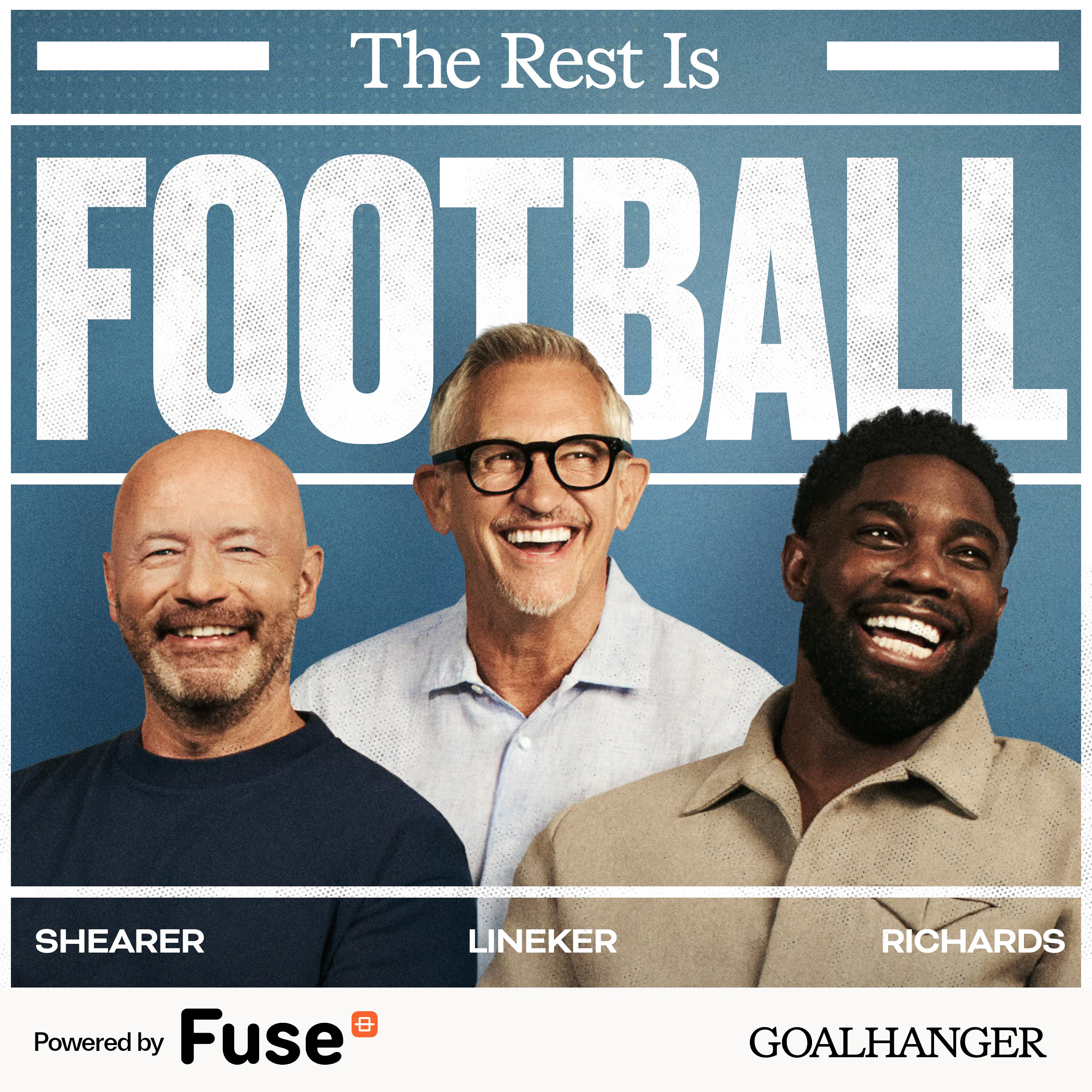
Germany finally lost a World Cup penalty shootout — and the panel agrees they deserved every bit of their humiliating exit. Alan Shearer, who was at the game in Boston, called the first half one of the worst performances he had ever seen: no energy, no quality, no fight.

Despite deep fears about US immigration policy, ICE enforcement, and geopolitical tension, the 2026 World Cup started and quickly became a force for human connection. Tournament after tournament, it delivers a brief moment of global uplift that no one can manufacture.

The Trump administration barred Iran's World Cup players from US hotels and forced them to travel back to Tijuana at 4 AM after every match. The Iranian embassy in Kenya called it the most unfair and shameful behavior ever seen at a World Cup.

The biggest trend of 2026 isn't AI chatbots — it's IRL experiences. From the World Cup to movie theaters to live concerts, people are choosing real-world togetherness over digital convenience.
1 in 5 World Cup elimination games are decided by penalty kicks, and Jason Kelce wanted to know how goalkeepers choose their side. He recruited US legend Tim Howard for a session at St. Joseph's University — and actually saved one.
Analytics and improved scouting have essentially eliminated bad lottery picks. Bill Simmons and Kyle Mann note that the first 12 players taken were universally the right calls — no Kendrick Browns, no wild swings. The draft has become too competent to be fun.

Creator revenues are set to exceed $21 billion in 2026, more than doubling since 2022, and Cannes Lions is the bellwether. About 500 YouTube creators are attending this year — up from 400 last year — and nano and micro-influencers now take 49% of US creator spend while traditional TV ad budgets shrink.
Fans at Shinnecock booed Wyndham Clark's every shot and cheered his misses — a level of hostility rarely seen at a US Open. The hosts break down the three strikes against him: smashing lockers at Oakmont, destroying a T-Mobile sign, and making a birth control joke at the Masters Par 3 tournament.

Errol Musk defends having a child with his stepdaughter, claims two-thirds of the world has a marriageable age of 12, and responds to every challenge with 'you may think so'. This is not satire — it's the real clip, and it's extraordinary.
Will Ferrell walked into Lorne Michaels' office carrying a briefcase stuffed with counterfeit money from a toy store, planning to stack it on Lorne's desk and demand a spot on SNL. He was too nervous to pull it off — but he brought the briefcase back to the meeting where he was finally offered the job.

Mussolini's sporting strategy wasn't just building stadiums — it was a three-layered system. First, he projected himself as Italy's greatest athlete, bare-chested on skis and horseback. Second, 3,000 new sports fields and gyms pushed mass participation to build an army-ready population. Third, elite Italian sportspeople competed internationally, turning every medal into a fascist advertisement.

Young fans haven't abandoned sport — they've just stopped watching it the way their parents did. A YouGov poll shows 74% of 18-to-24-year-olds follow sport regularly, but only 30% primarily watch full games. The match itself is becoming an interruption in a flood of clips, podcasts and punditry.

The football-versus-soccer debate is pure noise. Once you move to America and start calling it soccer, you quickly realise nobody cares — everyone knows what you mean and the game is just as beautiful.
At 35, Lionel Messi finally won the one trophy that had eluded him his entire career. Argentina beat France in a penalty shootout after an astonishing comeback, giving Messi — arguably the greatest player who ever lived — the World Cup crown.

When FIFA announced Qatar as the 2022 World Cup host, a devastated Bill Clinton reportedly threw an ornament at his hotel room mirror, shattering it. The reaction captured the disbelief of an American delegation that had every reason to expect a win.
Qatar ranked in the hundreds as a soccer-playing nation and had almost no infrastructure — yet it beat the US, South Korea, Japan, and Australia to host the 2022 World Cup. The win made no logical sense except as the opening move in a billion-dollar soft-power game.
You're at the end of this conversation.
New podbits will appear here as podcasts discuss this topic.
No sections match your search.
We use essential and analytics cookies to run Vuci. To understand how the site is used: Privacy Policy.

Install Vuci on your phone
Add it to your home screen for a faster, app-like experience.
Install Vuci on your phone
Tap the Share button, then “Add to Home Screen”.
A new version is available
Reload to get the latest Vuci.


