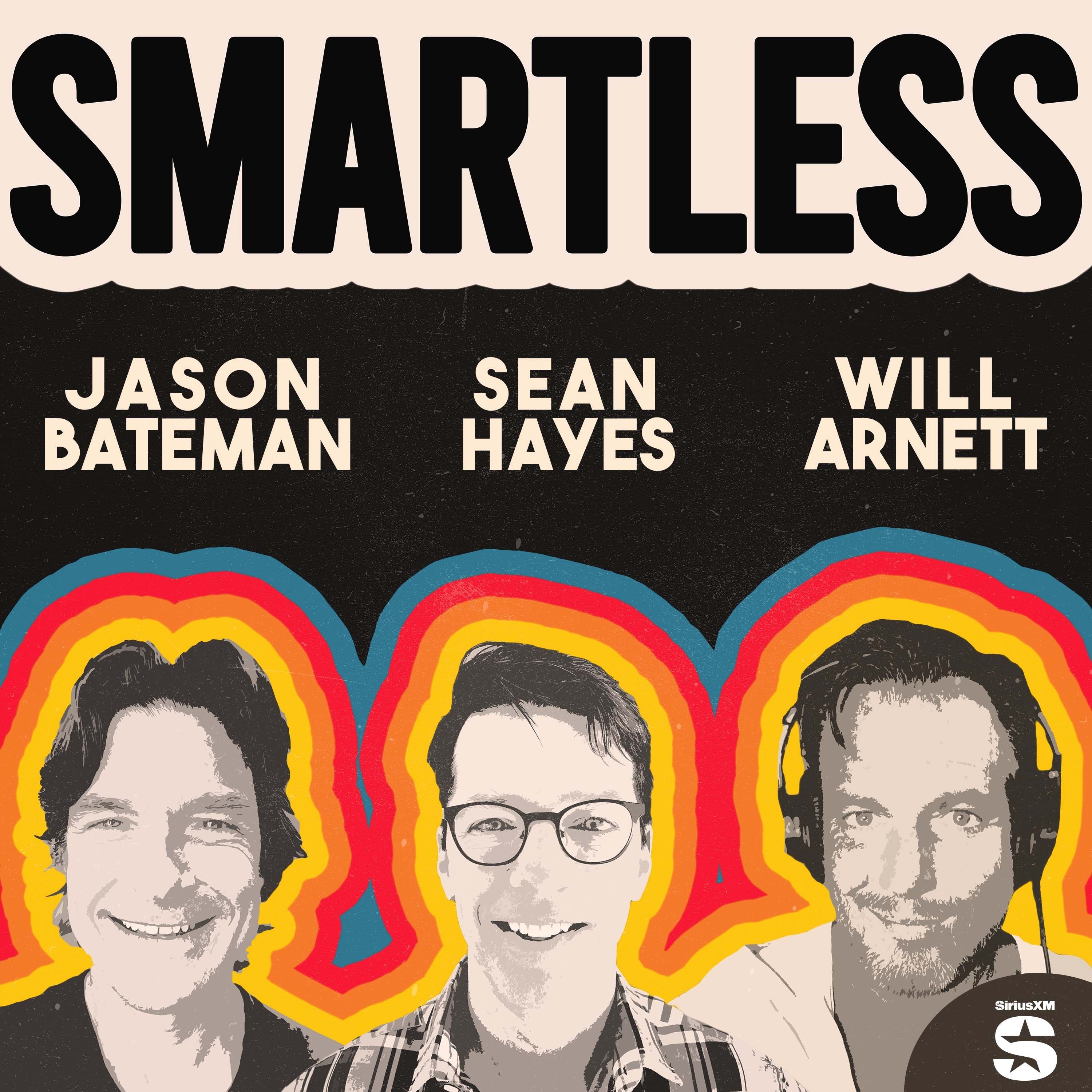
Jason Bateman admits he sometimes takes roles specifically because the character has a personality trait he wants to try on in his own life. It is a low-stakes personal experiment disguised as work.
Where this was said
At 34:10 · chapter starts 29:25
Will mentions that he recently discovered Emma's adaptation of Alone in Berlin — Hans Fallada's novel about quiet resistance to Nazi Germany — and watched it unaware she had made it. He calls the book one of the best second halves he has ever read, and the film beautiful. Emma, visibly touched, asks whether Will is really one of the three people who saw it. [1] — Will Arnett "Will Arnett called Alone in Berlin one of the best second halves of a book he has ever read. Emma Thompson said the novel and the film she …" 31:48 The conversation opens into a broader discussion about how Emma selects projects across wildly different genres. Her answer is intuitive and almost mystical: things come to you at moments when you need them, and 'something will come across my bowels' and she knows instantly. She links her attraction to Alone in Berlin to a larger obsession with the two World Wars, which she argues left traumas in the UK that have never been properly healed — a particular resonance for someone born in 1959, just 14 years after VE Day.
Will Arnett called Alone in Berlin one of the best second halves of a book he has ever read. Emma Thompson said the novel and the film she made from it speak to World War II traumas that the UK has never properly addressed.
Emma Thompson, born in 1959 just 14 years after the war's end, says the UK has never properly healed from the traumas of both World Wars. That unresolved grief is why films like Alone in Berlin keep drawing her in.
Robby Hoffman isn't fearless — she's terrified all the time. The difference is she does it anyway, because not doing it feels worse than the fear itself.
John Mulaney texted Robby Hoffman out of nowhere saying he'd been a fan for a while and wanted to make a Netflix special with her. Robby called it 'shocking, horrifying, anxiety-inducing, surreal and thrilling' — and said yes.
Mulaney is buttoned-up, suit-wearing, classy. Robby is gritty, raw, and undefined. Together they made the collab nobody expected. Batman and Robin. Eminem and Dido.
Music had Pope Gregory forcing notation. Comedy has had 'magical thinking' — he's just got funny bones. But jokes work through discoverable, teachable mechanics. Writing down the rules doesn't kill the magic; it gives more people access to it.
Howard Ashman had one insight nobody else had: animated Disney films should be Broadway musicals. The third song of every great musical is the character sitting alone explaining what they want. That's 'Part of Your World.' That structure — combined with Alan Menken's compositions — generated Beauty and the Beast, Aladdin, and The Lion King, and turned Disney Animation into the most profitable creative engine in entertainment history.
The Lion King musical has been running for 30 years across Broadway, London's West End, and global touring companies. It has grossed over $11 billion in total revenue — more than Avatar, more than Avengers: Endgame, more than any album, more than any video game. It generates an average of $350 million in revenue every single year. Disney owns it outright.
The anonymous French artist Invader has hidden 1,500 pixelated mosaic artworks across Paris alone, with thousands more scattered across 80+ cities — affixed to the Eiffel Tower, the Hollywood sign, and even sent to the International Space Station. He might be even busier than Banksy.
The Flash Invaders app turns city streets into a treasure hunt, letting players scan Invader's hidden mosaics for points. Players have collectively logged over 47 million flashes. Unlike most mobile games that glue you to a screen, this one forces you to look up and engage with your surroundings.
New York draws thousands of young, talented performers every year chasing Broadway stardom — but the hard truth is that most of them never make it. Zelig Williams was one of the rare exceptions.
We use essential and analytics cookies to run Vuci. To understand how the site is used: Privacy Policy.
Install Vuci on your phone
Add it to your home screen for a faster, app-like experience.
Install Vuci on your phone
Tap the Share button, then “Add to Home Screen”.
A new version is available
Reload to get the latest Vuci.
