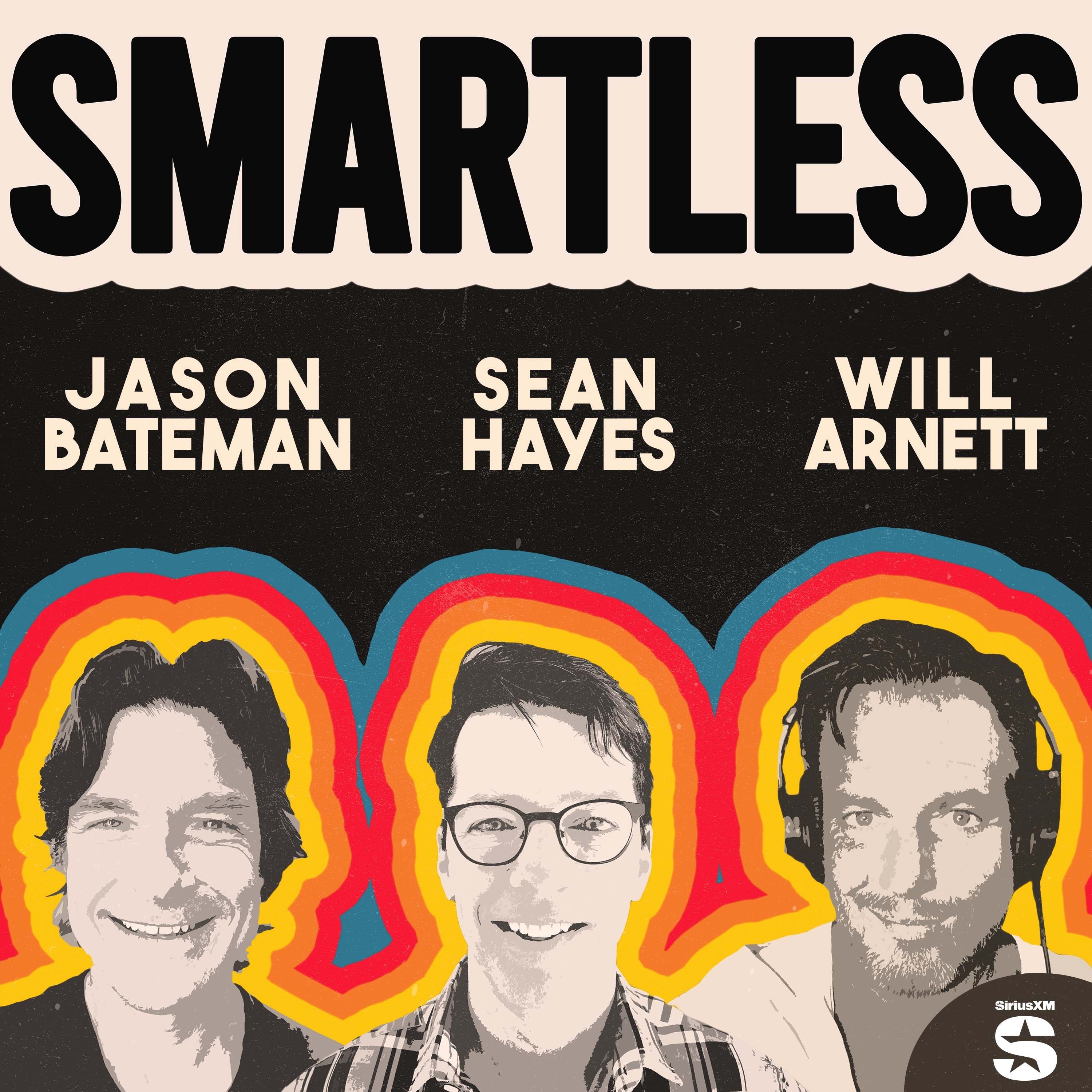
Will Arnett called Alone in Berlin one of the best second halves of a book he has ever read. Emma Thompson said the novel and the film she made from it speak to World War II traumas that the UK has never properly addressed.
Where this was said
At 31:48 · chapter starts 29:25
Will mentions that he recently discovered Emma's adaptation of Alone in Berlin — Hans Fallada's novel about quiet resistance to Nazi Germany — and watched it unaware she had made it. He calls the book one of the best second halves he has ever read, and the film beautiful. Emma, visibly touched, asks whether Will is really one of the three people who saw it. [1] — Will Arnett "Will Arnett called Alone in Berlin one of the best second halves of a book he has ever read. Emma Thompson said the novel and the film she …" 31:48 The conversation opens into a broader discussion about how Emma selects projects across wildly different genres. Her answer is intuitive and almost mystical: things come to you at moments when you need them, and 'something will come across my bowels' and she knows instantly. She links her attraction to Alone in Berlin to a larger obsession with the two World Wars, which she argues left traumas in the UK that have never been properly healed — a particular resonance for someone born in 1959, just 14 years after VE Day.
Emma Thompson, born in 1959 just 14 years after the war's end, says the UK has never properly healed from the traumas of both World Wars. That unresolved grief is why films like Alone in Berlin keep drawing her in.
Jason Bateman admits he sometimes takes roles specifically because the character has a personality trait he wants to try on in his own life. It is a low-stakes personal experiment disguised as work.
Factories that replaced coal engines with electric ones in the early 1900s got only 6% efficiency gains. Those that redesigned their entire factory around electricity got a 3x productivity improvement. Swapping AI tools into your existing structure will give you 6%. Rebuilding around AI will give you 10x.
Lebanese terrorists backed by Iran were holding American hostages throughout the Reagan presidency. Reagan had loudly campaigned against negotiating with terrorists — putting him in an impossible position that his team quietly decided to ignore.
During the Iran-Iraq War, the US openly supplied Iraq with weapons, training, and intelligence. At the same time, Oliver North was secretly funneling missiles to Iran. The US was playing both sides of a shooting war.
Oliver North traveled to Iran under the alias 'William P. Goode' with a fake passport. CIA Director William Casey allegedly gave him cyanide pills so he could kill himself rather than be tortured if captured. He returned safely and the deal moved forward.
The Pentagon sold missiles to the CIA for $3,700 each. The CIA sold them to Richard Secord at cost. Secord sold them to Iranian middleman Ghorbanifar for $10,000 each. Ghorbanifar charged Iran even more. The profit — including $3 million in interest in one Swiss account — was diverted directly to fund the Nicaraguan Contras.
America secretly transferred 2,000 missiles and missile parts to Iran in 8 shipments over more than a year. Only 3 of 7 hostages were released. Three more were taken. The net result was zero freed hostages and a full-blown constitutional scandal.
On October 5, 1986, a CIA Contra supply plane flew a weapons drop at 2,500 feet in broad daylight. A Sandinista soldier shot it down. The only survivor, Eugene Hasenfuss, had borrowed a parachute from his skydiving brother. He was captured, paraded in front of cameras, and told the Sandinistas everything he knew.
The CIA supply operation used a front company called Southern Air Transport, widely known to be a CIA cover. Crew members of the downed plane carried their Southern Air Transport employee IDs in their wallets. One also had a business card directly linking him to Oliver North's office in Washington.
When the scandal broke, Oliver North and his secretary Fawn Hall conducted what became known as a 'shredding party,' destroying a day's worth of documents. The full truth of Iran-Contra may never be known because of what was fed through that shredder.
We use essential and analytics cookies to run Vuci. To understand how the site is used: Privacy Policy.
Install Vuci on your phone
Add it to your home screen for a faster, app-like experience.
Install Vuci on your phone
Tap the Share button, then “Add to Home Screen”.
A new version is available
Reload to get the latest Vuci.
