
Only artist with Oscar for acting AND writing
Emma Thompson is the sole artist to have won an Academy Award for both acting (Howards End) and screenwriting (Sense and Sensibility).
Emma Thompson keeps her Oscars in the bathroom to keep them "in their place" — and almost became a stand-up comedian instead of an actress.
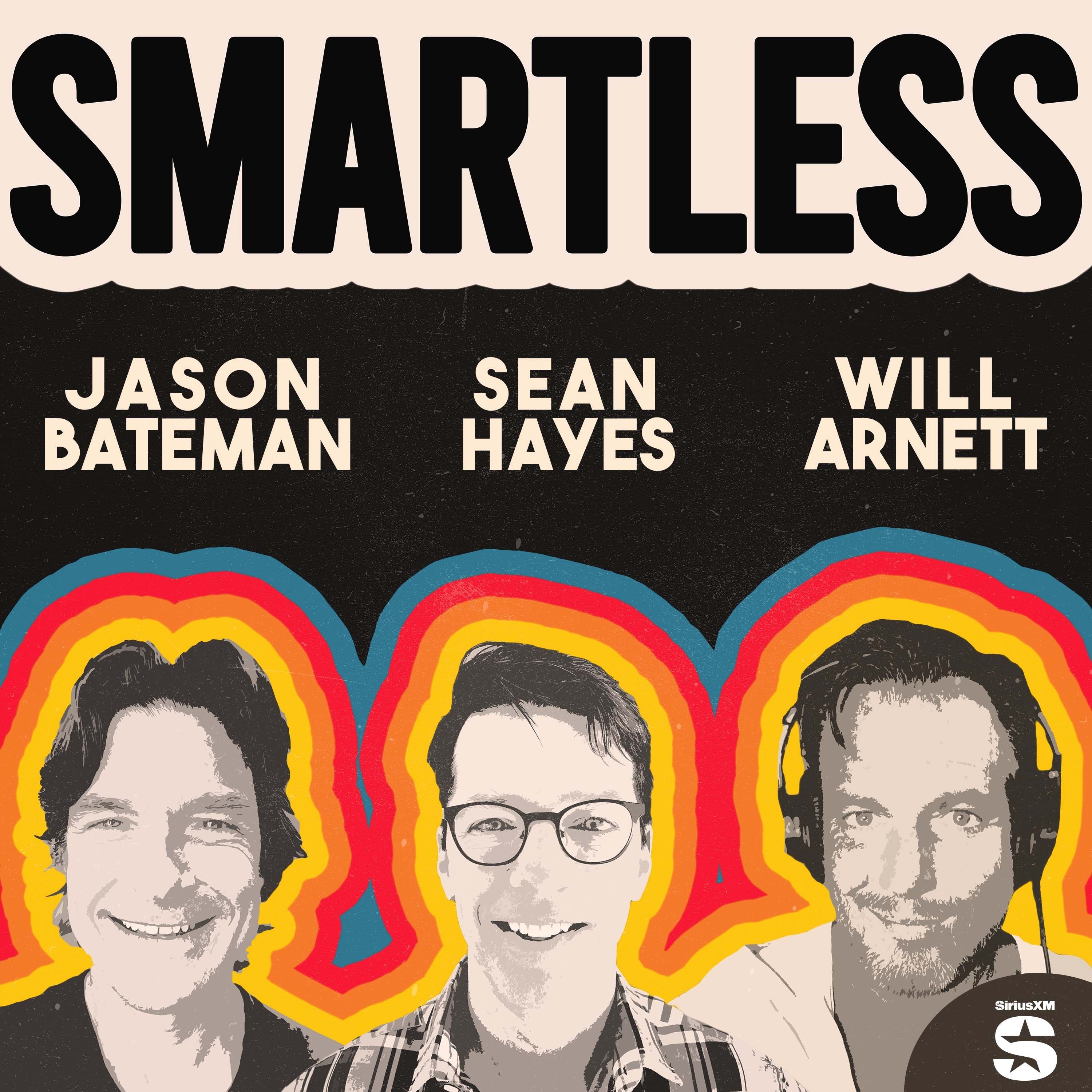
SmartLess
Emma Thompson keeps her Oscars in the bathroom to keep them "in their place" — and almost became a stand-up comedian instead of an actress.
TL;DR
Emma Thompson joins Jason Bateman, Sean Hayes, and Will Arnett for a wide-ranging, warmly chaotic conversation that feels more like a dinner party than an interview. Topics veer from London's brutal heatwave and Britain's ice obsession to fan encounters, Barneys' demise, and growing up in a theatrical household. Emma reveals her Oscars live in the bathroom, that she nearly became a stand-up comedian inspired by Lily Tomlin, and how a sketch about Victorian sexual ignorance led directly to her Oscar-winning Sense and Sensibility screenplay [1] — Emma Thompson "Emma Thompson's father was a working-class boy from Guildford who escaped his circumstances to become an actor. His mother — Emma's grandmo…" 38:10 . The single best takeaway: boredom is a creative tool we've collectively forgotten how to use.
Emma Thompson joins Jason Bateman, Sean Hayes, and Will Arnett on SmartLess for an episode about Barneys, boredom, haggis, and ice.
The episode opens with two sponsor reads before the main content begins. Jason Bateman delivers the Hotels.com spot, pitching free membership that saves up to 20% instantly with member prices, while Sean Hayes voices the ACANA pet food ad, emphasising whole ingredients like pasture-raised beef and turmeric. Neither read involves the hosts breaking character; both are clearly scripted commercial segments.
Rather than a conventional cold open from the hosts, Emma Thompson speaks first — calling in from 'Blighty' with her microphone propped on a box of her newly commissioned name cards. She describes the books on her desk: 'Truth and Repair' by Judith Herman, 'Getting Over Your Parents', and 'On Being Nice' — each book a gentle window into her intellectual preoccupations. She closes the cold open by announcing 'Welcome to SmartLess' in three echoing repetitions, setting a warm, playful, and subtly literary tone for everything that follows.
Before Emma Thompson joins the video call, the hosts indulge in a round of 'face exercises' — pulling exaggerated surprise expressions at each other — before Sean Hayes reveals he genuinely received a note asking him to perform a reaction shot with his mouth closed, prompting good-natured mockery. Will Arnett shares an anecdote about being told mid-shoot that his walk was too wide-legged, and the conversation spills into hockey: Jason Bateman asks Will — a Toronto fan — whether he's cheering for Montreal, before teasing Sean about not knowing the Vegas Golden Knights' name. Will then pivots into Emma Thompson's introduction with the smoothest possible segue, reeling off her Academy Award nominations (five), wins (two), and her unique status as the only performer to win Oscars for both acting and writing. [1] — Will Arnett "Only artist with Oscar for acting AND writing: Emma Thompson is the sole artist to have won an Academy Award for both acting (Howards End) …" 06:25
From her North London office, Emma Thompson takes in each host's video setup: Sean Hayes surrounded by statues and awards, Jason Bateman framed by sky, and Will Arnett in 'deep darkness' with a 'vampire voice'. When Jason notes that she has no awards visible despite having won more than any of them, Emma delivers one of the episode's standout lines: her Oscars are in the lavatory because 'that just keeps them in their place' [1] — Emma Thompson "Emma Thompson keeps her Oscars in the lavatory and her Globes on a shelf so high she can't see them. It's not false modesty — it's a very B…" 08:00 , with her Globes and BAFTAs on a shelf so high she cannot see them. She calls it very British. Will's counter-proposal — a spotlight table in the foyer so visitors know exactly what they're dealing with — delights her, and the group riffs on gradually placing awards in every room until guests simply want to leave.
Emma has lived on the same North London street since she was six — over 60 years — and right now that street is suffering through a 35-degree heatwave with no air conditioning and no ice [1] — Emma Thompson "35°C London heatwave: London was experiencing a 35-degree Celsius heatwave during the recording, unusual for a city that typically has only…" 09:57 . Jason Bateman seizes on the ice angle, observing that Europe seems to have reached a collective agreement that carbonated drinks don't taste better cold — 'I sound like an ugly American, I apologise.' Emma's response is gleeful: Americans are simply 'obsessed' with ice. When she first arrived, ice appeared without asking — she jokes that chicken Parmesan came with ice, and that visitors were practically dunked in an ice bath on arrival. [2] — Emma Thompson "When Emma Thompson first arrived in America, she was baffled by the relentless presence of ice — everything came with it, she joked, includ…" 10:32 She explains the practical reality: British fridges are smaller, ice-making mechanisms break within a week, and for most of history three hot days a year didn't require a solution.
Jason observes that the shift from autographs to phone cameras has eliminated the natural exit clause — now everyone has a camera and the pressure to say yes is constant. Emma asks the group directly: do you ever say no? Will admits he sometimes does when he's with young children; Emma says she rarely does but has found that people take a polite refusal with complete understanding, almost as if they knew the ask was a lot. The conversation then unlocks one of Emma's great stories: at Harry's Bar in Venice during the film festival, a woman grinned at her across the room for an entire evening. [1] — Emma Thompson "At Harry's Bar in Venice, a woman grinned at Emma Thompson all evening before revealing she thought Thompson was the person who sold her sh…" 18:15 As she left, the woman revealed she remembered Emma from 'the 5th floor at Barneys' — she thought Thompson was the shoe saleswoman who had sold her a pair she still wears. Emma had the choice to play along or correct her, and chose the diplomatic middle path.
Coming out of Emma's Barneys story, the conversation pivots to genuine, slightly guilty nostalgia for the store's closure. Will notes he misses both the New York and LA locations. Sean remembers going directly to the shoe department. Jason explains it went 'belly up' because of online shopping. The aside is brief but affectionate — a shared cultural reference across the Atlantic — before Jason signals the ad break.
The mid-roll block opens with a repeat of the ACANA pet food read, followed by an Allstate home insurance ad built around matching family pyjamas. Southern New Hampshire University pitches its online degree programs with a dog joke. Will Arnett then delivers a personalised BetterHelp ad, sharing that he has learned to talk through difficult conversations with someone else before having them, and noting that even in 2026, mental health stigma still stops people from seeking help. BetterHelp offers 10% off at betterhelp.com/smartless.
Will Arnett drops what is genuinely new information for the other hosts: Emma Thompson spent years in the famous Cambridge Footlights sketch comedy group — the equivalent, she explains, of SNL in review format — alongside Hugh Laurie and Stephen Fry. [1] — Emma Thompson "Before the Oscars, before Harry Potter, Emma Thompson planned to be a comedian. She performed sketch comedy at Cambridge Footlights alongsi…" 24:28 What surprises Jason and Sean further is that comedy was her intended career, not drama. She deeply admired Lily Tomlin, especially 'The Search for Signs of Intelligent Life in the Universe', and Jane Wagner's extraordinary characters. Jason quickly notes that she never fully left comedy — every dramatic role she plays carries some cheeky wink, some expanded comic possibility. It is a generous observation, and Emma accepts it warmly.
Sean Hayes cheerfully announces he is 'a massive Harry Potter fan' and asks Emma how she trusted the leap into playing the spectacularly neurotic Professor Sybill Trelawney — Coke-bottle glasses, enormous magnified eyeballs, prone to possession — in a franchise already crowded with extraordinary characters. Will adds the essential question: how do you calibrate your volume against a cast who have been working for years? Emma's answer is both pragmatic and funny: the character is in the books. Trelawney is described as nearly blind and deeply neurotic; Emma simply followed the text. She also puts the role into perspective — she estimates she has spent about 30 days on Harry Potter across her entire career, which makes it strange that it looms so large in public consciousness.
Will mentions that he recently discovered Emma's adaptation of Alone in Berlin — Hans Fallada's novel about quiet resistance to Nazi Germany — and watched it unaware she had made it. He calls the book one of the best second halves he has ever read, and the film beautiful. Emma, visibly touched, asks whether Will is really one of the three people who saw it. [1] — Will Arnett "Will Arnett called Alone in Berlin one of the best second halves of a book he has ever read. Emma Thompson said the novel and the film she …" 31:48 The conversation opens into a broader discussion about how Emma selects projects across wildly different genres. Her answer is intuitive and almost mystical: things come to you at moments when you need them, and 'something will come across my bowels' and she knows instantly. She links her attraction to Alone in Berlin to a larger obsession with the two World Wars, which she argues left traumas in the UK that have never been properly healed — a particular resonance for someone born in 1959, just 14 years after VE Day.
Jason Bateman opens a candid thread: he has occasionally accepted roles not just for story or director or cast, but because the character embodied something he himself wanted to develop. [1] — Jason Bateman "Jason Bateman admits he sometimes takes roles specifically because the character has a personality trait he wants to try on in his own life…" 34:10 Emma latches onto this immediately, and connects it to her recent television series 'Down Cemetery Road', based on a Mick Herron book from the Slow Horses world. Her character Zoe grew up in 1960s London and is emphatically not a good girl — unapologetic, impolite, and not reflexively kind. Emma reflects that she was brought up to be emollient, accepting, tolerant: the very traits that, she argues, women in her culture are socialised to perform. Playing Zoe was liberating precisely because Zoe uses kindness judiciously, not as a scattergun to avoid conflict or judgment. Will tries to clarify: is Zoe's kindness weaponised? Emma says no — it is simply instinct, which is different.
Will notes that both of Emma's parents were actors, and asks what it was like to grow up inside the family business. Emma's answer goes much further back. Her father was working class, from a southern English town, largely self-taught — a 'proper leaver' of his origins who became an actor and met Emma's Scottish Presbyterian mother in the theater. [1] — Emma Thompson "Grandmother was a servant raped by employer: Emma Thompson's paternal grandmother went into domestic service at 16 and had a child out of w…" 38:50 But it is the generation before her father that truly lands: his mother, Emma's grandmother, went into domestic service at 16. One of her children was born out of wedlock because she was raped by one of her employers. Four children, a fractured family history, and a son determined to get out. Emma recounts this without sentimentality — just as context for who she is and where she comes from. The family grew up in a world without television: her father expected to do Shakespeare in the provinces and radio work. Emma didn't have a TV until she was about eight, and it was black and white.
Emma's discussion of her policy on television — she told her daughter the TV was broken for eight years, and held off on a phone until age 13 [1] — Emma Thompson "Emma Thompson asked the hosts a simple question: when did you last feel actually bored? The conversation that followed argued that boredom …" 41:40 — opens into the episode's most philosophical stretch. She asks all three hosts when they last felt genuinely bored. Jason answers immediately: this past weekend, indoors, rain, out of good TV, and he found it revelatory. He argues that true relaxation lives next door to boredom, and that is where clarity and nap time and right priorities emerge. Emma agrees that we have lost our relationship with boredom entirely — and that the smartphone generation cannot even ride an elevator without looking at their phone. [2] — Emma Thompson "Boredom is good for imagination: Emma Thompson argued that society has lost its relationship with boredom, which she and Jason Bateman both…" 41:45 Will admits, somewhat against the grain, that he is never bored — he simply doesn't feel it. Jason reframes boredom not as a pejorative but as a signal of high-functioning modern life that finally switches off.
Will Arnett pivots to Sean Hayes, who has been unusually quiet, asking whether hearing Emma describe her theatrical upbringing makes him wish he'd grown up in that environment. Sean's answer is warm and self-deprecating: his own entry into theater was operating a single on/off light switch for 'Calamity Jane' in junior high. He was nervous to tell his family he was doing theater — not sports — until his oldest brother pointed out that football players wear eye-black just like actors wear stage makeup. The moment is quietly endearing. Sean then reflects that while he loves theater, the physical and mental endurance it demands is something one eventually has to outgrow.
Will reads a promo for the Audible comedy series 'Heads Will Roll: Heir Apparent', the sequel starring Kate McKinnon with a star-studded cast. Emma reads a Whole Foods Market summer grilling ad highlighting their antibiotic-free burgers and prepared foods. Sean delivers the Muscle Milk spot, plugging the new formula's four flavours and its post-workout positioning.
Will asks about Emma's last theater production. The answer is unexpected: she performed Mrs. Lovett in Sweeney Todd with bass-baritone Bryn Terfel, staged with the New York Philharmonic at Lincoln Center for five performances, then two weeks at London's Dominion Theatre. [1] — Emma Thompson "Emma Thompson spent nine months learning the Sweeney Todd score before performing it with the New York Philharmonic at Lincoln Center. Shak…" 47:20 She spent nine months learning the score. What she loved most was the cross-pollination of forms — acting while a timpanist made extraordinary sounds behind her, the orchestra themselves energised by having actors moving among them. She uses the production to make a broader point about artistic snobbery: theater, classical music, and television acting are too siloed. A good actor is a good actor in any form. And then, in a casual but striking claim, she says Sondheim is harder than Shakespeare — because Shakespeare, she says, is like a reliable old sailing boat: you get in and sail. Sondheim gives you no such comfort.
Will notes that Emma is credited as the writer of Sense and Sensibility — something both he and Sean genuinely did not know. Emma corrects them gently: she adapted it, Jane Austen wrote it, and she 'plagiarised mercilessly'. But the real revelation is how the commission happened. [1] — Emma Thompson "A feminist sketch Emma Thompson wrote about a Victorian woman encountering a penis for the first time led producer Lindsay Doran to ask her…" 50:50 Emma wrote a feminist comedy sketch about a young Victorian bride returning from her honeymoon baffled by a 'small woodland hairy creature' in her husband's lap that 'changes shape'. The sketch was about sexual ignorance — the fact that women in that era were married off without any knowledge of sex whatsoever. Producer Lindsay Doran, who began her career with Spinal Tap, saw the sketch and wrote to Emma saying: 'I've seen your sketch about the Victorian penis. I wonder if you would fancy adapting a Jane Austen novel.' Emma called it an 'interesting segue'. She said yes, gave it a go, and eventually took home an Academy Award.
Emma has written two children's films, the most notable being Nanny McPhee, and has been collaborating with Gary Clarke — the Irish composer behind Sing Street — on a stage musical for a decade. [1] — Emma Thompson "Nanny McPhee musical coming to West End: Emma Thompson has spent 10 years writing the musical adaptation of Nanny McPhee, with music by Gar…" 53:35 She gave Clarke two sonic touchstones: Tom Waits' 'Swordfish Trombone' and something in the vein of the Tiger Lillies — Victorian steampunk, dark circus, not too on the nose. After a billion songs written and cut, the show is finally heading to the West End. Will then brings up The Sheep Detective, a film written by Craig Mazin (who wrote Chernobyl) about a shepherd who is murdered and whose sheep solve the crime. Emma says the premise alone was enough: she would have played a broom. The film also stars Hugh Jackman. Emma was only on set for three weeks, shooting in a picture-perfect English village she eventually remembers as Hambleton.
Will declares his love for the English breakfast, which prompts Jason to ask what Will actually orders. Sean is mystified by black pudding. Emma explains: pig's blood, mixed with spices and grains — like haggis, which is a sheep's stomach filled with offal. The table is briefly alarmed. Emma's explanation is both funny and historically grounded: when you killed an animal, you ate everything, because you didn't have the luxury of being wasteful. Scotland in particular was very poor until recently, and many areas still are. The nose-to-tail culinary tradition is not about culinary adventure — it is about survival economics.
Sean Hayes, who spent three to four months in England the previous year, asks whether Emma still feels that sense of wonder about her home country or whether familiarity has dulled it. Emma is unequivocal: she loves it more now than she did when young. She describes Scotland as wild, unheld, full of extraordinary energies, and London as a precious teeming bowl of people living generally peacefully. She shot in Cornwall recently for the first time, and found it so exquisite she wanted to move there. Will Arnett, devoted Anglophile, immediately pitches a non-scripted travel show: Emma rediscovering England, region by region, with Will as EP. Jason compares it to Stanley Tucci's Italy series. Emma agrees, provided Will and the others come along and they eat the sheep at the end.
Emma departs to stand in a garden sprinkler in the North London heat, leaving the hosts to process the conversation. Jason admits Will squandered the chance to go through her incredible filmography; Will retorts they were just visiting, not interviewing. Sean brings up Remains of the Day with genuine reverence; Jason wonders how many films she has made. The post-interview warmth is genuine — all three are slightly dazzled. Jason floats a new sign-off line ('I guess we're just smartless') before the show closes with sponsor reads for Principal, a workplace benefits provider, and Harvey, an AI platform for legal work used by more than 60% of the AmLaw 100.
Chapter 3 · 02:45
Before Emma Thompson joins the video call, the hosts indulge in a round of 'face exercises' — pulling exaggerated surprise expressions at each other — before Sean Hayes reveals he genuinely received a note asking him to perform a reaction shot with his mouth closed, prompting good-natured mockery. Will Arnett shares an anecdote about being told mid-shoot that his walk was too wide-legged, and the conversation spills into hockey: Jason Bateman asks Will — a Toronto fan — whether he's cheering for Montreal, before teasing Sean about not knowing the Vegas Golden Knights' name. Will then pivots into Emma Thompson's introduction with the smoothest possible segue, reeling off her Academy Award nominations (five), wins (two), and her unique status as the only performer to win Oscars for both acting and writing. [1] — Will Arnett "Only artist with Oscar for acting AND writing: Emma Thompson is the sole artist to have won an Academy Award for both acting (Howards End) …" 06:25
Emma Thompson is the sole artist to have won an Academy Award for both acting (Howards End) and screenwriting (Sense and Sensibility).
Chapter 4 · 06:40
From her North London office, Emma Thompson takes in each host's video setup: Sean Hayes surrounded by statues and awards, Jason Bateman framed by sky, and Will Arnett in 'deep darkness' with a 'vampire voice'. When Jason notes that she has no awards visible despite having won more than any of them, Emma delivers one of the episode's standout lines: her Oscars are in the lavatory because 'that just keeps them in their place' [1] — Emma Thompson "Emma Thompson keeps her Oscars in the lavatory and her Globes on a shelf so high she can't see them. It's not false modesty — it's a very B…" 08:00 , with her Globes and BAFTAs on a shelf so high she cannot see them. She calls it very British. Will's counter-proposal — a spotlight table in the foyer so visitors know exactly what they're dealing with — delights her, and the group riffs on gradually placing awards in every room until guests simply want to leave.
Emma Thompson keeps her Oscars in the lavatory and her Globes on a shelf so high she can't see them. It's not false modesty — it's a very British instinct to refuse to let trophies define the room.
Emma Thompson keeps her Academy Awards in the lavatory to keep them 'in their place', and stores her Globes and BAFTAs on a shelf so high she can't see them.
Chapter 5 · 09:20
Emma has lived on the same North London street since she was six — over 60 years — and right now that street is suffering through a 35-degree heatwave with no air conditioning and no ice [1] — Emma Thompson "35°C London heatwave: London was experiencing a 35-degree Celsius heatwave during the recording, unusual for a city that typically has only…" 09:57 . Jason Bateman seizes on the ice angle, observing that Europe seems to have reached a collective agreement that carbonated drinks don't taste better cold — 'I sound like an ugly American, I apologise.' Emma's response is gleeful: Americans are simply 'obsessed' with ice. When she first arrived, ice appeared without asking — she jokes that chicken Parmesan came with ice, and that visitors were practically dunked in an ice bath on arrival. [2] — Emma Thompson "When Emma Thompson first arrived in America, she was baffled by the relentless presence of ice — everything came with it, she joked, includ…" 10:32 She explains the practical reality: British fridges are smaller, ice-making mechanisms break within a week, and for most of history three hot days a year didn't require a solution.
Emma Thompson has lived on the same street in North London since she was 6 years old — more than 60 years.
London was experiencing a 35-degree Celsius heatwave during the recording, unusual for a city that typically has only about three hot days per year.
When Emma Thompson first arrived in America, she was baffled by the relentless presence of ice — everything came with it, she joked, including chicken Parmesan. Britain's lack of ice, she explained, comes down to smaller fridges and fewer hot days.
Chapter 6 · 14:00
Jason observes that the shift from autographs to phone cameras has eliminated the natural exit clause — now everyone has a camera and the pressure to say yes is constant. Emma asks the group directly: do you ever say no? Will admits he sometimes does when he's with young children; Emma says she rarely does but has found that people take a polite refusal with complete understanding, almost as if they knew the ask was a lot. The conversation then unlocks one of Emma's great stories: at Harry's Bar in Venice during the film festival, a woman grinned at her across the room for an entire evening. [1] — Emma Thompson "At Harry's Bar in Venice, a woman grinned at Emma Thompson all evening before revealing she thought Thompson was the person who sold her sh…" 18:15 As she left, the woman revealed she remembered Emma from 'the 5th floor at Barneys' — she thought Thompson was the shoe saleswoman who had sold her a pair she still wears. Emma had the choice to play along or correct her, and chose the diplomatic middle path.
At Harry's Bar in Venice, a woman grinned at Emma Thompson all evening before revealing she thought Thompson was the person who sold her shoes on the fifth floor of Barneys. The woman was thrilled to see her doing so well.
Chapter 9 · 24:05
Will Arnett drops what is genuinely new information for the other hosts: Emma Thompson spent years in the famous Cambridge Footlights sketch comedy group — the equivalent, she explains, of SNL in review format — alongside Hugh Laurie and Stephen Fry. [1] — Emma Thompson "Before the Oscars, before Harry Potter, Emma Thompson planned to be a comedian. She performed sketch comedy at Cambridge Footlights alongsi…" 24:28 What surprises Jason and Sean further is that comedy was her intended career, not drama. She deeply admired Lily Tomlin, especially 'The Search for Signs of Intelligent Life in the Universe', and Jane Wagner's extraordinary characters. Jason quickly notes that she never fully left comedy — every dramatic role she plays carries some cheeky wink, some expanded comic possibility. It is a generous observation, and Emma accepts it warmly.
Before the Oscars, before Harry Potter, Emma Thompson planned to be a comedian. She performed sketch comedy at Cambridge Footlights alongside Hugh Laurie and Stephen Fry, inspired by Lily Tomlin's one-woman shows.
Emma Thompson performed sketch comedy for years in the Cambridge Footlights alongside Hugh Laurie and Stephen Fry, describing it as similar in format to Saturday Night Live.
Emma Thompson originally planned to be a stand-up comedian, inspired by Lily Tomlin, before her acting career took off.
Chapter 11 · 29:25
Will mentions that he recently discovered Emma's adaptation of Alone in Berlin — Hans Fallada's novel about quiet resistance to Nazi Germany — and watched it unaware she had made it. He calls the book one of the best second halves he has ever read, and the film beautiful. Emma, visibly touched, asks whether Will is really one of the three people who saw it. [1] — Will Arnett "Will Arnett called Alone in Berlin one of the best second halves of a book he has ever read. Emma Thompson said the novel and the film she …" 31:48 The conversation opens into a broader discussion about how Emma selects projects across wildly different genres. Her answer is intuitive and almost mystical: things come to you at moments when you need them, and 'something will come across my bowels' and she knows instantly. She links her attraction to Alone in Berlin to a larger obsession with the two World Wars, which she argues left traumas in the UK that have never been properly healed — a particular resonance for someone born in 1959, just 14 years after VE Day.
Will Arnett called Alone in Berlin one of the best second halves of a book he has ever read. Emma Thompson said the novel and the film she made from it speak to World War II traumas that the UK has never properly addressed.
Emma Thompson, born in 1959 just 14 years after the war's end, says the UK has never properly healed from the traumas of both World Wars. That unresolved grief is why films like Alone in Berlin keep drawing her in.
Jason Bateman admits he sometimes takes roles specifically because the character has a personality trait he wants to try on in his own life. It is a low-stakes personal experiment disguised as work.
Chapter 12 · 34:20
Jason Bateman opens a candid thread: he has occasionally accepted roles not just for story or director or cast, but because the character embodied something he himself wanted to develop. [1] — Jason Bateman "Jason Bateman admits he sometimes takes roles specifically because the character has a personality trait he wants to try on in his own life…" 34:10 Emma latches onto this immediately, and connects it to her recent television series 'Down Cemetery Road', based on a Mick Herron book from the Slow Horses world. Her character Zoe grew up in 1960s London and is emphatically not a good girl — unapologetic, impolite, and not reflexively kind. Emma reflects that she was brought up to be emollient, accepting, tolerant: the very traits that, she argues, women in her culture are socialised to perform. Playing Zoe was liberating precisely because Zoe uses kindness judiciously, not as a scattergun to avoid conflict or judgment. Will tries to clarify: is Zoe's kindness weaponised? Emma says no — it is simply instinct, which is different.
Emma Thompson was born in 1959, only 14 years after the end of World War II, which she says shaped her London childhood and explains her artistic obsession with the two World Wars.
Chapter 13 · 38:10
Will notes that both of Emma's parents were actors, and asks what it was like to grow up inside the family business. Emma's answer goes much further back. Her father was working class, from a southern English town, largely self-taught — a 'proper leaver' of his origins who became an actor and met Emma's Scottish Presbyterian mother in the theater. [1] — Emma Thompson "Grandmother was a servant raped by employer: Emma Thompson's paternal grandmother went into domestic service at 16 and had a child out of w…" 38:50 But it is the generation before her father that truly lands: his mother, Emma's grandmother, went into domestic service at 16. One of her children was born out of wedlock because she was raped by one of her employers. Four children, a fractured family history, and a son determined to get out. Emma recounts this without sentimentality — just as context for who she is and where she comes from. The family grew up in a world without television: her father expected to do Shakespeare in the provinces and radio work. Emma didn't have a TV until she was about eight, and it was black and white.
Emma Thompson's father was a working-class boy from Guildford who escaped his circumstances to become an actor. His mother — Emma's grandmother — was a servant who was raped by an employer and had a child out of wedlock. That dramatic family history is the soil from which Thompson's career grew.
Emma Thompson's paternal grandmother went into domestic service at 16 and had a child out of wedlock after being raped by one of her employers — a story Thompson recounted as context for her working-class roots.
Chapter 14 · 40:45
Emma's discussion of her policy on television — she told her daughter the TV was broken for eight years, and held off on a phone until age 13 [1] — Emma Thompson "Emma Thompson asked the hosts a simple question: when did you last feel actually bored? The conversation that followed argued that boredom …" 41:40 — opens into the episode's most philosophical stretch. She asks all three hosts when they last felt genuinely bored. Jason answers immediately: this past weekend, indoors, rain, out of good TV, and he found it revelatory. He argues that true relaxation lives next door to boredom, and that is where clarity and nap time and right priorities emerge. Emma agrees that we have lost our relationship with boredom entirely — and that the smartphone generation cannot even ride an elevator without looking at their phone. [2] — Emma Thompson "Boredom is good for imagination: Emma Thompson argued that society has lost its relationship with boredom, which she and Jason Bateman both…" 41:45 Will admits, somewhat against the grain, that he is never bored — he simply doesn't feel it. Jason reframes boredom not as a pejorative but as a signal of high-functioning modern life that finally switches off.
Emma Thompson and her partner told their daughter the television was broken, a ruse the child believed for approximately eight years until she found the remote at around age nine.
Emma Thompson asked the hosts a simple question: when did you last feel actually bored? The conversation that followed argued that boredom is not a problem to solve but a prerequisite for imagination, real relaxation, and mental clarity — something the smartphone generation has lost entirely.
Emma Thompson argued that society has lost its relationship with boredom, which she and Jason Bateman both agreed is essential for imagination, relaxation, and mental clarity.
Emma Thompson did not allow her daughter to have a phone until secondary school at age 13, as part of a deliberate approach to limit screen time.
Chapter 17 · 47:20
Will asks about Emma's last theater production. The answer is unexpected: she performed Mrs. Lovett in Sweeney Todd with bass-baritone Bryn Terfel, staged with the New York Philharmonic at Lincoln Center for five performances, then two weeks at London's Dominion Theatre. [1] — Emma Thompson "Emma Thompson spent nine months learning the Sweeney Todd score before performing it with the New York Philharmonic at Lincoln Center. Shak…" 47:20 She spent nine months learning the score. What she loved most was the cross-pollination of forms — acting while a timpanist made extraordinary sounds behind her, the orchestra themselves energised by having actors moving among them. She uses the production to make a broader point about artistic snobbery: theater, classical music, and television acting are too siloed. A good actor is a good actor in any form. And then, in a casual but striking claim, she says Sondheim is harder than Shakespeare — because Shakespeare, she says, is like a reliable old sailing boat: you get in and sail. Sondheim gives you no such comfort.
Emma Thompson spent nine months learning the Sweeney Todd score before performing it with the New York Philharmonic at Lincoln Center. Shakespeare, she argues, is easy by comparison — like a reliable old sailing boat.
Emma Thompson spent nine months learning the Sweeney Todd score before performing it with the New York Philharmonic at Lincoln Center and at London's Dominion Theatre.
Chapter 18 · 50:40
Will notes that Emma is credited as the writer of Sense and Sensibility — something both he and Sean genuinely did not know. Emma corrects them gently: she adapted it, Jane Austen wrote it, and she 'plagiarised mercilessly'. But the real revelation is how the commission happened. [1] — Emma Thompson "A feminist sketch Emma Thompson wrote about a Victorian woman encountering a penis for the first time led producer Lindsay Doran to ask her…" 50:50 Emma wrote a feminist comedy sketch about a young Victorian bride returning from her honeymoon baffled by a 'small woodland hairy creature' in her husband's lap that 'changes shape'. The sketch was about sexual ignorance — the fact that women in that era were married off without any knowledge of sex whatsoever. Producer Lindsay Doran, who began her career with Spinal Tap, saw the sketch and wrote to Emma saying: 'I've seen your sketch about the Victorian penis. I wonder if you would fancy adapting a Jane Austen novel.' Emma called it an 'interesting segue'. She said yes, gave it a go, and eventually took home an Academy Award.
A feminist sketch Emma Thompson wrote about a Victorian woman encountering a penis for the first time led producer Lindsay Doran to ask her to adapt a Jane Austen novel. The result: an Oscar-winning screenplay.
Emma Thompson's Oscar-winning Sense and Sensibility screenplay came about after a producer saw her feminist sketch about Victorian sexual ignorance and invited her to adapt a Jane Austen novel.
Emma Thompson has spent a decade writing the Nanny McPhee musical with composer Gary Clarke, aiming for a Victorian steampunk, Tom Waits-meets-dark-circus sound. It is finally coming to the West End.
Chapter 19 · 53:30
Emma has written two children's films, the most notable being Nanny McPhee, and has been collaborating with Gary Clarke — the Irish composer behind Sing Street — on a stage musical for a decade. [1] — Emma Thompson "Nanny McPhee musical coming to West End: Emma Thompson has spent 10 years writing the musical adaptation of Nanny McPhee, with music by Gar…" 53:35 She gave Clarke two sonic touchstones: Tom Waits' 'Swordfish Trombone' and something in the vein of the Tiger Lillies — Victorian steampunk, dark circus, not too on the nose. After a billion songs written and cut, the show is finally heading to the West End. Will then brings up The Sheep Detective, a film written by Craig Mazin (who wrote Chernobyl) about a shepherd who is murdered and whose sheep solve the crime. Emma says the premise alone was enough: she would have played a broom. The film also stars Hugh Jackman. Emma was only on set for three weeks, shooting in a picture-perfect English village she eventually remembers as Hambleton.
Emma Thompson has spent 10 years writing the musical adaptation of Nanny McPhee, with music by Gary Clarke, and it is coming to London's West End the following year.
Craig Mazin — who wrote Chernobyl — has penned a film about a murdered shepherd whose sheep solve the crime, and Emma Thompson is in it. The premise is so good, she says, she would have played a broom.
Emma Thompson appears in The Sheep Detective, a film written by Craig Mazin and starring Hugh Jackman, in which a shepherd is murdered and his sheep solve the crime.
No indexed bits in this chapter.
A feminist sketch Emma Thompson wrote about a Victorian woman encountering a penis for the first time led producer Lindsay Doran to ask her to adapt a Jane Austen novel. The result: an Oscar-winning screenplay.
Emma Thompson keeps her Oscars in the lavatory and her Globes on a shelf so high she can't see them. It's not false modesty — it's a very British instinct to refuse to let trophies define the room.
Emma Thompson asked the hosts a simple question: when did you last feel actually bored? The conversation that followed argued that boredom is not a problem to solve but a prerequisite for imagination, real relaxation, and mental clarity — something the smartphone generation has lost entirely.
This episode
Factual claims made this episode, and whether a source was named.
Emma Thompson is the only artist to have received an Academy Award for both acting and screenwriting.
Emma Thompson has been nominated for five Academy Awards and won two.
Emma Thompson has lived on the same street in North London since she was six years old — over 60 years.
London was experiencing a 35-degree Celsius heatwave at the time of recording, and typically has only about three hot days per year.
British theaters do not have air conditioning because they have never needed it before and have not yet adapted to climate change.
Emma Thompson performed Sweeney Todd with the New York Philharmonic at Lincoln Center for five performances, then for two weeks at the Dominion Theatre in London.
Emma Thompson spent nine months learning the Sweeney Todd score before performing it.
Emma Thompson's grandmother went into domestic service at 16 and had a child out of wedlock after being raped by one of her employers.
Emma Thompson was born in 1959, only 14 years after the end of World War II.
Emma Thompson told her daughter the television was broken, and the child believed this for approximately eight years before finding the remote.
Emma Thompson did not allow her daughter to have a phone until she started secondary school at age 13.
The Nanny McPhee musical has been in development for 10 years and is coming to London's West End.
The Sense and Sensibility screenplay commission came after producer Lindsay Doran saw a feminist sketch Thompson wrote about Victorian sexual ignorance.
Black pudding is made from pig's blood mixed with spices and grains.
Haggis is a sheep's stomach filled with offal, oatmeal, and various chopped ingredients.
This episode
Guest and subject of the episode; Oscar-winning actress and screenwriter discussed across all major topics.
Cited by Emma Thompson as her primary inspiration for wanting to become a stand-up comedian before her acting career took off.
Screenwriter of The Sheep Detective and Chernobyl, described as Jason Bateman's old buddy.
Stars alongside Emma Thompson in the upcoming film The Sheep Detective.
Performed alongside Emma Thompson in the Cambridge Footlights sketch comedy group.
Original author of Sense and Sensibility, which Emma Thompson adapted into an Oscar-winning screenplay.
Directed the film adaptation of Sense and Sensibility for which Emma Thompson wrote the Oscar-winning screenplay.
Will Arnett mentioned working with Pedro Pascal on a recent project, playing his brother, directed by Tony Gilroy.
Performed alongside Emma Thompson in the Cambridge Footlights sketch comedy group.
Defunct luxury department store chain; the subject of a fan-misidentification anecdote and collective nostalgia from all four speakers.
Cambridge University sketch comedy club where Emma Thompson performed alongside Hugh Laurie and Stephen Fry before her acting career began.
Orchestra with which Emma Thompson performed Sweeney Todd at Lincoln Center for five performances.
WWII novel by Hans Fallada and subsequent film starring Emma Thompson, discussed as an example of processing unhealed war traumas.
Film franchise in which Emma Thompson played Professor Sybill Trelawney, discussed in the context of large character choices.
Family film franchise written by Emma Thompson; a stage musical adaptation has been in development for 10 years and is set to open in London's West End.
The 1995 Jane Austen adaptation for which Emma Thompson won an Oscar for screenwriting, discussed at length.
Stephen Sondheim's musical performed by Emma Thompson with the New York Philharmonic at Lincoln Center and at London's Dominion Theatre; she spent nine months learning the score.
Emma Thompson's upcoming film written by Craig Mazin and starring Hugh Jackman, based on a book about sheep solving a murder.
Emma Thompson's lifelong home city, discussed in the context of heatwaves, the Tube, and her life as a North Londoner for over 60 years.
Emma Thompson's maternal heritage and second home; described as wild, unheld, and full of extraordinary energies.
Stats
We scan show notes for social handles, websites and apps. Nothing matched on this episode.
We use essential and analytics cookies to run Vuci. To understand how the site is used: Privacy Policy.

Install Vuci on your phone
Add it to your home screen for a faster, app-like experience.
Install Vuci on your phone
Tap the Share button, then “Add to Home Screen”.
A new version is available
Reload to get the latest Vuci.