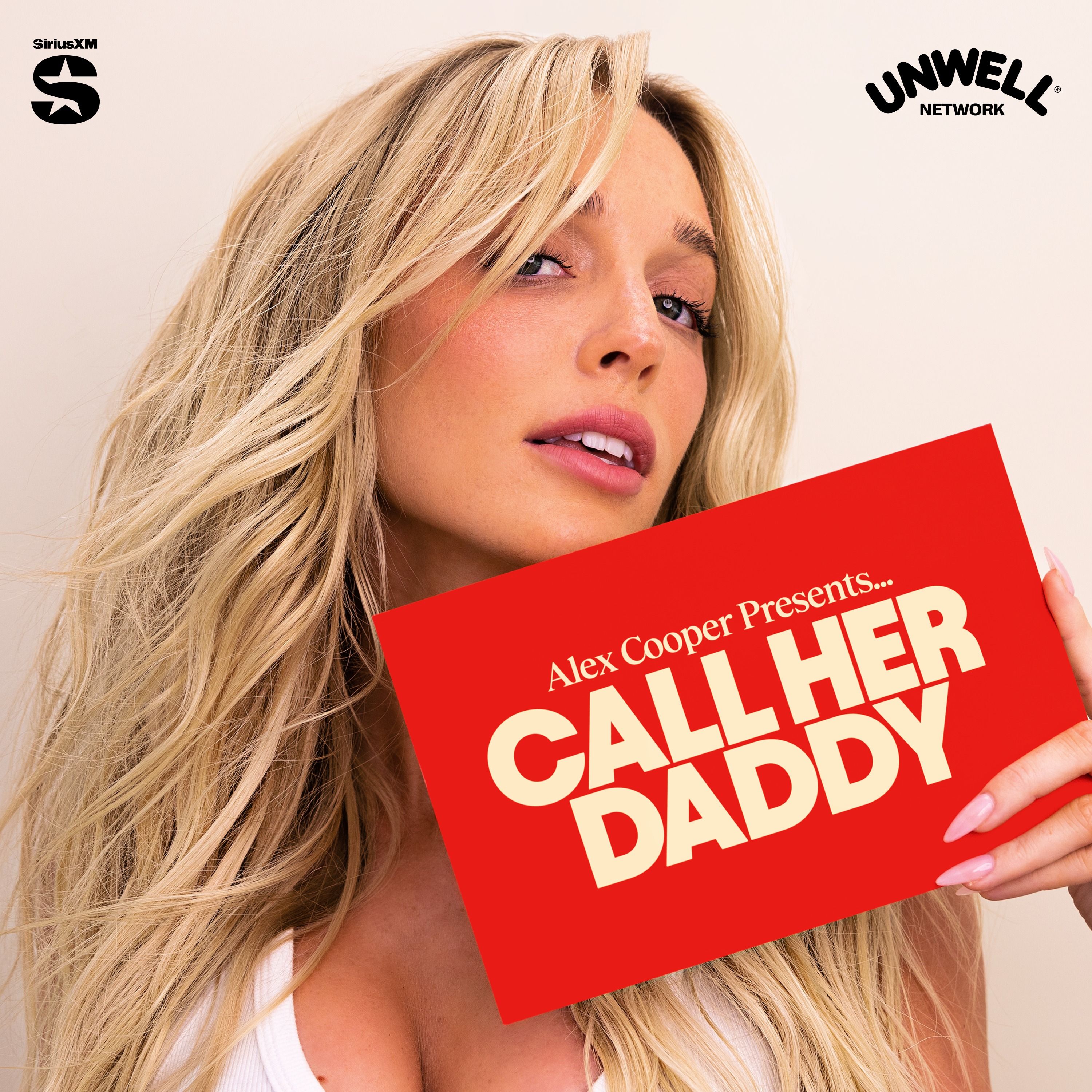
Olivia Wilde: Dating, Double Standards & Dealing with Scrutiny
Olivia Wilde says she was served legal papers on stage at CinemaCon mid-speech, muscled through, then convinced herself nobody saw — until Tom Cruise told her it was "fucked up" months later.
Jun 17, 20261:43:31
Difficulty: Beginner
Played
Call Her Daddy
Olivia Wilde: Dating, Double Standards & Dealing with Scrutiny
Olivia Wilde says she was served legal papers on stage at CinemaCon mid-speech, muscled through, then convinced herself nobody saw — until Tom Cruise told her it was "fucked up" months later.
Jun 17, 20261:43:31
Difficulty: Beginner
Played
TL;DR
Olivia Wilde joins Alex Cooper for a wide-ranging conversation covering the making of her new film *The Invite* (with Esther Perel as consultant), the double standards she faced during the public dissolution of her relationship with Jason Sudeikis, and the brutal scrutiny of her dating life and fashion choices[1]— Olivia Wilde"Esther Perel wasn't just an inspiration for The Invite — she was Olivia Wilde's actual therapist years ago, then the film's official consul…"03:10. Wilde reflects on her early marriage at 19, evolving views on marriage and motherhood, and how co-parenting can actually make you a better parent[2]— Olivia Wilde"Hollywood's perverse logic: for actresses, more experience means less value. For directors, the opposite is true. Wilde's pivot to directin…"58:40. Her central takeaway: the most rebellious thing a woman can do is stay soft — don't let public cruelty harden you[3]— Olivia Wilde"If we— if 50% of planes crashed, would we keep getting on flights?"30:47.
#female directors#double standards in Hollywood#co-parenting after divorce#Esther Perel relationship theory#beauty standards and aging#tabloid media scrutiny#motherhood and sexuality#internalized misogyny#The Invite film#working mothers guilt#Olivia Wilde#The Invite#Esther Perel#double standards#motherhood#co-parenting#beauty standards#Don't Worry Darling#Booksmart#marriage#CinemaCon#Harry Styles#Jason Sudeikis#Greta Gerwig#objectification#The OC#vulnerability#working mothers#tabloids
Olivia Wilde joins Alex Cooper to discuss her new film The Invite (with Esther Perel as consultant), the double standards she faced during and after her public relationship with Jason Sudeikis, her evolving views on marriage and motherhood, and navigating ruthless public scrutiny. Wilde reflects on co-parenting, the transition from acting to directing, and closes with advice from Pamela Anderson: the most rebellious thing you can do is stay soft.
Chapter list
The episode opens with a trio of sponsor reads — Sephora, Sour Patch Kids, and Macy's — before Alex Cooper introduces Olivia Wilde to the Daddy Gang. Cooper sets a tone of genuine admiration from the first line, calling Wilde a center-of-conversation figure for women, motherhood, ambition, and public relationships. Wilde reciprocates warmly, establishing an immediate sense of rapport between two women who know they're about to get into it.
Alex Cooper sets the scene with characteristic intimacy — pregnancy snacks, heating pad, no phone — before praising The Invite for its psychological nuance and modern relationship dynamics. Wilde lights up at the mention of Esther Perel, revealing that Perel wasn't just an inspiration but her actual therapist. She explains reading Mating in Captivity 20 years ago without fully understanding it, then spending two decades in relationships before the film finally unlocked it. The script, written by Rashida Jones and Will McCormick from a Spanish play, felt Perelian from the start — so Wilde brought the therapist herself in as a full consultant. The result: Penélope Cruz built her entire character on Perel, giving audiences a chance to spend the film with a fictionalized version of the world's most famous relationship therapist[1]— Olivia Wilde"Esther Perel wasn't just an inspiration for The Invite — she was Olivia Wilde's actual therapist years ago, then the film's official consul…"03:10.
Wilde describes the most pivotal thing Perel helped the production solve: how to let every character in the conflict be right simultaneously. Perel's insight — that people never present with the truth, only their reflection of it — prevented the film from becoming a simple story of good woman versus bad man. Cooper and Wilde riff on how much easier it is to blame a partner than to examine your own patterns. Wilde is honest that it took her a long time to reach this understanding, and both women reflect on how the wisdom of getting older is, paradoxically, the growing realization that you know less than you thought.
Alex runs through mid-episode sponsor reads for Revolve, pitch-perfect for the outfit-obsessed listener ('boom, we're done'), Ritual's probiotic Symbiotic+ for summer gut health, and a second Sephora read. Each read is personalized to Alex's experience rather than scripted corporate copy, maintaining the show's intimate tone even through commercial breaks.
Cooper steers into Wilde's origin story. Her parents were journalists who modeled intellectual courage at the dinner table — opinions were encouraged, discourse was valued. Her mother, a war correspondent who traveled to Afghanistan, was unlike other mothers in the neighborhood, which irritated young Olivia before she understood its value. Friends flocked to her mother's kitchen table, drawn to a woman who took everyone seriously. But the mother faced relentless judgment for prioritizing dangerous journalism over constant parental presence. Wilde reflects that the impossible standard placed on her mother — damned for leaving, damned for being present — is the same trap every working mother falls into, and the only antidote is talking about it. Shame dies when you share[1]— Olivia Wilde"Wilde's mother was a war correspondent who traveled to Afghanistan while raising her children, facing relentless judgment for choosing dang…"13:56.
Cooper asks about growing up as a strong-opinioned, misunderstood kid. Wilde says the feeling of being alien has been a consistent thread her whole life. As a young person she fought it; as an older one, she finds it clarifying. The deepest early loves of her life were platonic female friendships — a theme she poured into Booksmart. She describes youth as being rootless: easily pushed over by a strong enough storm. With age, the roots deepen. The high school version of Wilde wanted to fight misunderstanding at every turn. The current version finds something closer to equanimity in it — 'maybe I'm wrong' being, she says, the truest bit of wisdom she's accumulated.
Cooper opens this chapter with one of the episode's most delightful reveals: Wilde eloped at Burning Man at 19, with a paperwork ceremony completed by someone found on the internet whose signature may be legally invalid. She was on a school bus in Venice when she landed on The OC. The marriage lasted roughly six to seven years, ending around age 25 — not tumultuous, just an organic growing apart. She describes being a 25-year-old divorcée as 'a really funny' situation. The rebellion, she notes with irony, was to do the most traditional thing she could think of — and then not have a traditional marriage at all[1]— Olivia Wilde"Olivia Wilde eloped at Burning Man at 19, had the paperwork signed by someone found on the internet, and was immediately asking herself 'wh…"25:20.
Cooper praises the film's opening Oscar Wilde quote as a bold declaration, and Wilde clarifies it's not cynicism — it's a warning about entitlement. Marriage, she argues, too often becomes the end of actively loving rather than the continuation of it. Esther Perel's dictum that 'love is a verb' anchors the argument. Wilde brings in therapist Terry Real's observation and floats the crash analogy: if 50% of planes went down, nobody would fly. Yet people marry daily[1]— Olivia Wilde"Half of all marriages fail — so why do people keep doing it? Wilde's analogy is brutal: nobody would board a plane with a 50% crash rate. B…"29:10. She's not anti-marriage — she appreciates ceremony, ritual, promise. But the institution has historically been unfavorable to women, and she can't pretend otherwise. She ends with characteristic self-aware humor: knowing herself, she'll probably get married again at 85.
The conversation pivots to beloved TV history when Cooper confesses The OC was her favorite show growing up. Wilde is incredulous ('Nick at Nite?') before embracing the moment. She describes joining the show while living on a school bus, completely unaware of its cultural dominance until she was on it. The rapid-fire round covers everything from medical terms remembered from House to better kissers to whether either show needs a reboot. The real substance arrives when Wilde addresses representation: the Mischa Barton kiss during sweeps week became a national event not because of the kiss itself — which was 'so tame' — but because queerness had never before been attached to the 'popular pretty girl' archetype. Young people still tell her it changed conversations with their parents[1]— Olivia Wilde"When Wilde kissed Mischa Barton on The OC during sweeps week, it was treated as a massive cultural event — despite being the tamest kiss im…"34:00.
Alex delivers reads for Sephora (summery fragrances, next-level makeup, glowing skincare) and introduces Sour Patch Kids Besties, the new connected-pair spin on the classic candy. The Besties framing is cheerfully on-brand for an episode about relationships and female friendships.
Cooper steers into the territory of appearance and objectification in Wilde's career. Wilde says she never felt she fit conventional beauty standards growing up, so when Maxim's standards happened to shift to fit her, she was blindsided. Her publicist called and offered her the choice to accept or decline being #1 on the Hottest 100 — and the part of her that had always felt like the awkward outsider couldn't resist saying yes[1]— Olivia Wilde"Being ranked #1 on the Maxim Hot 100 felt like validation for the girl who never fit in — and that was exactly the danger. Wilde spent year…"43:00. She traces the danger from there: once you are publicly ranked, you must maintain the rank, and the same mechanism that called you the hottest will inevitably call you the ugliest. Cooper and Wilde riff on how beauty standards for women shift constantly — heroin chic to curves, Audrey Hepburn to Gisele — while men's standards have barely moved in a century.
The chapter opens with Wilde's recounting of a bad photo from a low-key San Francisco film festival that became an international meme. She initially convinced herself it wouldn't go anywhere — that's before it was in 100 million phones. Megyn Kelly did a full segment diagnosing her with Graves' disease. Wilde's analysis is sharp: Kelly needed something to discuss that wasn't the Equal Rights Amendment. Her own response — film her brother's spit-take, drink a bottle of wine, post it — became a case study in self-aware handling of internet cruelty[1]— Olivia Wilde"A terrible red carpet photo turned Wilde into a meme and prompted Megyn Kelly to do an entire segment declaring her dead. Her response: dri…"49:57. Cooper and Wilde arrive at a shared truth: red carpet photos are deeply untrustworthy, and sometimes what goes viral simply doesn't represent reality.
Cooper asks whether it feels like a betrayal when it's mainly women fueling the online commentary about Wilde's body and relationships. Wilde doesn't let women entirely off the hook — she argues that in participating in this cycle, women are effectively doing the patriarchy's job without being paid for it[1]— Olivia Wilde"The harshest critics of women are often other women — and Wilde argues that's not a coincidence. Women have been handed the patriarchy's to…"51:20. She offers a more generous interpretation too: gossip originated in medieval times as a genuinely positive form of feminine communication and community care. That instinct has been corrupted into a weapon. She and Cooper identify the cycle: a woman gets sexism directed at her, then takes it out on another woman, and so on, while the men laugh. Cooper frames it perfectly: 'The men are just watching.'
Cooper asks about the transition from actress to director, and Wilde frames it in terms of career economics: for actresses, more experience equals less value; for directors, the opposite is true. Directing gave her a career she could grow old in rather than one that deprecated with age[1]— Olivia Wilde"Hollywood's perverse logic: for actresses, more experience means less value. For directors, the opposite is true. Wilde's pivot to directin…"58:40. She vividly credits Greta Gerwig — 'she walked so I could run' — and notes that without Lady Bird, Booksmart doesn't exist. She felt a sense of collective responsibility: if Booksmart succeeded, it would make it easier for all female directors to get their films greenlit. Then Barbie happened, and the argument was permanently closed[2]— Olivia Wilde"Greta Gerwig's Lady Bird made Booksmart possible. And Barbie's billion-dollar box office made it impossible for any studio to claim female-…"59:35. Wilde also praises motherhood as an unexpected director superpower — the calm-in-chaos and multitasking skills are directly transferable.
Cooper notes that Wilde effectively disappeared from long-form interviews for about four years and asks if it was intentional. Wilde says absolutely — she needed to get quiet, hear herself again, and step out of the tornado. The Don't Worry Darling promotional period was unprecedented in its chaos: fake stories, fake sources, complete fictional narratives traded as fact. Her assistant, having watched it all from inside, told her it had ruined tabloids for him forever[1]— Olivia Wilde"Pulled back from public life for ~4 years: Wilde intentionally stepped back from public life and long-form interviews for roughly four year…"1:11:03. Wilde describes doing intensive therapy, taking the destruction as an opportunity to rebuild. She was the most talked-about woman in the world in 2022 — for her relationships, parenting, looks, and morality — and she felt completely disconnected from the person being discussed. Her private life during that period was, she says, actually wholesome and joyful: a tornado outside the door, a nice house inside.
Wilde describes one of the most surreal moments of her public unraveling: being served legal papers on stage at CinemaCon, a high-stakes studio event attended by exhibitors, press, and the most powerful people in the film industry. She muscled through the speech, dissolved backstage, then convinced herself the incident had gone unnoticed — no phones were allowed in the venue, after all. That delusion lasted until a separate event where Tom Cruise walked up and told her unprompted that what happened to her in Vegas was 'fucked up'[1]— Olivia Wilde"In front of the most powerful people in the film industry, Wilde was handed legal papers on stage mid-presentation. She finished her speech…"1:23:20. Wilde is careful about Jason Sudeikis — she says he told her he didn't know the papers would be served that way, and she needs to believe that. But she still processes it in therapy. The broader lesson: once you survive the unsurvivable, everything else feels manageable.
Cooper asks about the resentment Wilde faced for dating a younger man — a dynamic that goes entirely unremarked upon for men in power. Wilde says she doesn't fully understand it yet, but connects it to a parasocial burden on Harry Styles that inevitably landed on her. She describes the Thanksgiving photo moment with striking clarity: Sudeikis was photographed on a beach in Costa Rica during his custody time, the press celebrated him, and she knew with certainty that the same photo of her would have meant calls for custody removal[1]— Olivia Wilde"Jason Sudeikis was photographed on a beach in Costa Rica on Thanksgiving — the press loved it. Wilde knew that if she had been the one phot…"1:27:00. From there she and Cooper examine the puritanical American equation that motherhood ends sexual identity — citing Perel's observation that in France, a baby implies sex; in America, it implies the absence of it[2]— Olivia Wilde"In America, becoming a mother is treated as the end of your sexual identity. In France, Esther Perel notes, seeing a baby makes people thin…"1:22:35. A man with a baby reads as hot and capable. A woman with a baby is done.
Cooper asks Wilde to break down the film's treatment of sex, particularly the scene where Seth Rogen's character says his wife is 'supposed to be attracted to him' without any participation in earning that attraction. Wilde says that line made the veins pop in her neck because it captures a fundamental entitlement: expecting desire without doing the work to cultivate it. She and Rogen both felt strongly during filming that sex matters — it's the primary venue for nonverbal trust, vulnerability, and communication in a relationship[1]— Olivia Wilde"People who don't have sex and say, well, we don't have sex, but we have like a really healthy relationship. I call bullshit on it."1:26:34. If a couple has stopped having sex, the question isn't about frequency but about what deeper conversation is being avoided. She calls bullshit on the 'healthy but sexless' claim, while clarifying she's not prescribing a Cosmo quiz number of times per month.
The episode's emotional peak arrives when Wilde describes the precise moment she knew the relationship was over. It was her birthday — March 10, 2020 — when she asked Sudeikis if he'd gotten her a present and he replied, 'What would I get you, Olivia? I don't know you.' She points out he wasn't wrong: they had stopped engaging in the knowing of each other, stopped asking questions, stopped being curious[1]— Olivia Wilde"On her birthday, March 10, 2020, Wilde asked Jason Sudeikis for a birthday present and he told her he didn't know her anymore. Two days lat…"1:28:50. Two days later, COVID lockdown began. They were trapped together, trying to repair something that was already over, until the painful realization hit that staying together was helping no one. Wilde connects this directly to why she made The Invite: a film about two people in the same physical space who are miles apart emotionally.
Wilde delivers one of her most clarifying arguments: co-parenting done well can produce better, more present parenting than a fractured cohabitation. Each parent gives their best during their time; children receive the undivided best of both parents. She urges anyone going through separation to hear this rather than fear it[1]— Olivia Wilde"Co-parenting can produce better parenting: Wilde argues that sharing custody can actually make you a better parent because each parent is f…"1:08:16. The conversation pivots to the film's ambiguous final moments — Wilde conducts a live audience poll at every screening and has noticed that women overwhelmingly believe the couple does not reconcile. Her theory: women, when they finally decide to leave, have already run the deliberation through their 'committee' and are done. Men sometimes still waver. Despite all of this — the marriages, the breakups, the public humiliations — Wilde insists she is still a sucker for romance. She just thinks you need to be a whole person first.
Cooper expresses genuine admiration for Wilde — her intelligence, her resilience, her refusal to be flattened by everything she's been through. Wilde's final gift to the Daddy Gang is the Pamela Anderson moment: after watching her documentary, Wilde reached out and received one line of advice that reframed everything[1]— Olivia Wilde"After watching Pamela Anderson's documentary, Wilde reached out and received one line of advice: 'The most rebellious thing you can do is s…"1:39:05. 'The most rebellious thing you can do is stay soft. Don't let it harden you.' Wilde applies it directly to Cooper, now pregnant and entering a new era of public scrutiny: don't let unapologetic confidence become invulnerability. Stay soft. The episode closes with warm mutual declarations, followed by sponsor reads for Häagen-Dazs, Bright by Scotch-Brite, Stouffer's, and Dove Alcohol-Free Whole Body Deodorant.
Esther Perel
Belgian-American psychotherapist and author known for her work on erotic desire and relationships, most famous for books 'Mating in Captivity' and 'The State of Affairs'; served as a consultant on The Invite.
Mating in Captivity
Esther Perel's 2006 book exploring the tension between domesticity and erotic desire in long-term relationships; Wilde cited reading it 20 years ago as mind-blowing.
parasocial relationship
A one-sided emotional bond a fan feels toward a celebrity or public figure, as if they know them personally; Wilde cited this as a burden Harry Styles carried with his fanbase.
CinemaCon
An annual trade show in Las Vegas where studios present upcoming films to cinema exhibitors and press; Wilde was served legal papers on stage here.
sweeps week
Periods when TV viewership is measured to set advertising rates; networks typically aired high-stakes or provocative content, which is why the OC kiss was aired during sweeps.
confirmation bias
The tendency to search for and interpret information in a way that confirms one's existing beliefs; Wilde applied this concept to explain how tabloid narratives self-reinforce.
perimenopause
The transitional phase before menopause, typically beginning in a woman's 40s, involving hormonal changes, irregular periods, and symptoms like frozen shoulder; discussed in The Invite's script.
DEF CON 1
The highest military alert level in the US defense readiness condition system; Wilde used it colloquially to mean a full-scale child meltdown.
ingenue
An innocent, naive young female character type common in film and theater; Wilde used it to describe how Mischa Barton's OC character was perceived before her queer storyline.
Teflon
A non-stick coating; used figuratively to describe someone to whom criticism or scandal does not adhere; Wilde used it to describe her initial defensive approach to public scrutiny.
bohemian
A lifestyle characterized by unconventional, artistic, or socially free choices; Wilde used it to describe her early marriage, which lacked traditional structure.
greenlit
Industry term for a film or project receiving official approval and funding from a studio to proceed to production.
spitgate
A 2022 viral moment at the Venice Film Festival where video footage appeared to show Harry Styles spitting on actor Chris Pine, which Wilde addresses as a bizarre optical illusion.
uncanny valley
Originally describes how near-human robots feel unsettling; Wilde used it to describe how audiences sense inauthenticity when someone is visibly hiding their pain behind a composed exterior.
malleability
The quality of being easily shaped or influenced; Alex Cooper used it to describe why young people are particularly vulnerable to others' definitions of who they are.
discourse
Written or spoken communication on a topic, often within an intellectual or public context; used by Wilde to describe the value her parents placed on debate and opinion at the dinner table.
Chapter 2 · 01:52
The Invite: Esther Perel as Consultant and Penélope Cruz as Esther
Alex Cooper sets the scene with characteristic intimacy — pregnancy snacks, heating pad, no phone — before praising The Invite for its psychological nuance and modern relationship dynamics. Wilde lights up at the mention of Esther Perel, revealing that Perel wasn't just an inspiration but her actual therapist. She explains reading Mating in Captivity 20 years ago without fully understanding it, then spending two decades in relationships before the film finally unlocked it. The script, written by Rashida Jones and Will McCormick from a Spanish play, felt Perelian from the start — so Wilde brought the therapist herself in as a full consultant. The result: Penélope Cruz built her entire character on Perel, giving audiences a chance to spend the film with a fictionalized version of the world's most famous relationship therapist[1]— Olivia Wilde"Esther Perel wasn't just an inspiration for The Invite — she was Olivia Wilde's actual therapist years ago, then the film's official consul…"03:10.
Esther Perel wasn't just an inspiration for The Invite — she was Olivia Wilde's actual therapist years ago, then the film's official consultant. Penélope Cruz even based her character directly on Perel, letting audiences essentially spend the film hanging out with the world's most famous relationship therapist.
Olivia Wilde revealed that relationship therapist and author Esther Perel was her personal therapist for a period, and later became the official consultant on The Invite.
Wilde said she read Esther Perel's book Mating in Captivity 20 years ago and it blew her mind, but she didn't truly understand it until going through enough relationships herself.
Chapter 5 · 13:52
Growing Up: Journalist Parents and a Feminist Mother Who Wouldn't Tradwife
Cooper steers into Wilde's origin story. Her parents were journalists who modeled intellectual courage at the dinner table — opinions were encouraged, discourse was valued. Her mother, a war correspondent who traveled to Afghanistan, was unlike other mothers in the neighborhood, which irritated young Olivia before she understood its value. Friends flocked to her mother's kitchen table, drawn to a woman who took everyone seriously. But the mother faced relentless judgment for prioritizing dangerous journalism over constant parental presence. Wilde reflects that the impossible standard placed on her mother — damned for leaving, damned for being present — is the same trap every working mother falls into, and the only antidote is talking about it. Shame dies when you share[1]— Olivia Wilde"Wilde's mother was a war correspondent who traveled to Afghanistan while raising her children, facing relentless judgment for choosing dang…"13:56.
Wilde's mother was a war correspondent who traveled to Afghanistan while raising her children, facing relentless judgment for choosing dangerous journalism over constant presence. The lesson she passed to Olivia: the bullshit is inevitable, so don't get floored by it — just push through.
Olivia Wilde's parents were both war correspondents, with her mother traveling to dangerous places like Afghanistan, facing constant judgment for being a mother who put her life on the line for journalism.
Cooper opens this chapter with one of the episode's most delightful reveals: Wilde eloped at Burning Man at 19, with a paperwork ceremony completed by someone found on the internet whose signature may be legally invalid. She was on a school bus in Venice when she landed on The OC. The marriage lasted roughly six to seven years, ending around age 25 — not tumultuous, just an organic growing apart. She describes being a 25-year-old divorcée as 'a really funny' situation. The rebellion, she notes with irony, was to do the most traditional thing she could think of — and then not have a traditional marriage at all[1]— Olivia Wilde"Olivia Wilde eloped at Burning Man at 19, had the paperwork signed by someone found on the internet, and was immediately asking herself 'wh…"25:20.
Olivia Wilde eloped at Burning Man at 19, had the paperwork signed by someone found on the internet, and was immediately asking herself 'what the fuck did I just do?' She then spent her early 20s living on a school bus in Venice before landing on The OC — and still considers the spontaneous marriage classic Olivia Wilde.
Olivia Wilde eloped at Burning Man at 19 years old, with the actual paperwork signed back in LA — she says she immediately thought 'what the fuck did I just do?'
Olivia Wilde's only marriage lasted roughly 6-7 years, ending when she was about 25, making her a self-described '25-year-old divorcée.'
Chapter 8 · 28:20
The Oscar Wilde Quote and Olivia's Evolving Views on Marriage
Cooper praises the film's opening Oscar Wilde quote as a bold declaration, and Wilde clarifies it's not cynicism — it's a warning about entitlement. Marriage, she argues, too often becomes the end of actively loving rather than the continuation of it. Esther Perel's dictum that 'love is a verb' anchors the argument. Wilde brings in therapist Terry Real's observation and floats the crash analogy: if 50% of planes went down, nobody would fly. Yet people marry daily[1]— Olivia Wilde"Half of all marriages fail — so why do people keep doing it? Wilde's analogy is brutal: nobody would board a plane with a 50% crash rate. B…"29:10. She's not anti-marriage — she appreciates ceremony, ritual, promise. But the institution has historically been unfavorable to women, and she can't pretend otherwise. She ends with characteristic self-aware humor: knowing herself, she'll probably get married again at 85.
Half of all marriages fail — so why do people keep doing it? Wilde's analogy is brutal: nobody would board a plane with a 50% crash rate. But she's not anti-marriage; she's anti-entitlement, arguing that marriage fails when active loving becomes passive expectation.
The OC, Thirteen, and a Bisexual Kiss That Became Sweeps Week History
The conversation pivots to beloved TV history when Cooper confesses The OC was her favorite show growing up. Wilde is incredulous ('Nick at Nite?') before embracing the moment. She describes joining the show while living on a school bus, completely unaware of its cultural dominance until she was on it. The rapid-fire round covers everything from medical terms remembered from House to better kissers to whether either show needs a reboot. The real substance arrives when Wilde addresses representation: the Mischa Barton kiss during sweeps week became a national event not because of the kiss itself — which was 'so tame' — but because queerness had never before been attached to the 'popular pretty girl' archetype. Young people still tell her it changed conversations with their parents[1]— Olivia Wilde"When Wilde kissed Mischa Barton on The OC during sweeps week, it was treated as a massive cultural event — despite being the tamest kiss im…"34:00.
When Wilde kissed Mischa Barton on The OC during sweeps week, it was treated as a massive cultural event — despite being the tamest kiss imaginable. She believes it mattered because queerness had never been assigned to the 'popular pretty girl' before, and young people still tell her it changed conversations with their parents.
34:00
38:00
Chapter 11 · 41:04
Maxim #1 and the Beauty Trap: When Being Ranked Is a Danger
Cooper steers into the territory of appearance and objectification in Wilde's career. Wilde says she never felt she fit conventional beauty standards growing up, so when Maxim's standards happened to shift to fit her, she was blindsided. Her publicist called and offered her the choice to accept or decline being #1 on the Hottest 100 — and the part of her that had always felt like the awkward outsider couldn't resist saying yes[1]— Olivia Wilde"Being ranked #1 on the Maxim Hot 100 felt like validation for the girl who never fit in — and that was exactly the danger. Wilde spent year…"43:00. She traces the danger from there: once you are publicly ranked, you must maintain the rank, and the same mechanism that called you the hottest will inevitably call you the ugliest. Cooper and Wilde riff on how beauty standards for women shift constantly — heroin chic to curves, Audrey Hepburn to Gisele — while men's standards have barely moved in a century.
Being ranked #1 on the Maxim Hot 100 felt like validation for the girl who never fit in — and that was exactly the danger. Wilde spent years unraveling how she'd handed her self-worth over to a fickle, subjective machine that will inevitably flip to calling you the ugliest.
Wilde was ranked #1 on Maxim's Hottest 100 list, and her publicist asked if she wanted to accept it. She did, acknowledging it was 'fucked up' but admitting her inner insecure teenage self was validated.
Chapter 12 · 47:00
Viral Cadaver Photo, Megyn Kelly, and the Art of Laughing at Yourself
The chapter opens with Wilde's recounting of a bad photo from a low-key San Francisco film festival that became an international meme. She initially convinced herself it wouldn't go anywhere — that's before it was in 100 million phones. Megyn Kelly did a full segment diagnosing her with Graves' disease. Wilde's analysis is sharp: Kelly needed something to discuss that wasn't the Equal Rights Amendment. Her own response — film her brother's spit-take, drink a bottle of wine, post it — became a case study in self-aware handling of internet cruelty[1]— Olivia Wilde"A terrible red carpet photo turned Wilde into a meme and prompted Megyn Kelly to do an entire segment declaring her dead. Her response: dri…"49:57. Cooper and Wilde arrive at a shared truth: red carpet photos are deeply untrustworthy, and sometimes what goes viral simply doesn't represent reality.
A terrible red carpet photo turned Wilde into a meme and prompted Megyn Kelly to do an entire segment declaring her dead. Her response: drink a bottle of wine with her brother, film his spit-take reaction, post it, and let the internet have the laugh they wanted anyway.
49:57
54:25
Chapter 13 · 51:20
Women Police Women — The Patriarchy Thanks You
Cooper asks whether it feels like a betrayal when it's mainly women fueling the online commentary about Wilde's body and relationships. Wilde doesn't let women entirely off the hook — she argues that in participating in this cycle, women are effectively doing the patriarchy's job without being paid for it[1]— Olivia Wilde"The harshest critics of women are often other women — and Wilde argues that's not a coincidence. Women have been handed the patriarchy's to…"51:20. She offers a more generous interpretation too: gossip originated in medieval times as a genuinely positive form of feminine communication and community care. That instinct has been corrupted into a weapon. She and Cooper identify the cycle: a woman gets sexism directed at her, then takes it out on another woman, and so on, while the men laugh. Cooper frames it perfectly: 'The men are just watching.'
The harshest critics of women are often other women — and Wilde argues that's not a coincidence. Women have been handed the patriarchy's tools and are unconsciously using them to keep each other down, while the men are laughing. The origin of gossip was once a positive feminine superpower. It's been weaponized.
Directing, Booksmart, and Greta Gerwig Blazing the Trail
Cooper asks about the transition from actress to director, and Wilde frames it in terms of career economics: for actresses, more experience equals less value; for directors, the opposite is true. Directing gave her a career she could grow old in rather than one that deprecated with age[1]— Olivia Wilde"Hollywood's perverse logic: for actresses, more experience means less value. For directors, the opposite is true. Wilde's pivot to directin…"58:40. She vividly credits Greta Gerwig — 'she walked so I could run' — and notes that without Lady Bird, Booksmart doesn't exist. She felt a sense of collective responsibility: if Booksmart succeeded, it would make it easier for all female directors to get their films greenlit. Then Barbie happened, and the argument was permanently closed[2]— Olivia Wilde"Greta Gerwig's Lady Bird made Booksmart possible. And Barbie's billion-dollar box office made it impossible for any studio to claim female-…"59:35. Wilde also praises motherhood as an unexpected director superpower — the calm-in-chaos and multitasking skills are directly transferable.
Hollywood's perverse logic: for actresses, more experience means less value. For directors, the opposite is true. Wilde's pivot to directing wasn't just creative — it was a survival strategy, swapping a ticking clock for a career that compounds with age.
Booksmart (2019) was Olivia Wilde's first feature film as director, and she credits Greta Gerwig's Lady Bird as paving the way for her to get it greenlit.
Greta Gerwig's Lady Bird made Booksmart possible. And Barbie's billion-dollar box office made it impossible for any studio to claim female-directed films aren't bankable. Wilde owes her directing career to women who went before her and kept blazing the path.
Wilde cited the Barbie film's billion-dollar box office as proof that female-directed films are bankable, eliminating any studio argument against investing in women-led projects.
Chapter 15 · 1:02:00
Four Years of Quiet: The Don't Worry Darling Era and Its Aftermath
Cooper notes that Wilde effectively disappeared from long-form interviews for about four years and asks if it was intentional. Wilde says absolutely — she needed to get quiet, hear herself again, and step out of the tornado. The Don't Worry Darling promotional period was unprecedented in its chaos: fake stories, fake sources, complete fictional narratives traded as fact. Her assistant, having watched it all from inside, told her it had ruined tabloids for him forever[1]— Olivia Wilde"Pulled back from public life for ~4 years: Wilde intentionally stepped back from public life and long-form interviews for roughly four year…"1:11:03. Wilde describes doing intensive therapy, taking the destruction as an opportunity to rebuild. She was the most talked-about woman in the world in 2022 — for her relationships, parenting, looks, and morality — and she felt completely disconnected from the person being discussed. Her private life during that period was, she says, actually wholesome and joyful: a tornado outside the door, a nice house inside.
Wilde argues that sharing custody can actually make you a better parent because each parent is fully present during their time, giving children the best of both parents rather than a diminished version.
Wilde intentionally stepped back from public life and long-form interviews for roughly four years after the Don't Worry Darling promotional chaos, to heal and rebuild herself.
Wilde describes one of the most surreal moments of her public unraveling: being served legal papers on stage at CinemaCon, a high-stakes studio event attended by exhibitors, press, and the most powerful people in the film industry. She muscled through the speech, dissolved backstage, then convinced herself the incident had gone unnoticed — no phones were allowed in the venue, after all. That delusion lasted until a separate event where Tom Cruise walked up and told her unprompted that what happened to her in Vegas was 'fucked up'[1]— Olivia Wilde"In front of the most powerful people in the film industry, Wilde was handed legal papers on stage mid-presentation. She finished her speech…"1:23:20. Wilde is careful about Jason Sudeikis — she says he told her he didn't know the papers would be served that way, and she needs to believe that. But she still processes it in therapy. The broader lesson: once you survive the unsurvivable, everything else feels manageable.
In America, becoming a mother is treated as the end of your sexual identity. In France, Esther Perel notes, seeing a baby makes people think about sex — the couple that made it. In America, it means they're definitely not having sex. A man with a baby reads as hot and capable. A woman with a baby reads as done.
Double Standards: Dating, The Thanksgiving Photo, and Motherhood's Sexuality Tax
Cooper asks about the resentment Wilde faced for dating a younger man — a dynamic that goes entirely unremarked upon for men in power. Wilde says she doesn't fully understand it yet, but connects it to a parasocial burden on Harry Styles that inevitably landed on her. She describes the Thanksgiving photo moment with striking clarity: Sudeikis was photographed on a beach in Costa Rica during his custody time, the press celebrated him, and she knew with certainty that the same photo of her would have meant calls for custody removal[1]— Olivia Wilde"Jason Sudeikis was photographed on a beach in Costa Rica on Thanksgiving — the press loved it. Wilde knew that if she had been the one phot…"1:27:00. From there she and Cooper examine the puritanical American equation that motherhood ends sexual identity — citing Perel's observation that in France, a baby implies sex; in America, it implies the absence of it[2]— Olivia Wilde"In America, becoming a mother is treated as the end of your sexual identity. In France, Esther Perel notes, seeing a baby makes people thin…"1:22:35. A man with a baby reads as hot and capable. A woman with a baby is done.
In front of the most powerful people in the film industry, Wilde was handed legal papers on stage mid-presentation. She finished her speech, dissolved backstage, convinced herself nobody saw — and then Tom Cruise brought it up months later. The lesson she took: surviving the unsurvivable makes you feel like you can handle anything.
During a high-stakes CinemaCon presentation, Wilde was served legal papers on stage in front of studio executives and press, and forced herself to finish her speech before breaking down backstage.
Chapter 18 · 1:26:20
Sex, Intimacy, and Calling Bullshit on 'Healthy But Sexless' Relationships
Cooper asks Wilde to break down the film's treatment of sex, particularly the scene where Seth Rogen's character says his wife is 'supposed to be attracted to him' without any participation in earning that attraction. Wilde says that line made the veins pop in her neck because it captures a fundamental entitlement: expecting desire without doing the work to cultivate it. She and Rogen both felt strongly during filming that sex matters — it's the primary venue for nonverbal trust, vulnerability, and communication in a relationship[1]— Olivia Wilde"People who don't have sex and say, well, we don't have sex, but we have like a really healthy relationship. I call bullshit on it."1:26:34. If a couple has stopped having sex, the question isn't about frequency but about what deeper conversation is being avoided. She calls bullshit on the 'healthy but sexless' claim, while clarifying she's not prescribing a Cosmo quiz number of times per month.
Jason Sudeikis was photographed on a beach in Costa Rica on Thanksgiving — the press loved it. Wilde knew that if she had been the one photographed away from the kids on a national holiday, she would have faced calls for her to lose custody. That asymmetry is the double standard made concrete.
The Birthday That Ended It: 'I Don't Know You Anymore'
The episode's emotional peak arrives when Wilde describes the precise moment she knew the relationship was over. It was her birthday — March 10, 2020 — when she asked Sudeikis if he'd gotten her a present and he replied, 'What would I get you, Olivia? I don't know you.' She points out he wasn't wrong: they had stopped engaging in the knowing of each other, stopped asking questions, stopped being curious[1]— Olivia Wilde"On her birthday, March 10, 2020, Wilde asked Jason Sudeikis for a birthday present and he told her he didn't know her anymore. Two days lat…"1:28:50. Two days later, COVID lockdown began. They were trapped together, trying to repair something that was already over, until the painful realization hit that staying together was helping no one. Wilde connects this directly to why she made The Invite: a film about two people in the same physical space who are miles apart emotionally.
On her birthday, March 10, 2020, Wilde asked Jason Sudeikis for a birthday present and he told her he didn't know her anymore. Two days later, COVID lockdown began, trapping them in the same house as they tried to figure out what came next. That conversation was the real end.
Wilde and Jason Sudeikis's relationship effectively ended on her birthday, March 10, 2020, when he said 'I don't know you anymore,' followed just two days later by the COVID lockdown.
Wilde's film The Invite has a deliberately ambiguous ending; she conducts a poll at every screening asking if the couple stays together, and women overwhelmingly believe they do not.
Co-Parenting, The Invite's Ambiguous Ending, and Remaining a Romantic
Wilde delivers one of her most clarifying arguments: co-parenting done well can produce better, more present parenting than a fractured cohabitation. Each parent gives their best during their time; children receive the undivided best of both parents. She urges anyone going through separation to hear this rather than fear it[1]— Olivia Wilde"Co-parenting can produce better parenting: Wilde argues that sharing custody can actually make you a better parent because each parent is f…"1:08:16. The conversation pivots to the film's ambiguous final moments — Wilde conducts a live audience poll at every screening and has noticed that women overwhelmingly believe the couple does not reconcile. Her theory: women, when they finally decide to leave, have already run the deliberation through their 'committee' and are done. Men sometimes still waver. Despite all of this — the marriages, the breakups, the public humiliations — Wilde insists she is still a sucker for romance. She just thinks you need to be a whole person first.
Wilde thought the Harry Styles/Chris Pine spitting video was a private absurdity. Then the world went insane. She kept reassuring herself each scandal was small and unnoticed — until Tom Cruise walked up at a party and told her unprompted: 'Fucked up, what happened to you in Vegas.' Nobody is unnoticed.
1:34:30
1:36:50
Chapter 21 · 1:36:00
Pamela Anderson's Advice, Closing Thoughts, and Sponsor Outro
Cooper expresses genuine admiration for Wilde — her intelligence, her resilience, her refusal to be flattened by everything she's been through. Wilde's final gift to the Daddy Gang is the Pamela Anderson moment: after watching her documentary, Wilde reached out and received one line of advice that reframed everything[1]— Olivia Wilde"After watching Pamela Anderson's documentary, Wilde reached out and received one line of advice: 'The most rebellious thing you can do is s…"1:39:05. 'The most rebellious thing you can do is stay soft. Don't let it harden you.' Wilde applies it directly to Cooper, now pregnant and entering a new era of public scrutiny: don't let unapologetic confidence become invulnerability. Stay soft. The episode closes with warm mutual declarations, followed by sponsor reads for Häagen-Dazs, Bright by Scotch-Brite, Stouffer's, and Dove Alcohol-Free Whole Body Deodorant.
After watching Pamela Anderson's documentary, Wilde reached out and received one line of advice: 'The most rebellious thing you can do is stay soft. Don't let it harden you.' It reframed everything — staying vulnerable isn't weakness in the face of public cruelty, it's defiance.
After watching Pamela Anderson's documentary, Wilde reached out and Anderson advised her: 'The most rebellious thing you can do is stay soft. Don't let it harden you.'
In front of the most powerful people in the film industry, Wilde was handed legal papers on stage mid-presentation. She finished her speech, dissolved backstage, convinced herself nobody saw — and then Tom Cruise brought it up months later. The lesson she took: surviving the unsurvivable makes you feel like you can handle anything.
On her birthday, March 10, 2020, Wilde asked Jason Sudeikis for a birthday present and he told her he didn't know her anymore. Two days later, COVID lockdown began, trapping them in the same house as they tried to figure out what came next. That conversation was the real end.
Factual claims made this episode, and whether a source was named.
⚠
Approximately 50% of marriages end in failure, possibly more currently.
Olivia Wildeno source cited
⚠
Greta Gerwig's Barbie film made over one billion dollars at the box office.
Olivia Wildeno source cited
⚠
Penélope Cruz based her character in The Invite on Esther Perel.
Olivia Wildeno source cited
⚠
Esther Perel was Olivia Wilde's personal therapist at one point years ago.
Olivia Wildeno source cited
⚠
Esther Perel's Mating in Captivity was read by Wilde approximately 20 years ago.
Olivia Wildeno source cited
⚠
Olivia Wilde was ranked #1 on Maxim's Hottest 100 list.
Olivia Wildeno source cited
⚠
Wilde was served legal papers on stage at CinemaCon during a film presentation.
Olivia Wildeno source cited
⚠
Wilde married at 19 years old at Burning Man, with paperwork completed later in Los Angeles.
Olivia Wildeno source cited
⚠
The OC is now available on streaming and is being rediscovered by younger audiences including teenagers.
Olivia Wildeno source cited
⚠
Wilde's relationship with Jason Sudeikis effectively ended on March 10, 2020 — her birthday — two days before the COVID lockdown began.
Olivia Wildeno source cited
✓
Esther Perel has written about America's cultural tendency to view motherhood as the end of a woman's sexual identity, contrasting it with French attitudes.
Olivia WildeEsther Perel (author and therapist)
⚠
Booksmart was released in 2019 as Wilde's directorial debut.
Olivia Wildeno source cited
This episode
Cast
Belgian-American psychotherapist who was Wilde's personal therapist, then consultant on The Invite; Penélope Cruz based her character on Perel.
Wilde's former partner and co-parent, whose public relationship dissolution was a central topic of tabloid scrutiny discussed in the episode.
Director credited by Wilde as having paved the way for female directors by making Lady Bird and then Barbie, which grossed over a billion dollars.
Wilde's former partner, referenced in the context of their public relationship, the spitgate incident, and the parasocial pressure his fanbase placed on Wilde.
Stars in The Invite; based her character on Esther Perel, and co-wrote the menopause scene that Wilde praised for its authenticity.
Co-stars with Wilde in The Invite, playing her husband Joe in a passively contemptuous marriage; both actors felt strongly about the film's message on sex in relationships.
Co-star on The OC whose kiss with Wilde during sweeps week became a major cultural moment; described by Wilde as having 'the most extraordinary face.'
Wilde reached out after watching Anderson's documentary; Anderson advised her that 'the most rebellious thing you can do is stay soft.'
Co-wrote the script for The Invite with Will McCormick, based on a Spanish play; Wilde credits her and Esther Perel as central creative forces.
Referenced as having done an entire TV segment diagnosing Wilde as dead or ill based on a bad red carpet photo.
Referenced as having approached Wilde at an event to say 'fucked up what happened to you in Vegas' — disabusing her of the idea that the CinemaCon papers incident was unnoticed.
Olivia Wilde's new film, centered on a couple in a fractured marriage, written by Rashida Jones and Will McCormick, with Esther Perel as consultant.
The hit early-2000s TV drama Wilde joined, playing bisexual character Alex Kelly — a role now rediscovered by younger generations on streaming.
Olivia Wilde's 2019 directorial debut, which she says was only possible because Greta Gerwig made Lady Bird first.
TV drama where Wilde played fan-favorite character Thirteen, a bisexual doctor — described as iconic alongside her OC role.
Greta Gerwig's 2023 film that grossed over a billion dollars, cited by Wilde as proof that female-directed films are commercially bankable.
Wilde's 2022 film whose promotional period was engulfed in tabloid controversy about her personal life, relationships, and public image.
Greta Gerwig's 2017 directorial debut, which Wilde credits as the direct precedent that made her own Booksmart possible.