
First Latina paid $1M for a movie role
Jennifer Lopez became the first Latina actress ever paid $1 million for a movie role, a landmark milestone in Hollywood pay equity.
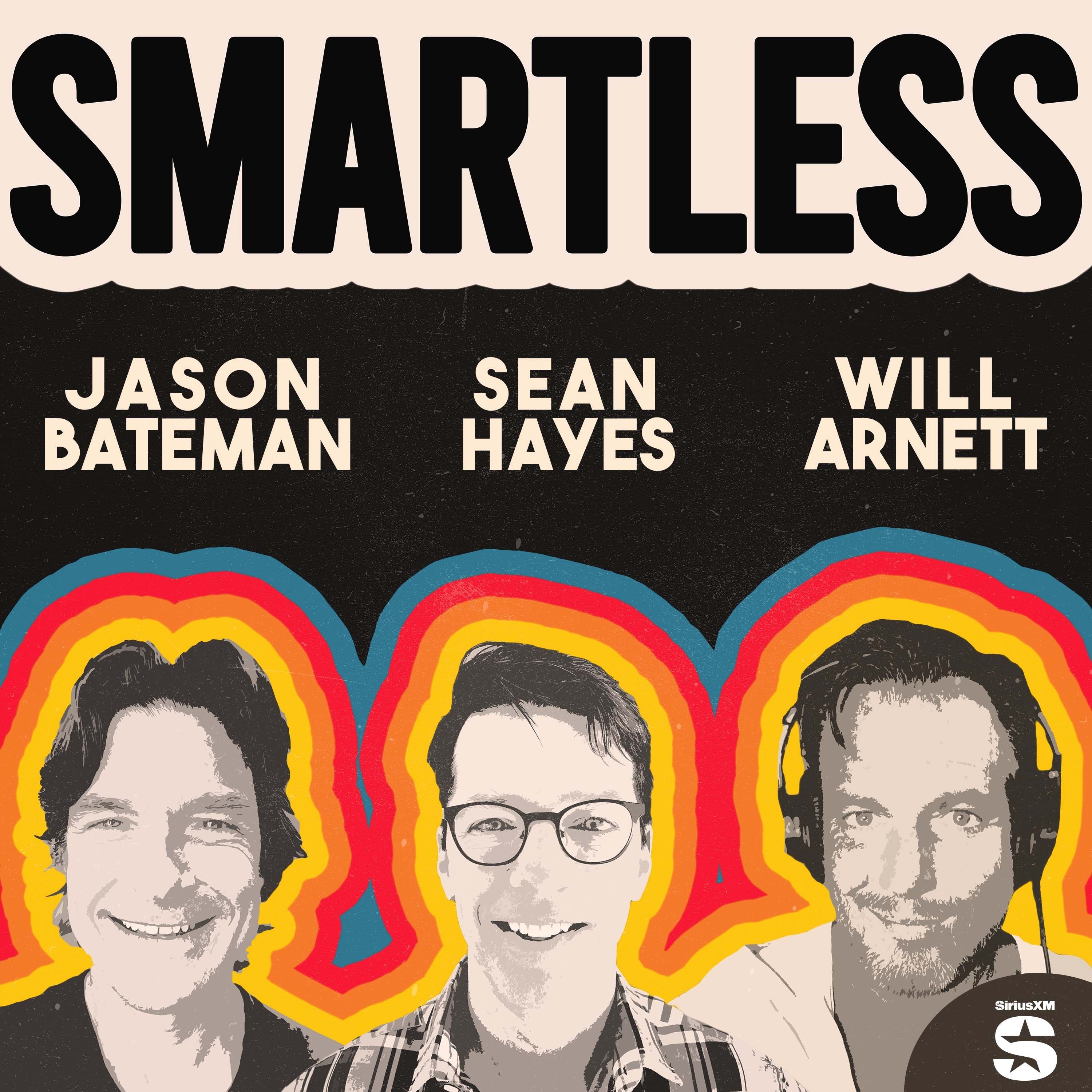
Jennifer Lopez reveals she worked 98 days straight without a day off before physically collapsing on the set of Enough — and that Google Images was invented because everyone Googled her green Versace dress.
SmartLess
Jennifer Lopez reveals she worked 98 days straight without a day off before physically collapsing on the set of Enough — and that Google Images was invented because everyone Googled her green Versace dress.
TL;DR
Jennifer Lopez joins Sean Hayes, Jason Bateman, and Will Arnett for a candid, wide-ranging conversation about fame, mental health, and reinvention. Lopez reveals how the overnight fame after Selena triggered panic attacks and a permanent loss of anonymity [1] — Jennifer Lopez "At New York's Hit Factory — where all the Sony artists recorded — rapper Heavy D kept calling Lopez 'Jenny Lo.' She loved it so much she na…" 32:40 , how 98 consecutive workdays on the set of Enough led to a physical collapse [2] — Jennifer Lopez "After her last divorce, Lopez canceled her tour and forced herself to sit in discomfort rather than work through the pain. She stopped blam…" 49:20 , and how post-divorce self-reflection became a genuine turning point [3] — Jennifer Lopez "Lopez wasn't born into Hollywood. She came from the Bronx, Puerto Rican, with holes in her sneakers — and a colleague's words ('If you can'…" 15:52 . She also credits Heavy D with coining "J-Lo," explains that Google Images was invented because of her Versace dress, and previews her Netflix film My Big Fat Greek Romance. The key takeaway: self-love is a practice, not a feeling — and it took Lopez decades to start applying it to herself.
Jennifer Lopez joins the SmartLess hosts for a wide-ranging conversation covering childhood inspiration, the terrifying loss of anonymity after Selena, a physical collapse after 98 days of non-stop work, post-divorce healing, the origin of the J-Lo name, and her upcoming Netflix film My Big Fat Greek Romance.
The episode opens with Jason Bateman in a solo cold open, musing about the eternal debate between crunchy-salty and gooey-sweet snacks before landing on the premise: a well-cooked SmartLess episode is what you put in between. Sponsor spots for ACANA Pet Food (pasture-raised beef, cranberries, turmeric) and Allstate home insurance roll before the hosts properly greet each other.
The three hosts ease in with their usual pre-guest chaos. Jason arrives frazzled, voice partly gone from what he suspects was a cold or allergies, having just taken prednisone and an antibiotic. Will immediately draws fire for his suspiciously deep tan despite claiming it comes from his daily walks rather than self-tanning — Jason counters that five hours on a golf course in SPF 100 has done that to him. Sean, wearing a medical boot, briefly becomes 'Boots.' Will then reaches off-camera to produce the VH1 Big in '04 award the Arrested Development cast won, sparking mild outrage that he kept the only trophy. Jason also mentions he'll be attending a Netflix Q&A the following day, and Will admits he nearly crashed it before deciding that would have made it about him.
Sean builds the reveal slowly: middle of three sisters, grew up sharing a bed in a tiny Castle Hill, Bronx apartment, constant reenactments of West Side Story. Her parents hoped she'd be a lawyer. Instead she left college, moved out, slept on the couch of a dance studio, and eventually taught Kerry Washington how to dance. He closes on the landmark fact that she became the first Latina actress ever paid $1 million for a movie role. Jason confidently guesses Andrea Martin; Will gets it right. Jennifer Lopez appears onscreen.
Lopez joins from a New York hotel where she's been doing network upfronts, her office printer visible in the background — which Jason immediately clocks as a power move compared to the award-stacking Zoom backdrop. The milk debate breaks out: Lopez is unapologetically 2%, Jason is lactose-intolerant-adjacent and mildly horrified by humans drinking another animal's milk. Sean and Lopez quickly get nostalgic about their three collaborations on Will & Grace, including one that involved Sean physically kicking Lopez in the back and jumping between her legs while they danced. Lopez then casually reveals she was recently watching Monster-in-Law on TV and completely forgot Will Arnett was in it — which he was, 21 years ago.
The conversation turns serious as Sean asks whether Lopez is aware of how much permission she gives other women just by existing at her level, fearlessly. Lopez brings it back to a moment twenty years ago when, overwhelmed by everything on her plate, a friend and employee told her plainly: 'Jennifer, if you can't do it, none of us can do it.' That sentence never left her. It crystallised a feeling of responsibility, particularly toward women who shared her background — Puerto Rican, from the Bronx, not born into Hollywood. She also traces her discipline to being a genuine athlete as a child: track, gymnastics, softball, practicing every single day. Dance was just the next sport she fell in love with — and when it took over, the athlete's drive came with it.
Jason asks what came first for Lopez: inspiration from accomplishment or from witnessing a specific talent. Lopez is definitive: it was the arts, and it was Rita Moreno. Her mother watched West Side Story in theaters when it first came out and showed it to the family every year thereafter. Lopez can't remember the first time she saw it — she was probably three or four — but she distinctly remembers watching it one Thanksgiving on TV and thinking, 'That's what I want to do.' Her mother was vivacious, a room-taker; Lopez was more like her father, quiet and inward. But the desire to perform was always there. Jason then probes the self-consciousness threshold that most kids hit around ten or eleven — Lopez says flatly that she was never afraid to make a fool of herself. She attributes that partly to her athletic background: you fall, you get up. You're scrappy.
Jason reads a Hotels.com spot ('it's all in the name'), followed by a second ACANA Pet Food read. Sean then delivers a Southern New Hampshire University spot aimed at busy professionals with pets. Will closes the break with a personal BetterHelp read, sharing that he has found it genuinely useful to talk through difficult conversations with a third party before having them — noting that even in 2026, stigma around mental health care gets in the way for many people. BetterHelp is pitched at 10% off via betterhelp.com/smartless.
Will sets up a genuinely searching question: at the level of fame Lopez achieved, there must be a gap between when the world recognizes you and when you as a person can hold that. Lopez says that period was the worst. She was still going on auditions in Hollywood when Selena came out — still anonymous, still walking to the store from her apartment. Then someone screamed her name and ran at her and her first instinct was survival: she thought she was about to be robbed. The realization that they were a fan brought a different kind of terror — the understanding that she would never be anonymous again. That thing is gone forever, she thought. The panic attacks started soon after. Will adds his own memory from Monster-in-Law: photographers on rooftops across the street, cameras pushed under fences, and Lopez having to drive to set in a blacked-out vehicle.
Sean had read about an incident on the set of Enough that he wanted Lopez to explain, and she does so in full. She had been filming every day, going into the studio at night, doing junkets and video shoots on weekends — and never clocking that it had been 98 days in a row. On set one afternoon, she started feeling a subtle pitter-patter in her chest every time she walked out to film. Then one day it didn't go away. The little girl playing her daughter tried to comfort her. Lopez went back to her trailer, sat down, and suddenly couldn't see clearly and couldn't move her body. Her long-time friend and assistant Arlene initially told her to stop scaring her before Lopez got her security guard B.O.B. to carry her to the car. At the hospital, the doctor's diagnosis was simple: exhaustion. She had shut down.
The conversation settles into how Lopez has managed the reality of being one of the most recognizable people on Earth for nearly three decades. She rarely goes out. She has a small, tight group of friends who come to her or join curated trips. Even a hat pulled low or a surgical mask makes it worse — people recognize her gait, her build, and especially her voice. She'll be shopping and notice strangers slowly creeping around an aisle because they heard her talking. 'I'm like, hi,' she says flatly. Will jokes that Jason actually calls the paparazzi and puts his schedule on iCal — and they still don't show up.
Will asks whether her friends called her J-Lo growing up — they absolutely did not. The nickname has a very specific origin: the Hit Factory in New York, where all the Sony artists recorded, was a hub where artists would drift in and out of each other's sessions. Rapper Heavy D had a habit of calling Lopez 'Jenny Lo' every time he saw her. It stuck in her head. When it came time to name her second album, she thought: I'm going to call it J-Lo. That's essentially the whole story — one rapper's affectionate shorthand became one of the most recognized stage identities in pop culture history.
Jason asks when Jenny from the Block came — Will was clearly angling toward the same question. Lopez patiently maps it: first album was On the 6, second was J.Lo (the huge one), third was This Is Me Then, and that's where Jenny from the Block lives. Will notes that Lopez essentially spawned a global habit of people calling their friends named Jennifer 'Jenny from the Block.'
Sean brings up the specific challenge Lopez faced: how do you get people to take you seriously as an actress when you started as a Fly Girl dancer on In Living Color? Lopez credits Greg Nava's Mi Familia as the key. It was a small role — young matriarch crossing the Rio Grande — but it was emotionally rich and physically demanding, and it gave people the 'piece of tape' they needed to say 'she can act.' She had already been studying acting seriously since moving to LA. Then Out of Sight: Soderbergh liked her for the role and sent her to do a chemistry read at Clooney's house. She arrived to find a pig in the front yard. She and Clooney read together on the couch, the chemistry clicked immediately, and by the time she got home her agent had called to say she had the part.
Jason's question is genuinely open: when you can do literally anything — direct, record, open a bank, start a cupcake store — how do you choose? Lopez's answer is rooted in a life transition: her twins are both 18 and leaving for college in a few months, and for the first time she has to sit with what her life looks like without them at the center of it. For the first time in her career, she says, she's realized she does have power and agency, and she wants to be intentional about the next four or five years rather than just saying yes to everything. She also teases J-Dough — her secret chocolate cookie recipe that she's convinced is the best in the world and one day plans to release. She's moved into a new house, bought horses for the kids (hoping it'll keep them coming home), and describes the past two years as a healing process from a turbulent five.
Jason delivers a Helix Sleep spot with characteristic self-deprecation, refusing to specify how long he's had his mattress or exactly how much his sleep has improved — just that he's 'slotted' and the Dusk Luxe is treating him well. Whole Foods Market promotes their cookout-ready proteins and prepared foods. Muscle Milk rounds out the break with a new protein formula in four flavors, no artificial sweeteners.
Will opens by noting that Lopez seems unusually clear-headed and calm given everything the public thinks it knows about her life. Lopez is direct: after her last divorce, she canceled her tour. She sat there alone and told herself she needed to figure out what patterns she kept bringing to her relationships. Jason adds that celebrity culture is particularly permissive — it lets you stay exactly as broken as you are for as long as you want. Will then offers his own story: making coffee one morning — oat milk, he specifies — he said aloud 'it's you' and immediately understood he needed to get into therapy. Lopez responds that everyone reaches this point eventually; it's part of being human. She describes looking back at the seven-year-old girl with the ripped nightgown and dirty bare feet and telling her: you did this. Give yourself a little love. Stop looking for it in other places.
The conversation on self-love deepens. Lopez says she genuinely didn't understand what it meant to love yourself until she had children, because she suddenly saw that whatever she wanted to give them — respect, care, attention — there was no reason not to give it to herself first. Jason offers a hair-growth metaphor: you can't see your own progress because you're with yourself every day. Will brings up how parenting itself generates the feeling — the more love you push out, the more comes back. Lopez then quotes her sister Linda as perhaps the person who said it most plainly: 'When are you gonna be your own keeper?' She took care of her mother, her siblings, her kids, everyone on her team. Nobody was taking care of her.
Sean asks for a horrible tour story. Lopez doesn't go for the obvious fall (that happened on live television and ran on CNN for three days, she notes — her coccyx was on fire). Instead she describes a summer tour date, possibly in Spain, during a quiet spotlight moment singing a slow song. She noticed bugs around the outdoor venue all night but ignored them. Then the crowd started screaming and laughing mid-ballad. She felt something on her body, thought it was touching and leaving, but stayed still. After the song she discovered a massive insect — she compares it to a helicopter — had crawled from her chest to her neck in full view of thousands of people. 'If I would have known it was that big,' she says, 'I probably would have been screaming.'
Sean brings up the detail from his intro: Lopez slept on a dance studio floor. She fills in the backstory. She worked in a law office through high school, was strong with numbers and taxes, and was on the lawyer track — her parents were very much counting on that. She started one semester of college and immediately began skipping class to go to the dance studio. Her mother's position was absolute: you are crazy; we did all this so you could go to college. Her father asked, 'Did you have a dream?' and she said yes. A tumultuous few months later, she called her dance teacher and asked to sleep on the studio couch. He said yes. Now, from a new house with stables and horses for her twins who got into every college they applied to, she reflects on that little girl and says: you did this. All of it. From holes in your sneakers.
Sean pushes into Lopez's music career, which he says is massively underrated in the conversation about her. She reveals she had a number-one dance record just weeks before this recording — Save Me Tonight with David Guetta, which went to the top after her first Coachella appearance. She did five new songs for a limited overseas tour last summer and one of them popped. The conversation then turns to the economics of music videos: Lopez describes spending $1–2 million on big-budget videos at the height of her early career, while Michael Jackson and Janet Jackson were doing $7 million productions. Now labels give artists $75,000–$100,000, sometimes less. You basically shoot them on your phone. And because of streaming, album sales have collapsed — touring is now the primary income source for recording artists.
Sean drops his final fact-bomb: Google Images was invented because of Jennifer Lopez. When she walked the red carpet in the green Versace dress, search volume for images of it overwhelmed Google — which had no way to display image results. Co-founder Sergey Brin has publicly confirmed this. Lopez laughs and wonders if she's owed some of their money. The hosts pivot to plugging her upcoming work: My Big Fat Greek Romance (Netflix), written by Brett Goldstein specifically for her, reuniting her with Edward James Olmos (who played her father in Selena and does again here). She also reveals she's currently editing the J.Lo Show — a Vegas residency filmed for Paramount+ and CBS that combines her hits with musical theater influences. The hosts wrap with genuine affection, agree Lopez is a megastar in every sense, and send her off before the closing credits and final sponsor reads for Principal and Harvey AI roll.
Chapter 3 · 08:55
Sean builds the reveal slowly: middle of three sisters, grew up sharing a bed in a tiny Castle Hill, Bronx apartment, constant reenactments of West Side Story. Her parents hoped she'd be a lawyer. Instead she left college, moved out, slept on the couch of a dance studio, and eventually taught Kerry Washington how to dance. He closes on the landmark fact that she became the first Latina actress ever paid $1 million for a movie role. Jason confidently guesses Andrea Martin; Will gets it right. Jennifer Lopez appears onscreen.
Jennifer Lopez became the first Latina actress ever paid $1 million for a movie role, a landmark milestone in Hollywood pay equity.
Chapter 5 · 14:30
The conversation turns serious as Sean asks whether Lopez is aware of how much permission she gives other women just by existing at her level, fearlessly. Lopez brings it back to a moment twenty years ago when, overwhelmed by everything on her plate, a friend and employee told her plainly: 'Jennifer, if you can't do it, none of us can do it.' That sentence never left her. It crystallised a feeling of responsibility, particularly toward women who shared her background — Puerto Rican, from the Bronx, not born into Hollywood. She also traces her discipline to being a genuine athlete as a child: track, gymnastics, softball, practicing every single day. Dance was just the next sport she fell in love with — and when it took over, the athlete's drive came with it.
Lopez wasn't born into Hollywood. She came from the Bronx, Puerto Rican, with holes in her sneakers — and a colleague's words ('If you can't do it, none of us can') made her realize the weight she carried for women who saw themselves in her. She didn't resent it. She embraced it.
Lopez traces her relentless work ethic directly to childhood track, gymnastics, and softball — sports she left behind only when dance consumed her completely. The athlete's drive never left; it just found a bigger stage.
Chapter 6 · 18:40
Jason asks what came first for Lopez: inspiration from accomplishment or from witnessing a specific talent. Lopez is definitive: it was the arts, and it was Rita Moreno. Her mother watched West Side Story in theaters when it first came out and showed it to the family every year thereafter. Lopez can't remember the first time she saw it — she was probably three or four — but she distinctly remembers watching it one Thanksgiving on TV and thinking, 'That's what I want to do.' Her mother was vivacious, a room-taker; Lopez was more like her father, quiet and inward. But the desire to perform was always there. Jason then probes the self-consciousness threshold that most kids hit around ten or eleven — Lopez says flatly that she was never afraid to make a fool of herself. She attributes that partly to her athletic background: you fall, you get up. You're scrappy.
Lopez's mother played West Side Story every year, and Lopez credits watching Rita Moreno as the foundational inspiration for her career in singing, dancing, and acting.
Chapter 8 · 25:02
Will sets up a genuinely searching question: at the level of fame Lopez achieved, there must be a gap between when the world recognizes you and when you as a person can hold that. Lopez says that period was the worst. She was still going on auditions in Hollywood when Selena came out — still anonymous, still walking to the store from her apartment. Then someone screamed her name and ran at her and her first instinct was survival: she thought she was about to be robbed. The realization that they were a fan brought a different kind of terror — the understanding that she would never be anonymous again. That thing is gone forever, she thought. The panic attacks started soon after. Will adds his own memory from Monster-in-Law: photographers on rooftops across the street, cameras pushed under fences, and Lopez having to drive to set in a blacked-out vehicle.
Walking to the store from her LA apartment after Selena came out, someone ran toward Lopez screaming — and her first instinct was pure fear. The moment she realized they were a fan was also the moment she understood her anonymity was gone forever.
Lopez began having panic attacks after losing her anonymity following the release of Selena, when strangers first started recognizing and running toward her in the street.
Filming Enough, recording the J.Lo album, doing junkets, and shooting videos simultaneously, Lopez worked 98 consecutive days without a break. On set one afternoon, she lost her vision, became paralyzed, and had to be carried to a car. The diagnosis: complete exhaustion.
Chapter 9 · 27:45
Sean had read about an incident on the set of Enough that he wanted Lopez to explain, and she does so in full. She had been filming every day, going into the studio at night, doing junkets and video shoots on weekends — and never clocking that it had been 98 days in a row. On set one afternoon, she started feeling a subtle pitter-patter in her chest every time she walked out to film. Then one day it didn't go away. The little girl playing her daughter tried to comfort her. Lopez went back to her trailer, sat down, and suddenly couldn't see clearly and couldn't move her body. Her long-time friend and assistant Arlene initially told her to stop scaring her before Lopez got her security guard B.O.B. to carry her to the car. At the hospital, the doctor's diagnosis was simple: exhaustion. She had shut down.
Lopez worked 98 days in a row — filming, recording, doing junkets, and shooting videos — before her body shut down on the set of Enough.
Chapter 11 · 32:35
Will asks whether her friends called her J-Lo growing up — they absolutely did not. The nickname has a very specific origin: the Hit Factory in New York, where all the Sony artists recorded, was a hub where artists would drift in and out of each other's sessions. Rapper Heavy D had a habit of calling Lopez 'Jenny Lo' every time he saw her. It stuck in her head. When it came time to name her second album, she thought: I'm going to call it J-Lo. That's essentially the whole story — one rapper's affectionate shorthand became one of the most recognized stage identities in pop culture history.
At New York's Hit Factory — where all the Sony artists recorded — rapper Heavy D kept calling Lopez 'Jenny Lo.' She loved it so much she named her second album after it. A nickname born of studio banter became one of the most recognizable monikers in pop culture.
The 'J-Lo' nickname originated from rapper Heavy D, who called her Jenny Lo at New York's Hit Factory recording studio, prompting her to name her second album J.Lo.
Lopez's first three albums — On the 6, J.Lo, and This Is Me Then — trace her artistic and personal identity from Bronx girl to global superstar.
Chapter 13 · 34:55
Sean brings up the specific challenge Lopez faced: how do you get people to take you seriously as an actress when you started as a Fly Girl dancer on In Living Color? Lopez credits Greg Nava's Mi Familia as the key. It was a small role — young matriarch crossing the Rio Grande — but it was emotionally rich and physically demanding, and it gave people the 'piece of tape' they needed to say 'she can act.' She had already been studying acting seriously since moving to LA. Then Out of Sight: Soderbergh liked her for the role and sent her to do a chemistry read at Clooney's house. She arrived to find a pig in the front yard. She and Clooney read together on the couch, the chemistry clicked immediately, and by the time she got home her agent had called to say she had the part.
After impressing Soderbergh with her initial read, Lopez was sent to Clooney's house for a chemistry test. She arrived to find a pig in the yard, then sat on the couch with Clooney and read the script. The chemistry was instant — and by the time she got home, she had the job.
Chapter 14 · 38:50
Jason's question is genuinely open: when you can do literally anything — direct, record, open a bank, start a cupcake store — how do you choose? Lopez's answer is rooted in a life transition: her twins are both 18 and leaving for college in a few months, and for the first time she has to sit with what her life looks like without them at the center of it. For the first time in her career, she says, she's realized she does have power and agency, and she wants to be intentional about the next four or five years rather than just saying yes to everything. She also teases J-Dough — her secret chocolate cookie recipe that she's convinced is the best in the world and one day plans to release. She's moved into a new house, bought horses for the kids (hoping it'll keep them coming home), and describes the past two years as a healing process from a turbulent five.
Lopez shared that both of her 18-year-old twins were accepted into all their chosen colleges and received scholarships largely on their own merits.
Chapter 16 · 46:00
Will opens by noting that Lopez seems unusually clear-headed and calm given everything the public thinks it knows about her life. Lopez is direct: after her last divorce, she canceled her tour. She sat there alone and told herself she needed to figure out what patterns she kept bringing to her relationships. Jason adds that celebrity culture is particularly permissive — it lets you stay exactly as broken as you are for as long as you want. Will then offers his own story: making coffee one morning — oat milk, he specifies — he said aloud 'it's you' and immediately understood he needed to get into therapy. Lopez responds that everyone reaches this point eventually; it's part of being human. She describes looking back at the seven-year-old girl with the ripped nightgown and dirty bare feet and telling her: you did this. Give yourself a little love. Stop looking for it in other places.
After her last divorce, Lopez canceled her tour and forced herself to sit in discomfort rather than work through the pain. She stopped blaming external circumstances and confronted the patterns she recognized in herself. That was two years ago. She says she's a completely different person now.
Making coffee one morning — oat milk, notably — Arnett said aloud 'it's you.' That moment of self-accountability, recognizing he was the common thread in his life's problems, pushed him into serious therapy. He calls it a turning point.
Chapter 17 · 52:20
The conversation on self-love deepens. Lopez says she genuinely didn't understand what it meant to love yourself until she had children, because she suddenly saw that whatever she wanted to give them — respect, care, attention — there was no reason not to give it to herself first. Jason offers a hair-growth metaphor: you can't see your own progress because you're with yourself every day. Will brings up how parenting itself generates the feeling — the more love you push out, the more comes back. Lopez then quotes her sister Linda as perhaps the person who said it most plainly: 'When are you gonna be your own keeper?' She took care of her mother, her siblings, her kids, everyone on her team. Nobody was taking care of her.
During a quiet, spotlight-only ballad on tour in Spain, the audience started screaming and laughing. Lopez stayed still and kept singing. Only afterward did she realize a massive bug had slowly crawled from her chest to her neck in front of thousands. She finished the song before reacting.
Chapter 19 · 56:40
Sean brings up the detail from his intro: Lopez slept on a dance studio floor. She fills in the backstory. She worked in a law office through high school, was strong with numbers and taxes, and was on the lawyer track — her parents were very much counting on that. She started one semester of college and immediately began skipping class to go to the dance studio. Her mother's position was absolute: you are crazy; we did all this so you could go to college. Her father asked, 'Did you have a dream?' and she said yes. A tumultuous few months later, she called her dance teacher and asked to sleep on the studio couch. He said yes. Now, from a new house with stables and horses for her twins who got into every college they applied to, she reflects on that little girl and says: you did this. All of it. From holes in your sneakers.
Lopez worked in a law office through high school, was strong in numbers and taxes, and was on track for law school. She had done one semester of college before a dream convinced her to stop attending classes and go to the dance studio full-time instead. Her parents thought she was crazy.
Before pursuing dance and acting, Lopez worked in a law office during high school and was on track to apply to law school, with a natural aptitude for numbers and taxes.
After a falling out with her mother over dropping college to pursue dance, Lopez called her dance teacher and slept on the studio couch with nowhere else to go.
Chapter 20 · 59:40
Sean pushes into Lopez's music career, which he says is massively underrated in the conversation about her. She reveals she had a number-one dance record just weeks before this recording — Save Me Tonight with David Guetta, which went to the top after her first Coachella appearance. She did five new songs for a limited overseas tour last summer and one of them popped. The conversation then turns to the economics of music videos: Lopez describes spending $1–2 million on big-budget videos at the height of her early career, while Michael Jackson and Janet Jackson were doing $7 million productions. Now labels give artists $75,000–$100,000, sometimes less. You basically shoot them on your phone. And because of streaming, album sales have collapsed — touring is now the primary income source for recording artists.
Lopez's new dance track 'Save Me Tonight,' produced with David Guetta, reached number one on the dance charts weeks after her Coachella debut performance.
Music video budgets for major artists collapsed from $7 million in the Michael Jackson/Janet Jackson era to as low as $75,000 in the streaming age.
In the streaming era, touring has become the primary revenue source for recording artists, replacing album sales which have been decimated by streaming platforms.
Chapter 21 · 1:05:05
Sean drops his final fact-bomb: Google Images was invented because of Jennifer Lopez. When she walked the red carpet in the green Versace dress, search volume for images of it overwhelmed Google — which had no way to display image results. Co-founder Sergey Brin has publicly confirmed this. Lopez laughs and wonders if she's owed some of their money. The hosts pivot to plugging her upcoming work: My Big Fat Greek Romance (Netflix), written by Brett Goldstein specifically for her, reuniting her with Edward James Olmos (who played her father in Selena and does again here). She also reveals she's currently editing the J.Lo Show — a Vegas residency filmed for Paramount+ and CBS that combines her hits with musical theater influences. The hosts wrap with genuine affection, agree Lopez is a megastar in every sense, and send her off before the closing credits and final sponsor reads for Principal and Harvey AI roll.
When Lopez wore the plunging green Versace dress, the internet broke — and Google had nowhere to send the image searches. According to co-founder Sergey Brin, the overwhelming demand for that single image directly led to the creation of Google Images.
Google co-founder Sergey Brin confirmed that the volume of image searches for Lopez's green Versace Grammy dress prompted the creation of Google Images.
Lopez's new Netflix comedy My Big Fat Greek Romance — written by Brett Goldstein specifically for her — reunites her with Edward James Olmos, who played her father in Selena and now plays her father again. When Olmos walked into the first screening and delivered his opening line, the audience burst into applause.
No indexed bits in this chapter.
When Lopez wore the plunging green Versace dress, the internet broke — and Google had nowhere to send the image searches. According to co-founder Sergey Brin, the overwhelming demand for that single image directly led to the creation of Google Images.
Filming Enough, recording the J.Lo album, doing junkets, and shooting videos simultaneously, Lopez worked 98 consecutive days without a break. On set one afternoon, she lost her vision, became paralyzed, and had to be carried to a car. The diagnosis: complete exhaustion.
After her last divorce, Lopez canceled her tour and forced herself to sit in discomfort rather than work through the pain. She stopped blaming external circumstances and confronted the patterns she recognized in herself. That was two years ago. She says she's a completely different person now.
This episode
Factual claims made this episode, and whether a source was named.
Jennifer Lopez was the first Latina actress ever paid $1 million for a movie role.
Google Images was invented because of the overwhelming search volume for Jennifer Lopez's green Versace Grammy dress, as confirmed by Google co-founder Sergey Brin.
Jennifer Lopez worked 98 consecutive days without a single day off while simultaneously filming Enough and recording the J.Lo album.
Rapper Heavy D coined the nickname J-Lo by calling Jennifer Lopez 'Jenny Lo' at the Hit Factory recording studio in New York.
Jennifer Lopez's debut film role was in My Family (Mi Familia), directed by Greg Nava and starring Edward James Olmos.
Music video budgets for top artists like Michael Jackson and Janet Jackson reached up to $7 million, compared to $75,000–$100,000 in the streaming era.
Jennifer Lopez's twins are both 18 years old and were both accepted to all their colleges with scholarships.
Jennifer Lopez performed at Coachella for the first time and her single Save Me Tonight subsequently reached number one on the dance charts.
Monster-in-Law, in which Jennifer Lopez and Will Arnett co-starred, was filmed in the summer of 2005 — 21 years ago.
The vast majority of recording artist income in the modern music industry comes from touring rather than album sales.
Jennifer Lopez taught Kerry Washington how to dance.
Lopez's third album, This Is Me Then (2002), contained the song Jenny from the Block.
This episode
The episode's guest; a global superstar discussed across music, film, fashion, fame, mental health, and personal reinvention.
Veteran actor who played Lopez's father in both Selena and her new Netflix film My Big Fat Greek Romance.
Co-star of Out of Sight; the hosts joked that Lopez carried him to stardom in the film.
Puerto Rican actress and West Side Story icon cited by Lopez as her foundational childhood inspiration.
Director of Out of Sight; discussed for casting Lopez after a chemistry read at Clooney's house.
Actor-writer who wrote My Big Fat Greek Romance specifically with Jennifer Lopez in mind.
Music festival at which Lopez made her debut performance, after which her single Save Me Tonight reached number one on dance charts.
Rapper who coined the nickname J-Lo at the Hit Factory studio, which Lopez then used as her second album title.
French DJ and producer who created the track Save Me Tonight with Jennifer Lopez.
Actress whom Jennifer Lopez taught to dance, as noted in Sean Hayes's introduction.
Streaming platform releasing Lopez's new film My Big Fat Greek Romance and the J.Lo Show special.
Online therapy platform that sponsored the episode; mentioned in an ad read by Will Arnett about the value of talking to someone before difficult conversations.
Fashion house whose green Grammy gown worn by Lopez is credited with directly inspiring the creation of Google Images.
The 1997 biographical film starring Lopez as Tejano singer Selena Quintanilla-Pérez; identified as the project that made Lopez internationally famous.
Musical film Lopez's mother played annually; featured Rita Moreno and was the foundational artistic inspiration for Lopez's career.
Google's image search product, which hosts credited as having been invented specifically because of demand to see Lopez's green Versace Grammy dress.
Fox sketch comedy show on which Lopez began her professional career as a Fly Girl dancer, which brought her to Los Angeles.
New York City borough where Jennifer Lopez grew up; repeatedly invoked as a symbol of her humble origins and authentic identity.
Stats
We scan show notes for social handles, websites and apps. Nothing matched on this episode.
We use essential and analytics cookies to run Vuci. To understand how the site is used: Privacy Policy.

Install Vuci on your phone
Add it to your home screen for a faster, app-like experience.
Install Vuci on your phone
Tap the Share button, then “Add to Home Screen”.
A new version is available
Reload to get the latest Vuci.