
Church membership at 70% as late as 1999
Ben Shapiro noted that as late as 1999, 70% of American adults were members of a church or synagogue, with sharp decline beginning around 2000.
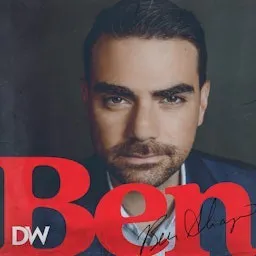
Ben Shapiro argues Tucker Carlson's new "third party" is a pure blackmail play to extract policy concessions from the GOP — not a real political movement.
The Ben Shapiro Show
Ben Shapiro argues Tucker Carlson's new "third party" is a pure blackmail play to extract policy concessions from the GOP — not a real political movement.
TL;DR
Friendly Fire's 18th episode brings together Michael Knowles, Ben Domenech, Ben Shapiro, Cabot Phillips, and DOJ veteran Theo Wold to argue about the Iran MOU, JD Vance's anti-Friedman economics turn, Tucker Carlson's fake third-party gambit, and the Supreme Court's 5-4 birthright citizenship ruling [1] — Cabot Phillips "Democrats haven't surged on the generic ballot, but Republicans face a brutal map, a red-carded Texas Senate race, and DSA candidates forci…" 34:55 . The midterms are more competitive than Republicans want to admit, far-left DSA candidates are forcing Democratic leadership left [2] — Cabot Phillips "Most people who say they like socialism think it means free healthcare. The actual DSA platform calls for abolishing the Senate, the presid…" 47:20 , and Idaho's firing squad revival is defended as the most humane and constitutionally sound alternative to drug-blocked lethal injection [3] — Theo Wold "The executive order approach was always a gamble — and the Supreme Court called the bluff. Theo Wold explains that because the Court issued…" 1:06:00 .
Friendly Fire Episode 18 featuring Ben Shapiro, Ben Domenech, Cabot Phillips, Michael Knowles, and Theo Wold discussing JD Vance's critique of free-market economics, the Iran MOU, Tucker Carlson's third party, the Supreme Court's birthright citizenship ruling, midterm prospects, and Idaho's firing squad.
Before the hosts get a word in, the episode opens with a trio of sponsor reads. NetSuite Next is pitched as the AI-powered business management suite that connects all company data into a single source of truth, with a free trial offer for businesses doing at least seven figures. Blinds.com follows, positioned as the antidote to the frustrating home-project experience of scheduling appointments and sitting through sales pitches, offering $50 off with code SHAPIRO. Finally, CookUnity — described as the first chef-led meal delivery service using Michelin-starred and James Beard Award-winning chefs — promises 50% off a first order with code BEN. The segment establishes the commercial structure of the show before the panel convenes.
The show kicks off not with policy but with sports, as the hosts react to FIFA's controversial red card that knocked the US out of World Cup contention. Michael Knowles is characteristically blunt: he hates soccer, considers it a third-world sport, and doesn't want America to be good at it. Ben Shapiro hedges — if America gets good at it, maybe it becomes important. But it's Ben Domenech who delivers the most memorable argument: the 2026 World Cup hosted in the United States has been a soft power triumph of historic proportions. [1] — Ben Domenech "Forget Pentagon budgets. Foreign fans came for the World Cup and discovered Buc-ee's, Waffle House, and air conditioning. Ben Domenech argu…" 05:54 Foreign fans have returned home inspired by air conditioning, working showers, Buc-ee's, and Waffle House — demanding their politicians explain why their countries don't offer the same. A fan nicknamed 'Freddie' went viral and was even invited to the White House, though he faced internet backlash for allegedly right-of-center past tweets. Knowles concedes that Domenech's soft power argument is the best case for caring about soccer he has ever heard.
Michael Knowles belatedly introduces the show — Friendly Fire, 'friends like these, cool dudes and dummies' — and pivots to Fourth of July plans. Ben Domenech steals the moment by revealing he is effectively on labor watch: his wife started contractions two nights ago at 20 minutes apart, keeping him up until 2am before they subsided. The sleep deprivation has wrecked his voice. He shares the charming detail of a 20-year agreement with his wife: a baby born between July 2nd and July 4th — especially in the 250th anniversary year — earns the right to a Founding Father name. The panel throws out options including Gouverneur Morris and Jefferson, setting a warm, collegial tone before the episode turns to harder political topics.
Michael Knowles sets the scene: he was in DC for an unveiling of an American Revolution statue, stopped by the Great American State Fair, and then secured a surprise hour-long interview with Vice President JD Vance covering his book, Iran, and 2028 prospects. Ben Shapiro watched the interview and delivers a mixed verdict — Vance is smooth and well-spoken, but his repeated attacks on MOU critics strike Shapiro as bizarre and unbecoming. [1] — Ben Shapiro "JD Vance argues Milton Friedman's laissez-faire economics only worked in a Christianized America — and now that the guardrails are gone, go…" 18:05 Shapiro has personally criticized the MOU and finds it falling apart — not just in the Strait of Hormuz but because a competing peace plan in Lebanon runs directly against it. He lays out alternatives: walking away from the Strait, bombing Karg Island, arming Gulf allies, or pressing through 'Project Freedom' despite Saudi resistance. Ben Domenech counters that Vance's anti-war language is not Obamian but Trumpian, rooted in Trump's 2016 critique of endless Iraq War. Ben Domenech then reveals he was personally named by Vance on Megyn Kelly's show as someone who just wants to keep bombing Iran — a characterization he finds deeply unfair given his consistent opposition to the Iraq War.
Michael Knowles plays the clip that set political Twitter on fire: JD Vance arguing that laissez-faire economics made more sense in a 1980s America with 'rich and powerful institutional Christianity' providing guardrails — and that globalized liberalism has eroded those guardrails, making Friedman's prescriptions less applicable today. Ben Domenech finds the argument partially convincing, noting that free trade with China didn't change China — it changed America, importing values alongside cheap televisions. [1] — Ben Shapiro "JD Vance argues Milton Friedman's laissez-faire economics only worked in a Christianized America — and now that the guardrails are gone, go…" 18:05 Ben Shapiro fires back with striking precision: church attendance in America was at 70% as late as 1999 and only declined sharply after 2000, but the growth of government since the 1960s has been exponential over the same period. His core argument is that government actively replaced the social functionality of the church — from Social Security eliminating the need to care for elderly parents at home, to welfare eliminating dependence on congregation. [2] — Ben Shapiro "Church attendance cratered after 2000 — and Ben Shapiro says government did it. When the state provides everything the church once provided…" 19:55 The suggestion that more government intervention will reinculcate virtue reverses the arrow of causality, Shapiro insists, and is structurally a Marxist idea — that changing the economic base changes the social superstructure. Knowles raises Hamilton and Reagan's protectionism as historical counter-examples, but Shapiro dismisses all of it as 'precedented and dumb.'
The panel turns to Tucker Carlson's announced departure from the GOP and launch of a new non-interventionist, America-First reform party. The immediate consensus is skepticism — Domenech can't quite read what Tucker is doing, but Shapiro can. [1] — Ben Shapiro "Tucker Carlson is not actually starting a third party — he's running a blackmail play against the GOP. By threatening an outside spoiler, h…" 28:44 His read: Tucker is not actually building a party. He's running a quasi-DSA play — a strategic blackmail threat designed to make Republicans fear a spoiler in 2026. If Republicans lose badly, Tucker will claim it's because they didn't cater to him, then demand the party hand him the wheel. Domenech compares the gambit to Pat Buchanan's 2000 Reform Party run — but Ben Domenech corrects him: Tucker is no Pat Buchanan. Buchanan was smarter, more consistent, and more disciplined. Pat Buchanan's 1992 convention speech, often mischaracterized as a pure culture-war address, was mostly about economics, crime, and working-class issues. Kalshi prediction markets have Tucker at 25% odds to run for president in 2028, which Domenech says he would immediately short. The group agrees: nobody on this panel is joining the Tucker Party.
Michael Knowles steps out of the political debate for a heartfelt PreBorn! sponsor read. He frames the charity around the Declaration of Independence's ordering of rights — life, liberty, pursuit of happiness — arguing that without life, the other rights are meaningless. PreBorn! provides free ultrasounds for $28 per session, and Knowles cites the organization's statistic that a mother who sees her baby on ultrasound for the first time is 80% more likely to choose life. He calls it one of the best ROIs available in charitable giving, noting that PreBorn! fundraises separately for administrative costs so every donated dollar goes toward saving lives. He asks listeners to donate $250 — a nod to America's 250th anniversary — by dialing #250 and saying 'BABY' or visiting preborn.com/knowles.
Cabot Phillips joins and frames himself as the 'delusional optimist': despite 3-4 months of bad news, Democrats have only gained about half a percent on the generic ballot, suggesting a ceiling on their momentum. New socialist candidates give Republicans targets to run against, and the redistricting war went to Republicans. But Ben Domenech provides the corrective: midterms are going to be terrible for Republicans. [1] — Cabot Phillips "Democrats haven't surged on the generic ballot, but Republicans face a brutal map, a red-carded Texas Senate race, and DSA candidates forci…" 34:55 A New York Times poll has Ken Paxton tied with James Talarico in Texas, with Paxton losing Hispanics dramatically — a stark contrast to Ted Cruz's 2022 performance. The Supreme Court's birthright citizenship ruling forces Paxton to lean into a losing issue while Talarico gets a free pass on transgender sports — precisely the issue that wrecked Colin Allred in 2022. [2] — Ben Domenech "I think that unfortunately capitalism may end up being a mono-partisan affair in faster than we could even imagine." 46:50 Democrats in Alaska are running a candidate with the same name as Dan Sullivan. Republicans are fighting each other in Washington instead of running a coherent message. Cabot adds that Democratic leadership — including JB Pritzker and Kamala Harris — is being forced to publicly embrace socialist candidates for fear of being 'eaten,' which will shift the party's national image further left.
As the DSA discussion winds down, Ben Domenech pauses to give credit where he thinks it's due. AOC's viral clip — responding to JD Vance's suggestion she could be a competitive presidential candidate — makes a generational argument that Domenech admits is grounded in real grievance. Boomers are the generation most distributed toward itself in American history. [1] — Ben Domenech "Boomers own the most houses in America, don't want to sell, and have left younger generations paying rent in apartments they can't afford. …" 49:50 They own the most houses, the most property, and show no signs of selling. Younger Americans trying to form families are stuck renting apartments in a market boomers have locked up. That resentment, Domenech argues, has a 'core truth to it' that Republicans have consistently failed to address — and that failure is precisely why socialists can exploit it with a message of anti-capitalism directed at people who don't understand what made the country powerful in the first place.
The episode pauses for two sponsor reads. Michael Knowles pitches Helix Sleep mattresses — noting he bought his children Helix mattresses and just ordered one for his guest room — with a 20% off sitewide deal (25% Luxe, 30% Elite) at helixsleep.com/dailywire. Ben Domenech then delivers what Michael Knowles calls 'an inspiring ad read': invoking Washington's troops crossing the Delaware while hearing Thomas Paine's American Crisis read aloud, he argues that Daily Wire Plus offers what Paine offered those soldiers — the truth about their moment in history. The 250th anniversary deal offers 3 months of Daily Wire Plus for $17.76. Knowles is so moved he jokes he wants to sign up himself, and Domenech adds the theological flourish that Paine, a pamphleteer and hustler, would probably have approved of using his words to sell subscriptions.
Theo Wold, who worked on the Trump administration's birthright citizenship executive order, joins Michael Knowles and Ben Domenech to break down what went wrong at the Supreme Court. He explains that both Kavanaugh and Amy Coney Barrett signaled skepticism at oral argument, and that Roberts' majority opinion is essentially an 'armchair historian's view' of the 14th Amendment rooted in Anglo common law — specifically the concept of subjecthood, not citizenship. [1] — Theo Wold "Chief Justice Roberts anchored his birthright citizenship ruling in 15th-century Anglo common law — and Theo Wold argues he missed everythi…" 56:10 Alito and Thomas both dissented correctly, Wold argues, noting that Roberts missed everything from the Declaration of Independence forward. The natural rights theorist Hadley Arkes pinpoints the flaw: Roberts defines citizenship as 'the right to have rights,' which would have struck the Framers as bizarre. Knowles adds the decisive historical counter: the United Kingdom — the very legal tradition Roberts invokes — abolished birthright citizenship in 1981, effective 1983, precisely because of mass migration. So if you're going to cite English common law, you should at least look at what the English actually did with it. [2] — Theo Wold "The executive order approach was always a gamble — and the Supreme Court called the bluff. Theo Wold explains that because the Court issued…" 1:06:00 Wold explains that the executive order approach, while legally interesting, failed to generate the political and legislative momentum needed and that most congressional remedies are now foreclosed by the constitutional ruling — meaning a fix will require a constitutional amendment. Ben Domenech, a longtime supporter of birthright citizenship who now has reservations given the scale of the Biden-era border crisis, says Roberts' opinion is 'crap' but that most Americans will simply shrug at the outcome.
The final substantive segment turns to Idaho becoming the first US state to formally adopt the firing squad as a method of execution. Michael Knowles opens with characteristic directness: if he were ever convicted of a capital offense — which he insists is not a hypothetical setup — he would want to go out blindfolded with a cigarette, shot standing up by a firing squad. Theo Wold provides the policy and legal context. [1] — Theo Wold "Abolitionist activists cut off the drug supply for lethal injection — so Idaho reversed course and went back to the firing squad. The resul…" 1:07:40 Abolitionist activists have spent years cutting off states' access to the drugs needed for the three-drug lethal injection compound, effectively short-circuiting capital punishment through a supply embargo rather than through the democratic or judicial process. Idaho's response was not to abandon capital punishment but to revert to a method that remains constitutional under the Eighth Amendment. [2] — Theo Wold "The average firing squad, formalized medical death occurs in seconds as opposed to 8, 9, 10 minutes in the few lethal injections that actua…" 1:08:55 The firing squad, Wold explains, causes medically confirmed death in seconds compared to 8-10 minutes for lethal injection — and it requires no health professionals to violate the Hippocratic oath. He notes that many death-row defendants across the country actually prefer the firing squad for these reasons. Knowles endorses the approach broadly: if you're going to have capital punishment, the firing squad is the most humane and constitutionally grounded option. Wold frames the deeper issue as Idaho simply refusing to let activist supply embargoes nullify the legal choices of its voters.
Michael Knowles wraps the substantive content and transitions into the final sponsor read for Policygenius — framed as the antidote to squinting at 'labyrinthine insurance websites,' with the promise of a 20-year, $1 million life insurance policy starting at $276 per year through a free comparison marketplace at policygenius.com/FIRE. The FIRE URL gets a morbid joke: it could be the cause of you needing the policy in the first place. Knowles then signs off warmly, noting that he's rushing off to the Fourth of July celebrations and referencing the possibility of a Friendly Fire episode 'during the Octave of Independence.' Ben Domenech wishes him a happy Fourth of July and the episode closes.
Chapter 1 · 00:00
Before the hosts get a word in, the episode opens with a trio of sponsor reads. NetSuite Next is pitched as the AI-powered business management suite that connects all company data into a single source of truth, with a free trial offer for businesses doing at least seven figures. Blinds.com follows, positioned as the antidote to the frustrating home-project experience of scheduling appointments and sitting through sales pitches, offering $50 off with code SHAPIRO. Finally, CookUnity — described as the first chef-led meal delivery service using Michelin-starred and James Beard Award-winning chefs — promises 50% off a first order with code BEN. The segment establishes the commercial structure of the show before the panel convenes.
Ben Shapiro noted that as late as 1999, 70% of American adults were members of a church or synagogue, with sharp decline beginning around 2000.
Chapter 2 · 03:45
The show kicks off not with policy but with sports, as the hosts react to FIFA's controversial red card that knocked the US out of World Cup contention. Michael Knowles is characteristically blunt: he hates soccer, considers it a third-world sport, and doesn't want America to be good at it. Ben Shapiro hedges — if America gets good at it, maybe it becomes important. But it's Ben Domenech who delivers the most memorable argument: the 2026 World Cup hosted in the United States has been a soft power triumph of historic proportions. [1] — Ben Domenech "Forget Pentagon budgets. Foreign fans came for the World Cup and discovered Buc-ee's, Waffle House, and air conditioning. Ben Domenech argu…" 05:54 Foreign fans have returned home inspired by air conditioning, working showers, Buc-ee's, and Waffle House — demanding their politicians explain why their countries don't offer the same. A fan nicknamed 'Freddie' went viral and was even invited to the White House, though he faced internet backlash for allegedly right-of-center past tweets. Knowles concedes that Domenech's soft power argument is the best case for caring about soccer he has ever heard.
Forget Pentagon budgets. Foreign fans came for the World Cup and discovered Buc-ee's, Waffle House, and air conditioning. Ben Domenech argues the 2026 tournament may be America's biggest soft power export in decades — and it didn't cost the defense budget a cent.
Chapter 4 · 09:50
Michael Knowles sets the scene: he was in DC for an unveiling of an American Revolution statue, stopped by the Great American State Fair, and then secured a surprise hour-long interview with Vice President JD Vance covering his book, Iran, and 2028 prospects. Ben Shapiro watched the interview and delivers a mixed verdict — Vance is smooth and well-spoken, but his repeated attacks on MOU critics strike Shapiro as bizarre and unbecoming. [1] — Ben Shapiro "JD Vance argues Milton Friedman's laissez-faire economics only worked in a Christianized America — and now that the guardrails are gone, go…" 18:05 Shapiro has personally criticized the MOU and finds it falling apart — not just in the Strait of Hormuz but because a competing peace plan in Lebanon runs directly against it. He lays out alternatives: walking away from the Strait, bombing Karg Island, arming Gulf allies, or pressing through 'Project Freedom' despite Saudi resistance. Ben Domenech counters that Vance's anti-war language is not Obamian but Trumpian, rooted in Trump's 2016 critique of endless Iraq War. Ben Domenech then reveals he was personally named by Vance on Megyn Kelly's show as someone who just wants to keep bombing Iran — a characterization he finds deeply unfair given his consistent opposition to the Iraq War.
In a clip played on air, JD Vance argued that Milton Friedman's ideas made sense in a 1980s America with strong Christian institutional guardrails — but that in today's secular, globalized environment, laissez-faire economics produces very different results. The panel had sharply divided reactions.
Chapter 5 · 18:05
Michael Knowles plays the clip that set political Twitter on fire: JD Vance arguing that laissez-faire economics made more sense in a 1980s America with 'rich and powerful institutional Christianity' providing guardrails — and that globalized liberalism has eroded those guardrails, making Friedman's prescriptions less applicable today. Ben Domenech finds the argument partially convincing, noting that free trade with China didn't change China — it changed America, importing values alongside cheap televisions. [1] — Ben Shapiro "JD Vance argues Milton Friedman's laissez-faire economics only worked in a Christianized America — and now that the guardrails are gone, go…" 18:05 Ben Shapiro fires back with striking precision: church attendance in America was at 70% as late as 1999 and only declined sharply after 2000, but the growth of government since the 1960s has been exponential over the same period. His core argument is that government actively replaced the social functionality of the church — from Social Security eliminating the need to care for elderly parents at home, to welfare eliminating dependence on congregation. [2] — Ben Shapiro "Church attendance cratered after 2000 — and Ben Shapiro says government did it. When the state provides everything the church once provided…" 19:55 The suggestion that more government intervention will reinculcate virtue reverses the arrow of causality, Shapiro insists, and is structurally a Marxist idea — that changing the economic base changes the social superstructure. Knowles raises Hamilton and Reagan's protectionism as historical counter-examples, but Shapiro dismisses all of it as 'precedented and dumb.'
JD Vance argues Milton Friedman's laissez-faire economics only worked in a Christianized America — and now that the guardrails are gone, government must fill the gap. Ben Shapiro fires back: that's not Hamiltonian, it's accidentally Marxist.
Church attendance cratered after 2000 — and Ben Shapiro says government did it. When the state provides everything the church once provided, there's no reason to show up on Sunday. Social Security means you don't care for grandma at home; welfare means you don't need your congregation. Government didn't just grow — it replaced religion.
Ben Shapiro argued that exponential government growth since the 1960s correlates with the precipitous decline in church attendance, suggesting government replaced church functionality.
Michael Knowles points out that Hamilton precedes Friedman and that even Reagan protected steel — so the historical case for government industrial policy isn't crazy. Ben Shapiro fires back: protectionism has always been dumb, it was dumb in the '80s, and it's dumb now unless national security is genuinely at stake.
Chapter 6 · 27:45
The panel turns to Tucker Carlson's announced departure from the GOP and launch of a new non-interventionist, America-First reform party. The immediate consensus is skepticism — Domenech can't quite read what Tucker is doing, but Shapiro can. [1] — Ben Shapiro "Tucker Carlson is not actually starting a third party — he's running a blackmail play against the GOP. By threatening an outside spoiler, h…" 28:44 His read: Tucker is not actually building a party. He's running a quasi-DSA play — a strategic blackmail threat designed to make Republicans fear a spoiler in 2026. If Republicans lose badly, Tucker will claim it's because they didn't cater to him, then demand the party hand him the wheel. Domenech compares the gambit to Pat Buchanan's 2000 Reform Party run — but Ben Domenech corrects him: Tucker is no Pat Buchanan. Buchanan was smarter, more consistent, and more disciplined. Pat Buchanan's 1992 convention speech, often mischaracterized as a pure culture-war address, was mostly about economics, crime, and working-class issues. Kalshi prediction markets have Tucker at 25% odds to run for president in 2028, which Domenech says he would immediately short. The group agrees: nobody on this panel is joining the Tucker Party.
Tucker Carlson is not actually starting a third party — he's running a blackmail play against the GOP. By threatening an outside spoiler, he's positioning himself to blame Republican 2026 losses on their failure to embrace his positions, then demand the party hand him the wheel.
Chapter 7 · 32:40
Michael Knowles steps out of the political debate for a heartfelt PreBorn! sponsor read. He frames the charity around the Declaration of Independence's ordering of rights — life, liberty, pursuit of happiness — arguing that without life, the other rights are meaningless. PreBorn! provides free ultrasounds for $28 per session, and Knowles cites the organization's statistic that a mother who sees her baby on ultrasound for the first time is 80% more likely to choose life. He calls it one of the best ROIs available in charitable giving, noting that PreBorn! fundraises separately for administrative costs so every donated dollar goes toward saving lives. He asks listeners to donate $250 — a nod to America's 250th anniversary — by dialing #250 and saying 'BABY' or visiting preborn.com/knowles.
Ben Domenech noted that prediction market Kalshi placed Tucker Carlson's odds of running for president in 2028 at around 25%, which he dismissed as far too high.
Ben Shapiro recalled that Pat Buchanan's Reform Party run in 2000 garnered only 0.4% of the vote, drawing a parallel to Tucker Carlson's third-party threat.
Michael Knowles cited PreBorn!'s statistic that a mother who sees her baby on ultrasound for the first time is 80% more likely to choose life.
Chapter 8 · 34:55
Cabot Phillips joins and frames himself as the 'delusional optimist': despite 3-4 months of bad news, Democrats have only gained about half a percent on the generic ballot, suggesting a ceiling on their momentum. New socialist candidates give Republicans targets to run against, and the redistricting war went to Republicans. But Ben Domenech provides the corrective: midterms are going to be terrible for Republicans. [1] — Cabot Phillips "Democrats haven't surged on the generic ballot, but Republicans face a brutal map, a red-carded Texas Senate race, and DSA candidates forci…" 34:55 A New York Times poll has Ken Paxton tied with James Talarico in Texas, with Paxton losing Hispanics dramatically — a stark contrast to Ted Cruz's 2022 performance. The Supreme Court's birthright citizenship ruling forces Paxton to lean into a losing issue while Talarico gets a free pass on transgender sports — precisely the issue that wrecked Colin Allred in 2022. [2] — Ben Domenech "I think that unfortunately capitalism may end up being a mono-partisan affair in faster than we could even imagine." 46:50 Democrats in Alaska are running a candidate with the same name as Dan Sullivan. Republicans are fighting each other in Washington instead of running a coherent message. Cabot adds that Democratic leadership — including JB Pritzker and Kamala Harris — is being forced to publicly embrace socialist candidates for fear of being 'eaten,' which will shift the party's national image further left.
Democrats haven't surged on the generic ballot, but Republicans face a brutal map, a red-carded Texas Senate race, and DSA candidates forcing party leadership left. Ben Domenech's verdict: midterms are going to be terrible for Republicans, and the Supreme Court just handed Democrats the perfect escape hatch on transgender sports.
Despite inflation rising, the Iran war, and public dissatisfaction, Democrats gained only about half a percent on the generic ballot over the last 3-4 months.
A poll showed rank-and-file Democrats have a higher opinion of Democratic Socialists of America than of Democrats in Congress.
Most people who say they like socialism think it means free healthcare. The actual DSA platform calls for abolishing the Senate, the presidency, the War Department, and joining the Third International. Cabot Phillips argues this gap between what voters think they're supporting and what they'd actually get is the biggest landmine in American politics.
Cabot Phillips revealed the DSA's official 'Workers Deserve More Plan' calls for abolishing the Senate, defunding the War Department, and replacing the president and Supreme Court with bodies subordinate to Congress.
Chapter 9 · 49:30
As the DSA discussion winds down, Ben Domenech pauses to give credit where he thinks it's due. AOC's viral clip — responding to JD Vance's suggestion she could be a competitive presidential candidate — makes a generational argument that Domenech admits is grounded in real grievance. Boomers are the generation most distributed toward itself in American history. [1] — Ben Domenech "Boomers own the most houses in America, don't want to sell, and have left younger generations paying rent in apartments they can't afford. …" 49:50 They own the most houses, the most property, and show no signs of selling. Younger Americans trying to form families are stuck renting apartments in a market boomers have locked up. That resentment, Domenech argues, has a 'core truth to it' that Republicans have consistently failed to address — and that failure is precisely why socialists can exploit it with a message of anti-capitalism directed at people who don't understand what made the country powerful in the first place.
Boomers own the most houses in America, don't want to sell, and have left younger generations paying rent in apartments they can't afford. Ben Domenech argues this is the core truth underneath the socialist surge — and Republicans have failed to offer any answer to it.
Chapter 11 · 54:55
Theo Wold, who worked on the Trump administration's birthright citizenship executive order, joins Michael Knowles and Ben Domenech to break down what went wrong at the Supreme Court. He explains that both Kavanaugh and Amy Coney Barrett signaled skepticism at oral argument, and that Roberts' majority opinion is essentially an 'armchair historian's view' of the 14th Amendment rooted in Anglo common law — specifically the concept of subjecthood, not citizenship. [1] — Theo Wold "Chief Justice Roberts anchored his birthright citizenship ruling in 15th-century Anglo common law — and Theo Wold argues he missed everythi…" 56:10 Alito and Thomas both dissented correctly, Wold argues, noting that Roberts missed everything from the Declaration of Independence forward. The natural rights theorist Hadley Arkes pinpoints the flaw: Roberts defines citizenship as 'the right to have rights,' which would have struck the Framers as bizarre. Knowles adds the decisive historical counter: the United Kingdom — the very legal tradition Roberts invokes — abolished birthright citizenship in 1981, effective 1983, precisely because of mass migration. So if you're going to cite English common law, you should at least look at what the English actually did with it. [2] — Theo Wold "The executive order approach was always a gamble — and the Supreme Court called the bluff. Theo Wold explains that because the Court issued…" 1:06:00 Wold explains that the executive order approach, while legally interesting, failed to generate the political and legislative momentum needed and that most congressional remedies are now foreclosed by the constitutional ruling — meaning a fix will require a constitutional amendment. Ben Domenech, a longtime supporter of birthright citizenship who now has reservations given the scale of the Biden-era border crisis, says Roberts' opinion is 'crap' but that most Americans will simply shrug at the outcome.
Chief Justice Roberts anchored his birthright citizenship ruling in 15th-century Anglo common law — and Theo Wold argues he missed everything from the Declaration of Independence forward. The real kicker: Britain itself abolished birthright citizenship in 1981, making Roberts' appeal to English tradition incoherent.
Michael Knowles highlighted that the UK voted to end birthright citizenship in 1981, effective 1983, directly in response to mass migration pressures — a parallel the US Supreme Court ignored.
The Supreme Court ruled 5-4 upholding birthright citizenship, with Kavanaugh refusing to join Thomas and Alito on the substantive constitutional point.
Chapter 12 · 1:06:00
The final substantive segment turns to Idaho becoming the first US state to formally adopt the firing squad as a method of execution. Michael Knowles opens with characteristic directness: if he were ever convicted of a capital offense — which he insists is not a hypothetical setup — he would want to go out blindfolded with a cigarette, shot standing up by a firing squad. Theo Wold provides the policy and legal context. [1] — Theo Wold "Abolitionist activists cut off the drug supply for lethal injection — so Idaho reversed course and went back to the firing squad. The resul…" 1:07:40 Abolitionist activists have spent years cutting off states' access to the drugs needed for the three-drug lethal injection compound, effectively short-circuiting capital punishment through a supply embargo rather than through the democratic or judicial process. Idaho's response was not to abandon capital punishment but to revert to a method that remains constitutional under the Eighth Amendment. [2] — Theo Wold "The average firing squad, formalized medical death occurs in seconds as opposed to 8, 9, 10 minutes in the few lethal injections that actua…" 1:08:55 The firing squad, Wold explains, causes medically confirmed death in seconds compared to 8-10 minutes for lethal injection — and it requires no health professionals to violate the Hippocratic oath. He notes that many death-row defendants across the country actually prefer the firing squad for these reasons. Knowles endorses the approach broadly: if you're going to have capital punishment, the firing squad is the most humane and constitutionally grounded option. Wold frames the deeper issue as Idaho simply refusing to let activist supply embargoes nullify the legal choices of its voters.
The executive order approach was always a gamble — and the Supreme Court called the bluff. Theo Wold explains that because the Court issued a constitutional ruling rather than a statutory one, most congressional options are now foreclosed. Fixing birthright citizenship will require a constitutional amendment.
Theo Wold noted the British fundamentally changed their notion of citizenship three times since WWII — in 1948, 1981, and the mid-1990s — while Roberts cited 15th-century English common law.
Abolitionist activists cut off the drug supply for lethal injection — so Idaho reversed course and went back to the firing squad. The result? Death in seconds versus 8-10 agonizing minutes. Theo Wold argues it's not barbaric; it's the most humane option available and there's no Hippocratic oath violation in sight.
Theo Wold argued the firing squad is more humane than lethal injection, causing medically confirmed death in seconds compared to 8-10 minutes for lethal injection when administered correctly.
No indexed bits in this chapter.
Tucker Carlson is not actually starting a third party — he's running a blackmail play against the GOP. By threatening an outside spoiler, he's positioning himself to blame Republican 2026 losses on their failure to embrace his positions, then demand the party hand him the wheel.
Most people who say they like socialism think it means free healthcare. The actual DSA platform calls for abolishing the Senate, the presidency, the War Department, and joining the Third International. Cabot Phillips argues this gap between what voters think they're supporting and what they'd actually get is the biggest landmine in American politics.
Chief Justice Roberts anchored his birthright citizenship ruling in 15th-century Anglo common law — and Theo Wold argues he missed everything from the Declaration of Independence forward. The real kicker: Britain itself abolished birthright citizenship in 1981, making Roberts' appeal to English tradition incoherent.
This episode
Factual claims made this episode, and whether a source was named.
As late as 1999, 70% of American adults were members of a church or synagogue, with church attendance declining precipitously after the year 2000.
Pat Buchanan's Reform Party won 0.4% of the vote in the 2000 presidential election, enough to affect the outcome in Florida.
Mothers who see their baby on ultrasound for the first time are 80% more likely to choose life over abortion.
Democrats gained only about half a percent on the generic ballot in the 3-4 months during and after the Iran war, despite inflation, the war, and public dissatisfaction.
A New York Times poll showed Ken Paxton tied with James Talarico in the Texas Senate race.
Democrats in Alaska put a candidate with the same name as incumbent Senator Dan Sullivan on the ballot.
A poll showed rank-and-file Democrats have a higher opinion of the Democratic Socialists of America than of Democrats in Congress.
The DSA's 'Workers Deserve More Plan' officially calls for abolishing the Senate, defunding the entire War Department, and replacing the president and Supreme Court with bodies chosen by and subordinate to Congress.
California state senators voted to allow child molesters to run for office by voting down a measure to exclude them.
The United Kingdom abolished birthright citizenship in 1981, with the change taking effect in 1983, in response to mass migration.
The firing squad causes medically confirmed death in seconds, compared to 8-10 minutes for lethal injection when administered correctly.
JD Vance personally negotiated the Iran MOU and continues to do press on its behalf.
The British fundamentally changed their notion of citizenship three times since WWII: in 1948, 1981, and the mid-1990s.
This episode
Discussed extensively for his negotiation and defense of the Iran MOU, his critique of Milton Friedman's economics, and his rhetorical attacks on MOU critics.
Debated as a political actor who announced a new third party, with hosts arguing the move is a blackmail play against the GOP rather than a genuine political movement.
Central to the economics debate after JD Vance publicly argued Friedman's laissez-faire ideas are obsolete in a post-Christian America.
Cited by Michael Knowles as a historical precedent for government industrial policy, and countered by Ben Shapiro who argued Hamilton's national bank was narrowly focused on national solvency.
Chief Justice whose birthright citizenship majority opinion was criticized by the panel and Theo Wold for relying on 15th-century Anglo common law and ignoring post-Declaration constitutional development.
Compared to Tucker Carlson as the historical precedent for a populist nationalist third-party spoiler run, with his 2000 Reform Party campaign cited as a cautionary template.
Cited approvingly for his dissent in the birthright citizenship case alongside Justice Alito, which the panel agreed correctly identified Roberts' constitutional errors.
Texas Senate candidate discussed as unexpectedly competitive against Democrat James Talarico, with polling showing Paxton losing Hispanic voters dramatically.
Praised for his dissent in the birthright citizenship case, which Theo Wold argued correctly identified the majority's failure to account for post-Declaration constitutional development.
Referenced for a viral clip in which she addressed generational economic grievances, with Ben Domenech acknowledging the core of her argument about boomers and housing is correct.
Mentioned for personally calling socialist Democratic primary winners and pro-Palestinian groups, which hosts cited as evidence of Democratic leadership being forced left.
Discussed as a growing force within the Democratic Party, with their official platform — abolishing the Senate, presidency, and War Department — revealed and debated.
Criticized for its 5-4 ruling upholding birthright citizenship under the 14th Amendment and accused of institutional cowardice by the panel.
Central to the episode's foreign policy debate around the MOU, with hosts debating whether the ceasefire deal was wise and what alternatives existed.
Became the focus of a capital punishment debate after becoming the first US state to use the firing squad as a method of execution in response to drug supply restrictions on lethal injection.
Key strategic waterway discussed in the context of whether Iran effectively controls it and whether the MOU adequately addresses US interests there.
Stats
We use essential and analytics cookies to run Vuci. To understand how the site is used: Privacy Policy.

Install Vuci on your phone
Add it to your home screen for a faster, app-like experience.
Install Vuci on your phone
Tap the Share button, then “Add to Home Screen”.
A new version is available
Reload to get the latest Vuci.