Speaker
Dr. Sasha Hamdani
Appearances over time
1 episodes
Episodes
1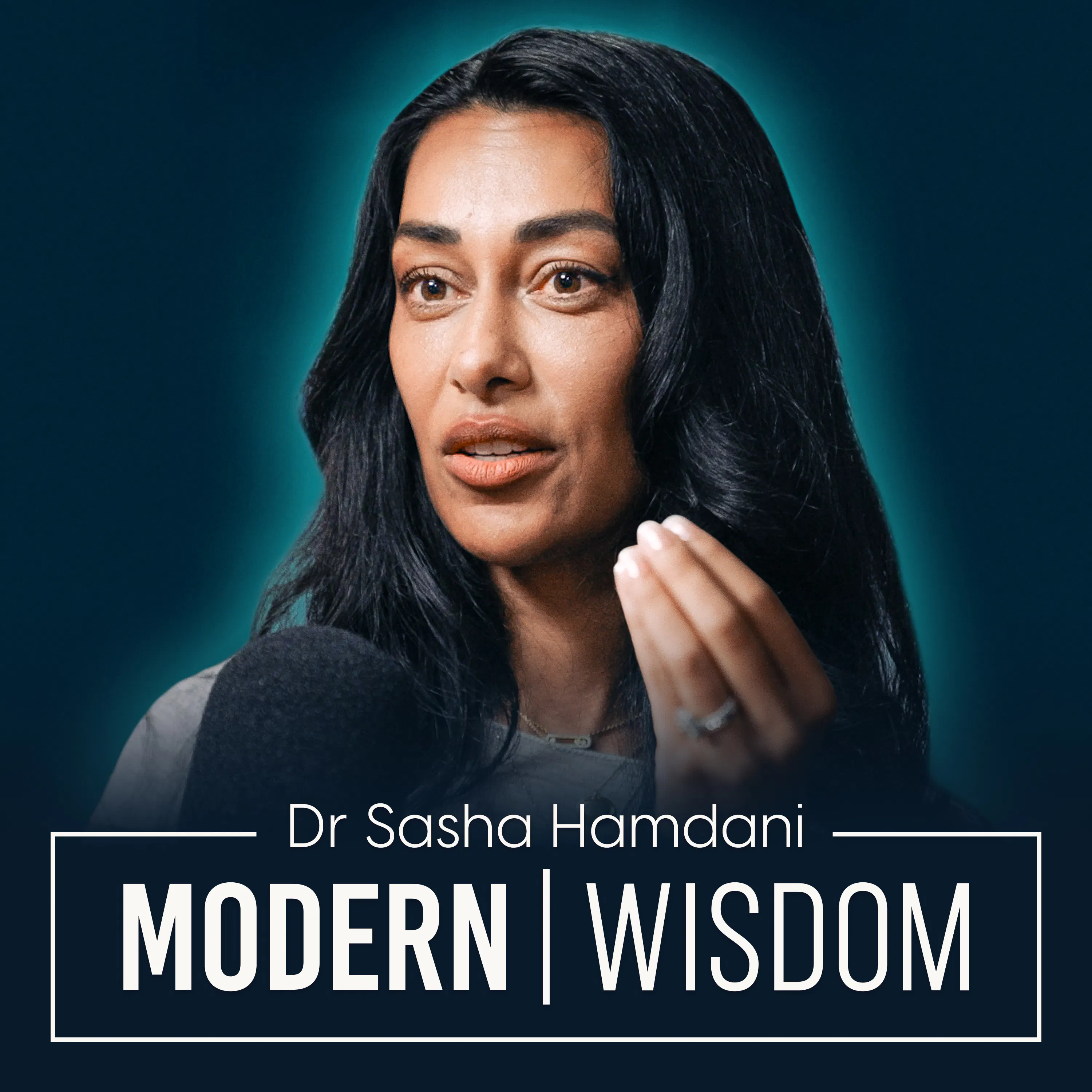
Podcasts

Quotes & moments

Rejection Sensitive Dysphoria can produce an emotional response so intense it looks clinically indistinguishable from a major depressive episode.
Emotionally sensitive people have a hyperactive amygdala, an underactive prefrontal cortex, and a frayed connection between the two — making emotional regulation structurally harder.
When estrogen drops, dopamine drops with it, making emotional regulation harder — meaning women are biologically more rejection-sensitive for roughly two weeks of every month.
Testosterone acts as a buffer against emotional sensitivity, but as it drops in men in their 50s and 60s, many experience a surge of emotional sensitivity they have no tools to handle.
Rejection sensitivity can be observed as early as age 2 or 3, suggesting it has strong developmental and likely genetic roots.
Almost 100% of people with ADHD fall on the emotional sensitivity or rejection-sensitive dysphoria spectrum, making emotional dysregulation a central but underacknowledged feature of ADHD.
For emotionally sensitive people, uncertainty is harder to bear than confirmed bad news because the brain fills the void with worst-case narratives — often far worse than reality.
A Yale study found that non-judgmental observation of emotions — without rushing to resolve them — reduces activation in the brain, making it a powerful regulation tool.
Men who appear emotionally avoidant are frequently emotionally sensitive individuals who were never given tools or permission to explore their sensitivity, so they default to withdrawal.
Being ghosted is particularly damaging for sensitive people because their brain doesn't interpret it as the relationship ending — it interprets it as evidence of personal insufficiency.
Dr. Hamdani developed a 12-tool emotional regulation toolkit drawing on three years of research across psychology and psychiatry, designed to be used in the moment of emotional flooding.
When rejection hits, the norepinephrine surge isn't metaphorical — heart rate spikes, chest tightens, and people think they're having a heart attack or panic attack. Your body is screaming 'danger' long before your brain has time to check whether the threat is real.
Emotionally sensitive people don't just feel things deeply — they spend enormous cognitive energy interpreting every interaction for threat, already masking and overcompensating for things that haven't happened yet. It's a full-time neurological job running in the background of every social moment.
RSD isn't just hurt feelings — it's a dopamine-deficient brain with a hyperactive amygdala and a frayed connection to the prefrontal cortex. Add a surge of norepinephrine and you get chest pain, sweating, and trembling that convinces your body something catastrophic is happening.
As estrogen drops, dopamine drops with it — and dopamine is what lets you regulate your emotions. For women, this happens on a monthly cycle, during pregnancy, and through perimenopause. For men, falling testosterone in their 50s and 60s creates an unexpected surge in emotional sensitivity they have no framework to handle.
Boys are told from childhood not to cry, not to feel, not to be weak — but anger gets a pass. The result: a generation of men who reroute every emotion, including sadness and fear, through the only acceptable channel. Emotional avoidance isn't toughness, it's misdirected sensitivity.
Emotional sensitivity isn't a defect — it's a high-resolution scanner for human experience. Highly sensitive people pick up body language, tone, and unspoken tension that others miss entirely. In the right environment, that's not a liability. It's a superpower.
Bad news gives you a game plan. Uncertainty gives your brain a blank canvas and it will paint the worst possible picture every single time. For emotionally sensitive people, an unreturned text isn't just an unreturned text — it's the opening frame of an elaborate catastrophe.
Her supervisor told her she was too emotional for the pediatric ICU. So she asked herself: 'What area of medicine can I cry in?' That question led her to psychiatry. Finding the environment that holds your emotional sensitivity isn't retreat — it's strategy.
For someone with RSD, ghosting isn't ambiguity — it's a self-verdict. Their brain doesn't read 'this relationship ended,' it reads 'I am the reason this failed.' No closure means the brain fills the gap with evidence of personal insufficiency, and it keeps filling indefinitely.
Dr. Hamdani admits she still gets triggered by social media as a psychiatrist — her sense of professional worth was driven by likes and engagement for years. For teenagers whose frontal lobes aren't fully developed, that external validation loop runs even deeper and faster.
RSD doesn't just make people overachieve — it stops some from applying at all. For those who make it inside organisations, the fear of looking incapable means they keep adding to their plates until burnout becomes inevitable. They can't delegate emotions the way they can delegate tasks.
If the world feels too spiky for your emotions, you're not broken — you just haven't been given a toolkit. Emotional sensitivity is a beautiful thing that can be extraordinarily difficult to live with. The tools exist. Learning to use them is life-changing.
Men need a 'bank account' of masculine status — muscle, money, success — before society grants them permission to express vulnerability. Chris Bumstead can cry at the Olympia and get celebrated. A struggling nobody doing the same thing gets contempt. This creates a tragic paradox where the men who most need emotional support get the least of it.
When you're emotionally flooded, your toolkit needs to be pre-loaded and ready. Movement oxygenates your frontal lobe and breaks the emotional loop. Delaying your reaction lets the amygdala cool and the rational brain come online. Non-judgmental observation — backed by a Yale study — reduces brain activation without requiring you to solve anything.
Analysis
What they talk about
- Society & Culture 70%
- Health & Fitness 30%
Connections
Shows they appear on and people they share episodes with. Drag to explore.
